
What Is Greenhushing in Business? The Quiet Side of Corporate Sustainability

Brands are often criticised for making exaggerated environmental claims , but there is another side to the conversation. Some companies choose to say very little about their sustainability efforts, even when they are taking steps to reduce their environmental impact. This practice is known as greenhushing . It raises an important question: when businesses stay quiet about their green initiatives, does it protect them from scrutiny or make it harder to hold them accountable?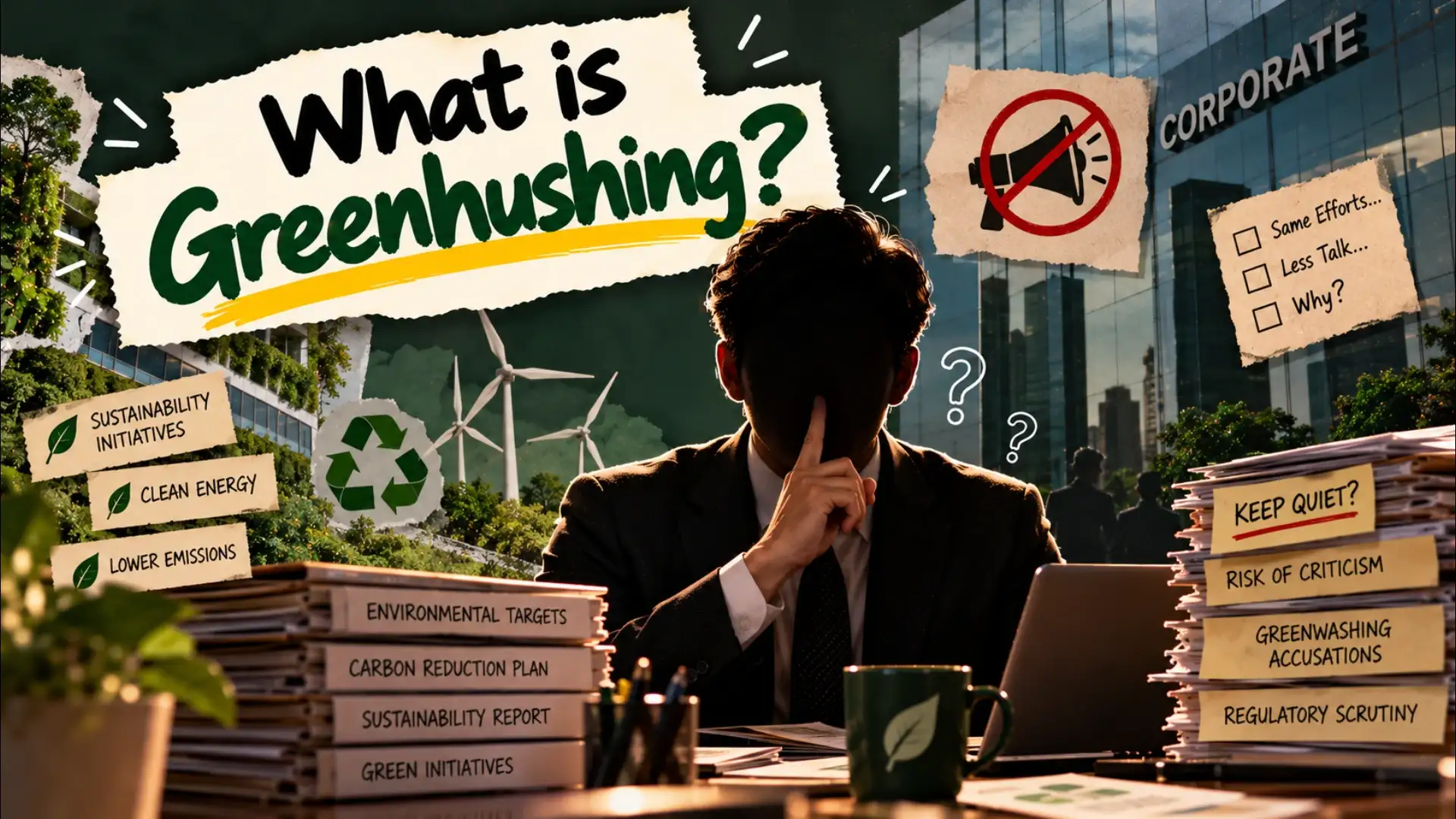
A business might invest in reducing packaging, improving energy efficiency or changing its supply chain but choose not to highlight those efforts in its marketing or public reports. The company may still be working on environmental improvements; it simply communicates less about them.
The term is often discussed alongside greenwashing , which involves misleading or exaggerated claims about environmental performance. Greenhushing represents a different communication challenge. Instead of saying too much or making unsupported claims, a company may say very little about its sustainability work.
However, not every company that remains quiet is greenhushing. Some businesses may lack the resources to communicate their progress, may be in the early stages of developing a sustainability strategy or may simply choose not to promote every operational change.
Some businesses may prefer to avoid making claims until they have reliable data to support them. Others may worry that a specific target will be interpreted as a guarantee, even when the outcome depends on suppliers, technology or changing regulations.
The complexity of sustainability reporting can also make communication difficult. Terms such as carbon neutral, recyclable and sustainable may require careful explanation. Companies that cannot clearly demonstrate what these claims mean may decide that saying less carries fewer risks. In some cases, however, silence can make it harder for customers and investors to understand a company's environmental performance.
Greenhushing, by contrast, involves withholding or limiting information about sustainability efforts. It does not automatically mean that a company is hiding wrongdoing or that its environmental performance is strong.
Both practices can create information gaps. Greenwashing can mislead people into believing a company is more environmentally responsible than it is. Greenhushing can leave people with too little information to assess a company's actual progress.
The key issue is transparency. Consumers need specific, understandable and verifiable information to evaluate environmental claims, rather than relying on promotional language or a complete lack of communication.
Companies can reduce this uncertainty by publishing measurable targets, explaining how progress is tracked and acknowledging areas where improvements are still needed. Independent verification and clear reporting can help make claims more credible.
Businesses do not need to promote every minor environmental action. However, meaningful transparency can help build trust when it is supported by evidence.
Greenhushing highlights the challenge of communicating sustainability responsibly. The aim should not be to make the biggest environmental claims or to remain silent, but to share accurate information that allows people to judge progress for themselves.
Understanding Greenhushing in Corporate Sustainability
Greenhushing refers to the practice of deliberately limiting public communication about a company's environmental goals, sustainability initiatives or progress.A business might invest in reducing packaging, improving energy efficiency or changing its supply chain but choose not to highlight those efforts in its marketing or public reports. The company may still be working on environmental improvements; it simply communicates less about them.
The term is often discussed alongside greenwashing , which involves misleading or exaggerated claims about environmental performance. Greenhushing represents a different communication challenge. Instead of saying too much or making unsupported claims, a company may say very little about its sustainability work.
However, not every company that remains quiet is greenhushing. Some businesses may lack the resources to communicate their progress, may be in the early stages of developing a sustainability strategy or may simply choose not to promote every operational change.
Why Do Companies Avoid Talking About Green Initiatives?
One reason is concern about greenwashing accusations. Environmental claims can attract scrutiny from consumers, regulators, investors and campaign groups. A company that makes a public commitment may face questions about the evidence behind it, how progress is measured and whether the results match its promises.Some businesses may prefer to avoid making claims until they have reliable data to support them. Others may worry that a specific target will be interpreted as a guarantee, even when the outcome depends on suppliers, technology or changing regulations.
The complexity of sustainability reporting can also make communication difficult. Terms such as carbon neutral, recyclable and sustainable may require careful explanation. Companies that cannot clearly demonstrate what these claims mean may decide that saying less carries fewer risks. In some cases, however, silence can make it harder for customers and investors to understand a company's environmental performance.
How Is Greenhushing Different From Greenwashing?
Greenwashing involves presenting a company's environmental performance in a misleading way. This might include making vague claims, exaggerating a product's benefits or highlighting a small initiative while ignoring a larger environmental impact.Greenhushing, by contrast, involves withholding or limiting information about sustainability efforts. It does not automatically mean that a company is hiding wrongdoing or that its environmental performance is strong.
Both practices can create information gaps. Greenwashing can mislead people into believing a company is more environmentally responsible than it is. Greenhushing can leave people with too little information to assess a company's actual progress.
The key issue is transparency. Consumers need specific, understandable and verifiable information to evaluate environmental claims, rather than relying on promotional language or a complete lack of communication.
What Does Greenhushing Mean for Consumers?
When companies communicate less about sustainability, consumers may find it difficult to compare products or understand which environmental improvements have been made. Investors and other stakeholders may also struggle to assess whether businesses are meeting their stated objectives.Companies can reduce this uncertainty by publishing measurable targets, explaining how progress is tracked and acknowledging areas where improvements are still needed. Independent verification and clear reporting can help make claims more credible.
Businesses do not need to promote every minor environmental action. However, meaningful transparency can help build trust when it is supported by evidence.
Greenhushing highlights the challenge of communicating sustainability responsibly. The aim should not be to make the biggest environmental claims or to remain silent, but to share accurate information that allows people to judge progress for themselves.
Next Story