
What Is Hobby Hoarding? Why We Keep Starting New Hobbies

One week, you decide you are going to learn pottery. You order the tools, watch beginner videos and imagine the beautiful things you will make. A few weeks later, the supplies are sitting in a corner while you have moved on to learning crochet, buying a journal or planning to take up photography. Sound familiar? This habit is sometimes called hobby hoarding . It describes repeatedly collecting hobbies , interests or the equipment associated with them without spending much time developing each one.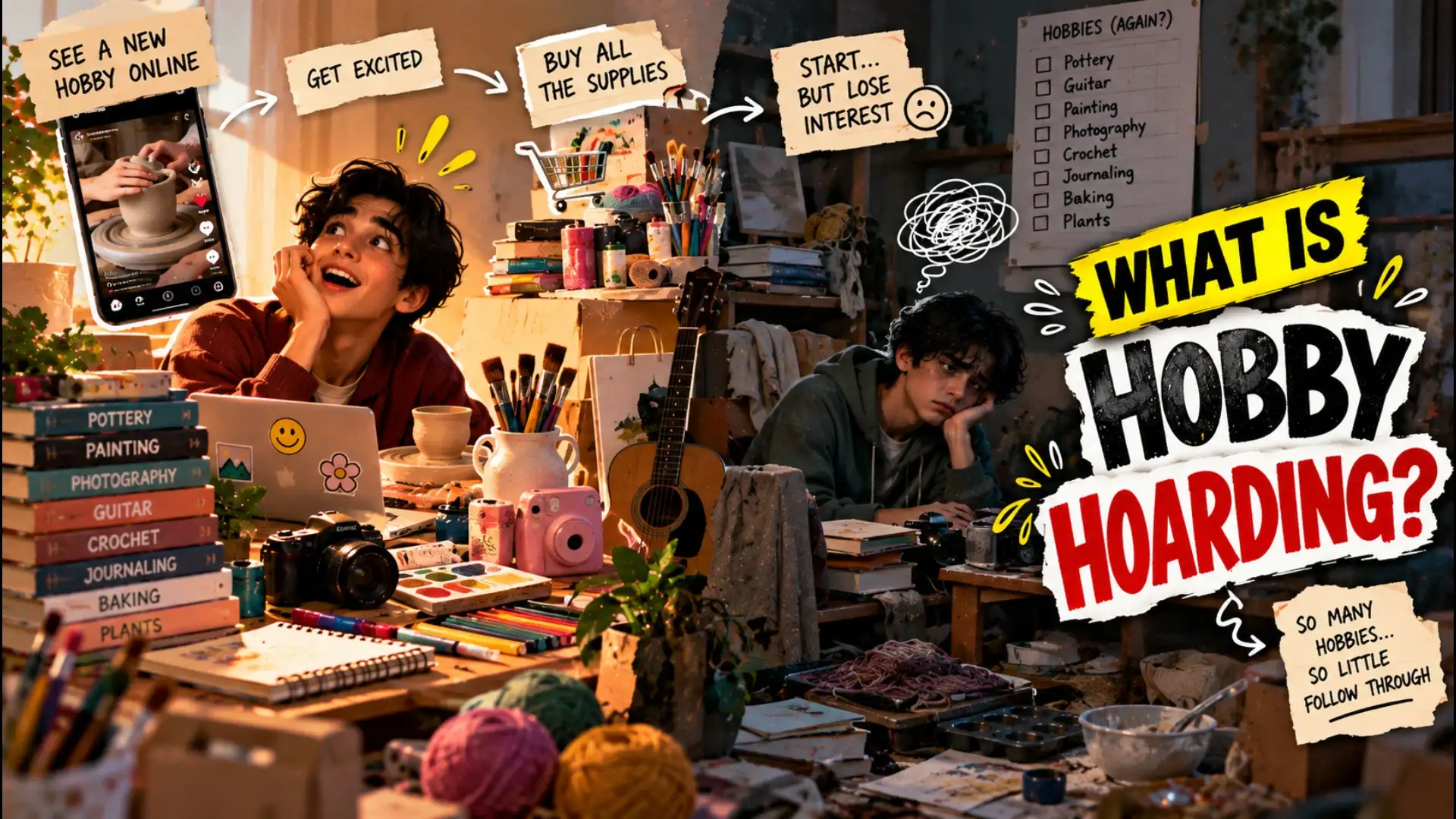
That anticipation can be motivating. Choosing equipment, watching tutorials and planning your first project all create a sense of progress, even before you have developed the actual skill. The difficult part begins when the novelty wears off and improvement requires repetition.
But buying supplies and practising a skill are two different things. Learning an instrument requires repetition. Drawing involves making plenty of imperfect sketches. Cooking something new can involve failed attempts before you get it right. If the preparation stage is more enjoyable than the practice, it becomes easy to keep buying for the next hobby instead of continuing with the current one.
Social media makes it easy to discover new interests, but it can also expose you to so many possibilities that committing to one feels unnecessarily restrictive. Why continue struggling with a beginner-level skill when another hobby looks more exciting? Of course, the people you watch may have spent years practising. Their finished work can make the learning process look much easier than it really is.
The pattern becomes frustrating when you repeatedly spend money on new activities but rarely make time to experience them properly. If that sounds familiar, try borrowing equipment, using beginner supplies you already own or setting a small goal before buying anything else.
For example, complete three beginner projects before deciding whether you need more materials. Give a hobby a few weeks of regular practice before judging whether you enjoy it. This creates space to distinguish between liking the idea of a hobby and enjoying the activity itself.
You can also have several interests without pursuing all of them at once. The goal is not to force yourself to stick with every activity you try. It is to understand what you actually enjoy, rather than constantly chasing the excitement of a fresh start.
Sometimes the most satisfying part of a hobby is not buying the supplies or imagining what you might create. It is sitting down, practising for half an hour and slowly getting better at something you genuinely like.
The Excitement Of Starting Something New
A new hobby comes with possibilities. You imagine the finished painting, the first knitted jumper, the photographs you will take or the musical instrument you will finally learn to play. At this stage, you are focused on what you might achieve rather than the hours of practice required.That anticipation can be motivating. Choosing equipment, watching tutorials and planning your first project all create a sense of progress, even before you have developed the actual skill. The difficult part begins when the novelty wears off and improvement requires repetition.
Buying Supplies Can Feel Like Progress
There is a particular satisfaction in preparing for a new interest. You research the best tools, compare products and assemble everything you think you will need. By the time the package arrives, it can feel as though you have already taken a significant step towards becoming good at the hobby.But buying supplies and practising a skill are two different things. Learning an instrument requires repetition. Drawing involves making plenty of imperfect sketches. Cooking something new can involve failed attempts before you get it right. If the preparation stage is more enjoyable than the practice, it becomes easy to keep buying for the next hobby instead of continuing with the current one.
Social Media Gives Us Endless Ideas
There is no shortage of inspiration online. You might see someone making beautiful pottery, another person creating intricate embroidery and someone else transforming ordinary photographs into impressive artwork. Each activity suddenly looks achievable and appealing.Social media makes it easy to discover new interests, but it can also expose you to so many possibilities that committing to one feels unnecessarily restrictive. Why continue struggling with a beginner-level skill when another hobby looks more exciting? Of course, the people you watch may have spent years practising. Their finished work can make the learning process look much easier than it really is.
Losing Interest Does Not Mean You Have Failed
Not every hobby needs to become a lifelong passion. You might try something, enjoy learning the basics and realise it is not for you. Exploring different interests can help you discover what you genuinely enjoy.The pattern becomes frustrating when you repeatedly spend money on new activities but rarely make time to experience them properly. If that sounds familiar, try borrowing equipment, using beginner supplies you already own or setting a small goal before buying anything else.
For example, complete three beginner projects before deciding whether you need more materials. Give a hobby a few weeks of regular practice before judging whether you enjoy it. This creates space to distinguish between liking the idea of a hobby and enjoying the activity itself.
You Do Not Have To Turn Every Hobby Into A Skill
Part of the pressure comes from expecting every interest to become something impressive. You do not need to become an expert, sell your work or produce something worth sharing online. A hobby can simply be enjoyable.You can also have several interests without pursuing all of them at once. The goal is not to force yourself to stick with every activity you try. It is to understand what you actually enjoy, rather than constantly chasing the excitement of a fresh start.
Sometimes the most satisfying part of a hobby is not buying the supplies or imagining what you might create. It is sitting down, practising for half an hour and slowly getting better at something you genuinely like.
Next Story