
What Is Looksmaxxing? Why Is Everyone Trying to “Optimise” Their Face?

Open social media and you will quickly realise that apparently, having a face is no longer enough. Now you need to analyse it. Your jawline can be sharper. Your cheekbones can be higher. Your skin can be clearer. Your eyes can look more attractive. Your side profile can apparently be "improved". Welcome to the world of looksmaxxing.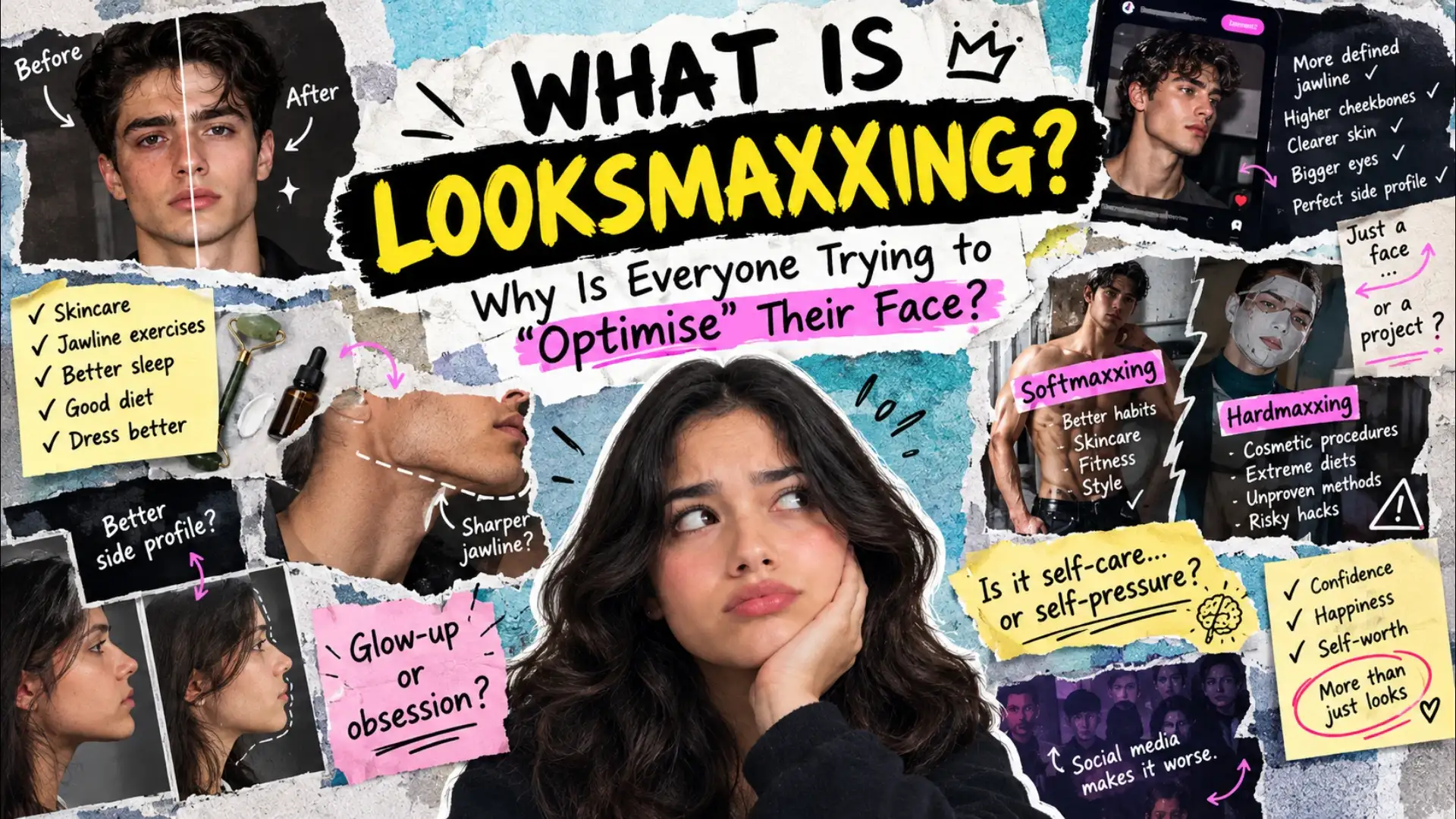
At its simplest, looksmaxxing means trying to maximise your physical attractiveness. It can include normal things like grooming, skincare, fitness, healthy habits and dressing well. But some corners of the trend take appearance optimisation much further, promoting unproven or potentially dangerous ways to change facial features and body shape.
Body-
For some people, that simply means getting a better haircut, exercising regularly or learning how to dress well. But online, looksmaxxing can become much more intense. People analyse facial symmetry, jawlines, eye shapes and other features, often treating appearance almost like a problem that needs to be solved.
Suddenly, your face is not just your face. It becomes a collection of things that could potentially be improved. A normal glow-up says, “I want to feel and look better.” Looksmaxxing can sometimes turn that into, “What exactly is wrong with me, and how do I fix it?”
Hardmaxxing, on the other hand, can involve more drastic interventions, including cosmetic procedures and other significant attempts to alter appearance. The concern is that some online communities also promote unsafe, unproven practices as shortcuts to an “ideal” face.
When you repeatedly see “perfect” faces online, it becomes easy to start examining your own. Experts have raised concerns that constant appearance-focused content can contribute to body dissatisfaction and unrealistic expectations, particularly among teenagers and young adults.
And because there will always be someone online who looks different or supposedly “better”, the finish line keeps moving.
Medical experts have warned that these practices can cause real harm and that many online appearance “hacks” are based on misinformation rather than evidence. A sharper jawline is never worth a broken jaw. And a viral transformation is never worth damaging your health.
Many online communities connect attractiveness with confidence, popularity, dating success and even overall success in life. That can make appearance feel less like one part of a person and more like the answer to every problem they have. Experts have warned that this kind of thinking can take advantage of insecurity and reinforce unhealthy beliefs about self-worth.
The problem is not wanting to improve. The problem is believing that you need to constantly optimise yourself to deserve confidence. There is a difference between taking care of your appearance and becoming obsessed with correcting every feature you have.
You can change your hairstyle, improve your skincare routine or work on your fitness. But there will always be another trend telling you there is something else to fix. Maybe the real question is not, “How much can I improve my appearance?” Maybe it is: “At what point do I stop looking for problems that were never really there?”
At its simplest, looksmaxxing means trying to maximise your physical attractiveness. It can include normal things like grooming, skincare, fitness, healthy habits and dressing well. But some corners of the trend take appearance optimisation much further, promoting unproven or potentially dangerous ways to change facial features and body shape.
Body-
So, What Is Looksmaxxing ?
The word is a combination of “looks” and "maximising". The basic idea is to improve every possible aspect of your appearance and become the most attractive version of yourself.For some people, that simply means getting a better haircut, exercising regularly or learning how to dress well. But online, looksmaxxing can become much more intense. People analyse facial symmetry, jawlines, eye shapes and other features, often treating appearance almost like a problem that needs to be solved.
From a Glow-Up to “Fixing” Everything
There is nothing strange about wanting to look good. People have always cared about their hair, clothes and appearance. What makes looksmaxxing different is the idea that almost every physical feature can be analysed, ranked and optimised.Suddenly, your face is not just your face. It becomes a collection of things that could potentially be improved. A normal glow-up says, “I want to feel and look better.” Looksmaxxing can sometimes turn that into, “What exactly is wrong with me, and how do I fix it?”
The Rise of Softmaxxing and Hardmaxxing
The internet has even created categories. Softmaxxing generally refers to less extreme appearance changes, such as better sleep, exercise, skincare, grooming and improving your style.Hardmaxxing, on the other hand, can involve more drastic interventions, including cosmetic procedures and other significant attempts to alter appearance. The concern is that some online communities also promote unsafe, unproven practices as shortcuts to an “ideal” face.
Why Has Looksmaxxing Become So Popular?
Social media is a huge part of the answer. We now see more faces than ever before, not just celebrities, but influencers, classmates and strangers whose appearances are constantly presented through carefully chosen angles, lighting and filters.When you repeatedly see “perfect” faces online, it becomes easy to start examining your own. Experts have raised concerns that constant appearance-focused content can contribute to body dissatisfaction and unrealistic expectations, particularly among teenagers and young adults.
The Problem With Treating Your Face Like a Project
Self-improvement can be healthy. The problem begins when improvement starts from the belief that you are never good enough as you are. Looksmaxxing can create an endless checklist. Improve your skin. Then your hair. Then your body. Then your jawline. Then your teeth. Then something else.And because there will always be someone online who looks different or supposedly “better”, the finish line keeps moving.
When Internet Advice Becomes Dangerous
This is where looksmaxxing becomes controversial. Some extreme content promotes things like deliberately hitting the face in an attempt to change bone structure, extreme dieting, unapproved substances or other risky methods.You may also like
- Benefits of eating Ragi: From strengthening bones to weight management—find out why you should include Ragi in your diet..
- Sleep and depression medications increase the risk of falls in the elderly, study reveals
- Midnight Awakenings: Why Suddenly Waking Up at Night Is a Warning Sign of Insomnia and Sleep Apnea You Shouldn't Ignore
- UP man moved from Banda to Noida for a better job, then asked a simple question: Is the higher salary worth the high rent and tiny homes?
- Nature's Green Medicine: 9 Powerful Leafy Greens to Include in Your Daily Diet for Lifelong Health and Vitality
Medical experts have warned that these practices can cause real harm and that many online appearance “hacks” are based on misinformation rather than evidence. A sharper jawline is never worth a broken jaw. And a viral transformation is never worth damaging your health.
Why Are Young Men Especially Drawn to It?
Beauty pressure has traditionally been discussed more openly in relation to women. But looksmaxxing has brought increasing attention to appearance anxiety among boys and young men too.Many online communities connect attractiveness with confidence, popularity, dating success and even overall success in life. That can make appearance feel less like one part of a person and more like the answer to every problem they have. Experts have warned that this kind of thinking can take advantage of insecurity and reinforce unhealthy beliefs about self-worth.
So, Is Looksmaxxing Always Bad?
Not necessarily. Taking care of your skin, exercising, dressing in a way that makes you feel confident and maintaining good hygiene are simply forms of self-care.The problem is not wanting to improve. The problem is believing that you need to constantly optimise yourself to deserve confidence. There is a difference between taking care of your appearance and becoming obsessed with correcting every feature you have.
When Does Self-Improvement Stop Feeling Like Self-Care?
Looksmaxxing reflects something much bigger happening online. We are living in a time where everything can be optimised: our productivity, sleep, careers and now even our faces. But a face is not a project that will ever be completely finished.You can change your hairstyle, improve your skincare routine or work on your fitness. But there will always be another trend telling you there is something else to fix. Maybe the real question is not, “How much can I improve my appearance?” Maybe it is: “At what point do I stop looking for problems that were never really there?”






Loving Newspoint? Download the app now
