
What Is Phantom Vibration Syndrome? Why You Think Your Phone Is Buzzing When It Isn't

You are walking down the street when you feel a familiar buzz in your pocket. You reach for your phone, unlock it and check your notifications. Nothing. No message, no call and no alert. For a moment, you wonder whether you imagined the whole thing. Then it happens again a few days later. This experience is commonly known as phantom vibration syndrome . It describes the sensation that your phone is vibrating when no actual vibration has occurred.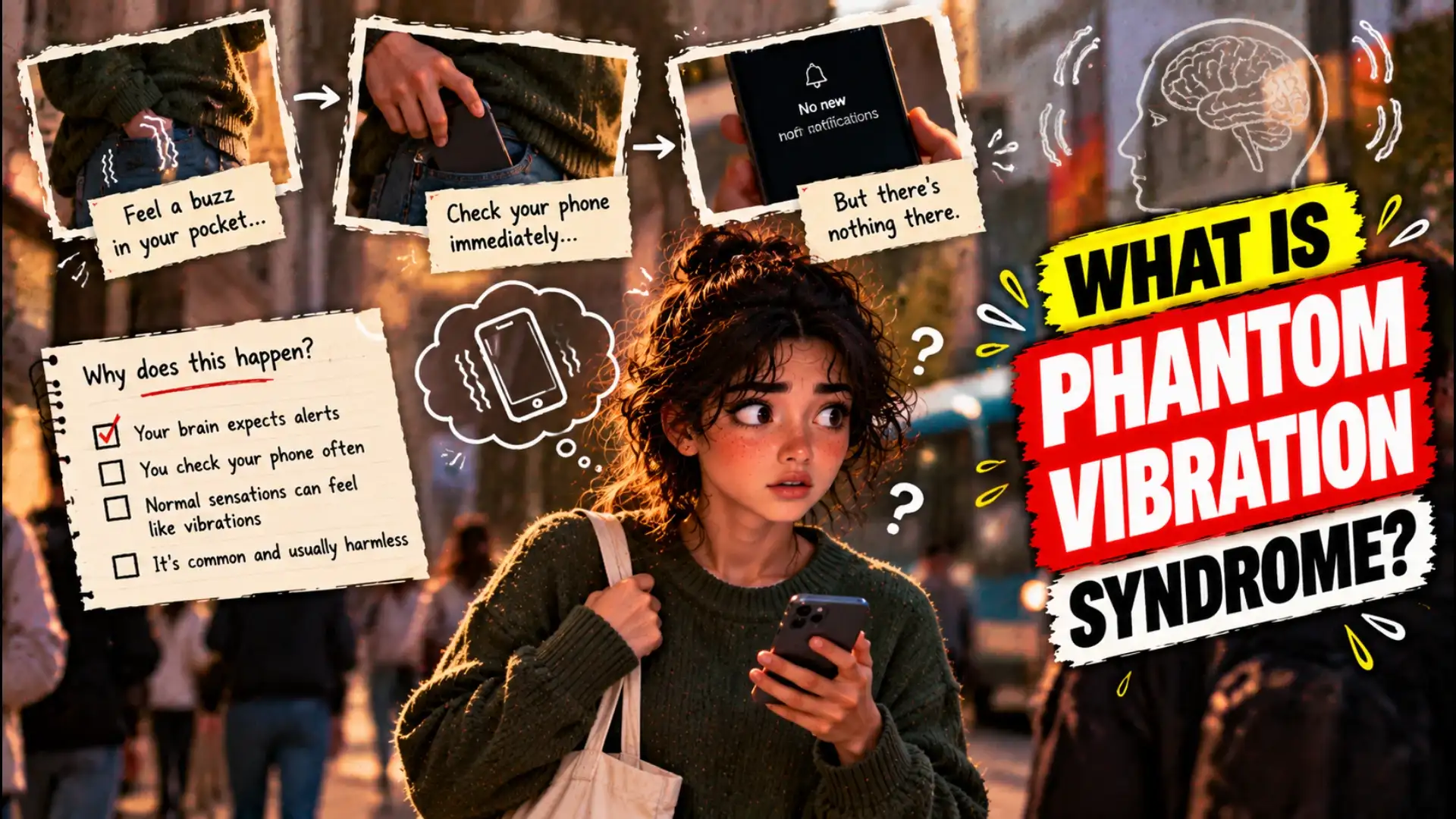
Our attention can become tuned to those signals. When you regularly expect a notification, an ambiguous sensation, such as clothing brushing against your skin, may occasionally be interpreted as a phone vibration.
This is one proposed explanation for phantom vibrations. The precise mechanisms are not fully established, and the experience can vary between individuals.
For example, a slight movement of fabric or a small muscle twitch may feel similar to a vibration. Because checking your phone has become such a routine response, you may reach for it before consciously questioning whether it actually buzzed.
That does not mean phantom vibrations automatically indicate phone addiction or a mental health problem. They are a reported experience among phone users, and occasional episodes are generally not considered a cause for alarm.
The aim is not to stop using your phone entirely. It is to reduce the constant expectation that something might be happening on it. If the sensations persist when you are not carrying a phone, become distressing or occur alongside other unusual physical symptoms, it is worth discussing them with a healthcare professional.
Sometimes, we become so accustomed to expecting our phones to demand our attention that we start anticipating the signal itself. And the next time you reach for your phone only to find absolutely nothing there, you will know that the experience has a name.
Your Brain Learns to Look for Phone Alerts
Smartphones have become part of our everyday routines. We check them for messages, calls, reminders and updates throughout the day. Over time, we become familiar with the sensations associated with notifications, including the subtle buzz of a phone in a pocket or bag.Our attention can become tuned to those signals. When you regularly expect a notification, an ambiguous sensation, such as clothing brushing against your skin, may occasionally be interpreted as a phone vibration.
This is one proposed explanation for phantom vibrations. The precise mechanisms are not fully established, and the experience can vary between individuals.
Why It Can Feel Completely Real
The sensation is not necessarily deliberate imagination. Your brain constantly interprets information from your surroundings and your body. Sometimes, a vague physical sensation can be mistaken for something familiar, especially when you are accustomed to expecting it.For example, a slight movement of fabric or a small muscle twitch may feel similar to a vibration. Because checking your phone has become such a routine response, you may reach for it before consciously questioning whether it actually buzzed.
Frequent Phone Checking May Play A Role
People who frequently anticipate calls or messages may be particularly familiar with the sensation of receiving alerts. If you regularly check your phone for work updates, personal messages or important notifications, you may find yourself paying closer attention to any possible vibration.That does not mean phantom vibrations automatically indicate phone addiction or a mental health problem. They are a reported experience among phone users, and occasional episodes are generally not considered a cause for alarm.
What Can You Do About It?
If phantom vibrations happen frequently, try reducing unnecessary alerts and checking your phone at more deliberate intervals. You can also experiment with keeping your device in a bag rather than a pocket or using a less intrusive notification setting when you do not need immediate alerts.The aim is not to stop using your phone entirely. It is to reduce the constant expectation that something might be happening on it. If the sensations persist when you are not carrying a phone, become distressing or occur alongside other unusual physical symptoms, it is worth discussing them with a healthcare professional.
A Small Reminder Of How Connected We Have Become
Phantom vibration syndrome is a curious example of how technology can influence what we notice in our everyday lives. A device does not even need to produce a sound for us to think we have received an alert.Sometimes, we become so accustomed to expecting our phones to demand our attention that we start anticipating the signal itself. And the next time you reach for your phone only to find absolutely nothing there, you will know that the experience has a name.
Next Story