
What Is Sleepmaxxing? Why People Are Turning Sleep Into A Lifestyle Obsession

Sleep used to have a fairly simple job: you went to bed, closed your eyes and hoped to wake up feeling rested. Now, for some people, it comes with a tracker, a carefully planned bedtime routine, a specific room temperature and a growing list of things they believe they must do before falling asleep. This is the idea behind sleepmaxxing , a lifestyle trend centred on optimising sleep as much as possible. It brings together sleep-related habits, products and technology, often with the goal of improving energy, concentration, appearance or general wellbeing. Some of these practices are sensible. Others can turn something natural into another thing to measure, manage and worry about.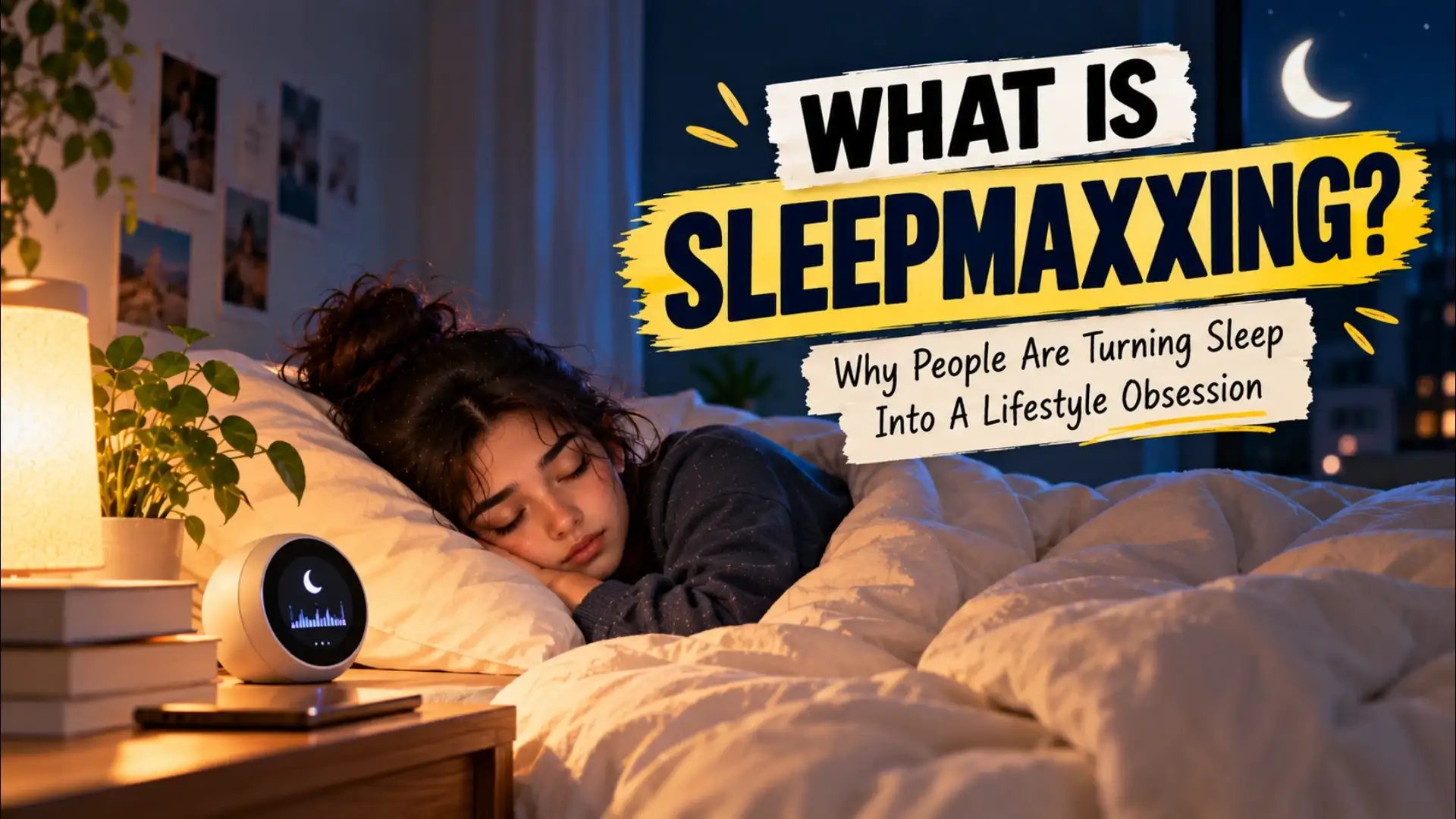
Others take a more elaborate approach, experimenting with temperature-controlled bedding, specialised pillows, sleep supplements or lengthy nighttime rituals. The underlying idea is that better sleep can support everyday functioning. However, not every popular product or technique has strong evidence behind it, and a routine that works for one person may not suit another.
Social media adds another layer. A carefully arranged bedroom, an elaborate nighttime routine or a screen full of sleep data can be turned into content. This makes sleepmaxxing both a personal habit and a lifestyle aesthetic. Wearable technology also allows people to see estimates of how long they slept and how their night was divided into different stages. For some, this information encourages useful changes. For others, it creates pressure to achieve an ideal score every morning.
There is a term used in sleep discussions, orthosomnia , to describe an unhealthy preoccupation with achieving perfect sleep, often linked to sleep-tracking data. It is not a reason to dismiss genuine sleep problems, but it highlights how trying too hard to sleep well can sometimes increase anxiety around bedtime. The same caution applies to supplements and viral sleep hacks. More products do not necessarily mean better rest, and supplements can have side effects or interact with medicines.
Adults generally need at least seven hours of sleep a night, although individual needs vary. Persistent difficulty sleeping, loud snoring, gasping during sleep or significant daytime sleepiness deserves medical attention rather than another internet hack. Sleepmaxxing can be useful when it encourages habits that genuinely support rest. But sleep is not a performance that needs to be perfected every night. Sometimes, the best sleep routine is simply one that helps you rest without making you think about sleep all the time.
What Does Sleepmaxxing Actually Mean?
Sleepmaxxing is not a formal medical term. It is an informal label for efforts to improve sleep through changes to daily routines, the sleep environment and personal habits. Someone following the trend might keep a consistent bedtime, reduce caffeine late in the day, make their bedroom darker or use a wearable device to monitor sleep patterns.Others take a more elaborate approach, experimenting with temperature-controlled bedding, specialised pillows, sleep supplements or lengthy nighttime rituals. The underlying idea is that better sleep can support everyday functioning. However, not every popular product or technique has strong evidence behind it, and a routine that works for one person may not suit another.
You may also like
- An old pressure cooker + mixer-grinder became a tea-processing machine: Meet 51-year-old Assam farmer Ratan Ray, whose low-cost invention crushes, tears and curls tea leaves
- Rohit Shetty backs Krithi Shetty's Bollywood debut with romantic film Hum Tere Pyaar Mein
- Awakening: Wake Up, You Are Already Here
- Can mitochondrial DNA affect fertility? What women should know about maternal genetic inheritance, egg quality and IVF outcomes
- Barbie pink, bows and a world beyond boxes: péro opens Lakmē Fashion Week with a playful twist
Why Has Sleep Become Something To Optimise?
Part of the appeal is that sleep affects so much of daily life. A poor night can leave you irritable, distracted and desperate for another cup of coffee. A good night's rest can make ordinary tasks feel easier. In a culture focused on productivity and self-improvement, sleep can start to look like another area where a better system might produce better results.Social media adds another layer. A carefully arranged bedroom, an elaborate nighttime routine or a screen full of sleep data can be turned into content. This makes sleepmaxxing both a personal habit and a lifestyle aesthetic. Wearable technology also allows people to see estimates of how long they slept and how their night was divided into different stages. For some, this information encourages useful changes. For others, it creates pressure to achieve an ideal score every morning.
When Better Sleep Becomes Another Source Of Stress
Tracking sleep can be useful, but it has limitations. Consumer devices estimate sleep stages and other measurements rather than directly measuring every aspect of sleep. Their results should not be treated as a definitive assessment of sleep quality. Constantly checking these numbers may also make some people anxious. They might wake up feeling reasonably rested but decide they must be exhausted because an app gave them a poor score.There is a term used in sleep discussions, orthosomnia , to describe an unhealthy preoccupation with achieving perfect sleep, often linked to sleep-tracking data. It is not a reason to dismiss genuine sleep problems, but it highlights how trying too hard to sleep well can sometimes increase anxiety around bedtime. The same caution applies to supplements and viral sleep hacks. More products do not necessarily mean better rest, and supplements can have side effects or interact with medicines.
What Is Actually Worth Trying?
The most useful sleep habits are often the least complicated. Keeping a reasonably consistent sleep schedule, allowing enough time for rest and making your bedroom comfortable are sensible starting points. It can also help to limit caffeine later in the day, get regular daylight exposure and establish a relaxing wind-down routine. If your phone keeps you awake, putting it aside before bedtime may be more helpful than buying another sleep gadget.Adults generally need at least seven hours of sleep a night, although individual needs vary. Persistent difficulty sleeping, loud snoring, gasping during sleep or significant daytime sleepiness deserves medical attention rather than another internet hack. Sleepmaxxing can be useful when it encourages habits that genuinely support rest. But sleep is not a performance that needs to be perfected every night. Sometimes, the best sleep routine is simply one that helps you rest without making you think about sleep all the time.






Loving Newspoint? Download the app now
