
What Is Social Jet Lag And How Does It Affect Your Sleep Schedule?

Have you ever spent the entire week dreaming about sleeping late on Sunday, only to wake up on Monday feeling even more exhausted? You have technically had more time in bed, so why does your body still feel like it needs another weekend? One possible explanation is social jet lag , a term used to describe the mismatch between your body's natural sleep timing and the schedule you follow because of work, college or other commitments. It is not the same as travelling across time zones, but the effect can feel surprisingly similar.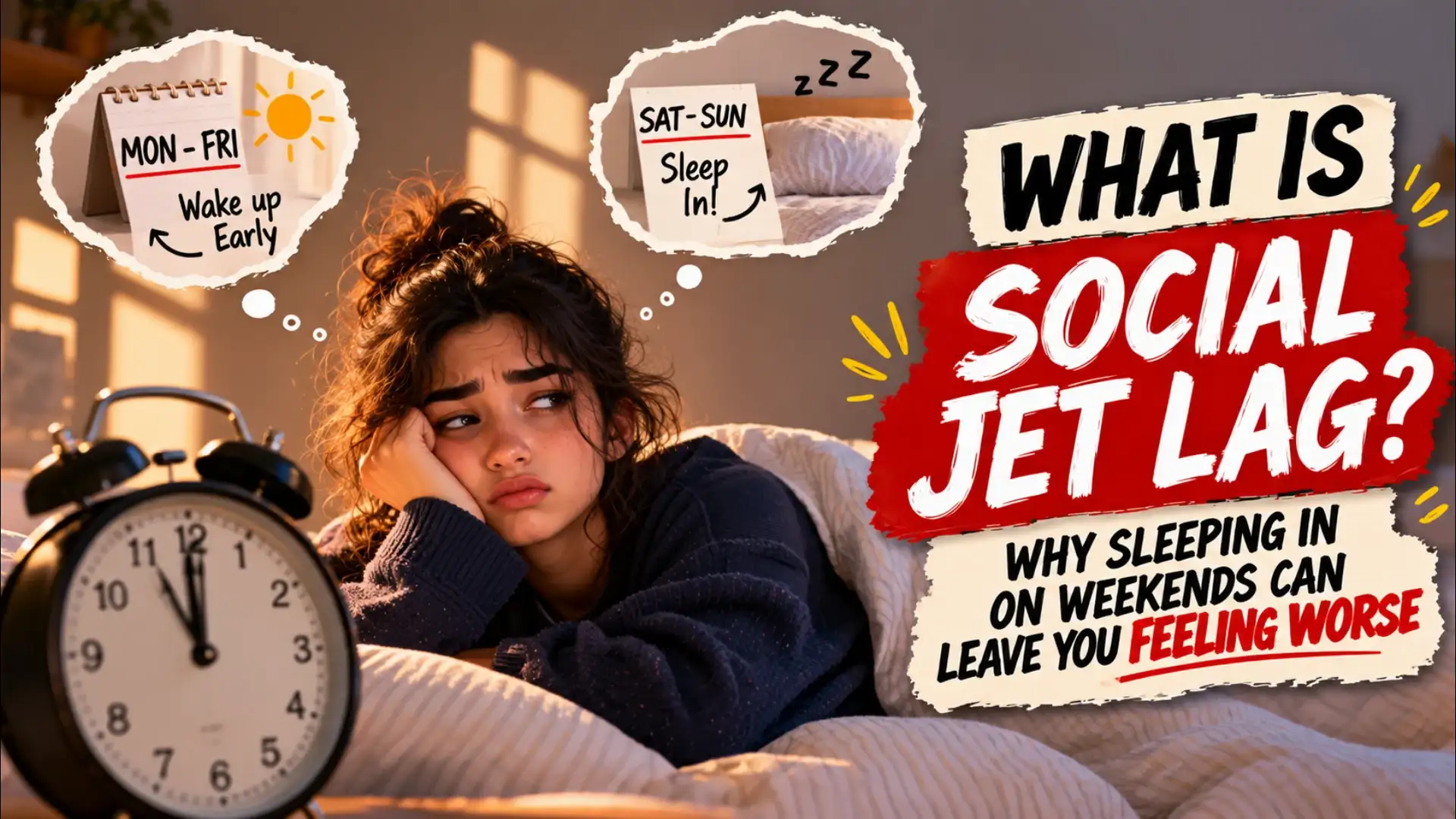
Light exposure, daily routines and sleep habits all influence this internal clock. If you usually wake up early for work but stay up late and sleep until noon on weekends, your sleep schedule can shift away from its weekday pattern. The bigger the difference between these schedules, the harder it may feel to return to your usual routine.
Then Monday arrives, and you need to wake up early again. Your alarm follows your work schedule, but your body may still be operating closer to the weekend timetable. You might feel sleepy, struggle to concentrate or find it difficult to get moving.
This mismatch is one reason some people experience Monday morning grogginess even after spending extra time in bed. However, sleeping in is not automatically harmful. If you are genuinely short on sleep, getting extra rest can help. The problem is that repeatedly shifting your schedule may make it harder to maintain a consistent rhythm.
Extra sleep may help reduce some of that tiredness, but it does not always make up for a consistently inadequate sleep schedule. The amount of sleep you need and your natural preference for earlier or later bedtimes also matter.
Social jet lag is not a medical diagnosis in itself, and feeling tired on Monday does not necessarily mean you have it. Stress, poor sleep quality and other factors can cause similar symptoms.
Getting natural daylight after waking, keeping evenings less stimulating and limiting late-night screen use can also support a more regular sleep schedule. Most importantly, aim to get enough sleep throughout the week rather than relying entirely on Saturday and Sunday to recover.
The goal is not to make every day follow a strict timetable. It is to avoid making your body adjust to a completely different schedule every few days.
Your Body Has Its Own Internal Clock
Your body follows a roughly 24-hour cycle known as the circadian rhythm . It helps regulate when you feel alert, when you become sleepy and several other processes, including changes in body temperature and hormone release.Light exposure, daily routines and sleep habits all influence this internal clock. If you usually wake up early for work but stay up late and sleep until noon on weekends, your sleep schedule can shift away from its weekday pattern. The bigger the difference between these schedules, the harder it may feel to return to your usual routine.
Why Sleeping In Can Make Monday Harder
Imagine waking up at 7 am from Monday to Friday but sleeping until 11 am on Sunday. Your body may begin adjusting to the later schedule, particularly if you also go to bed much later on Saturday night.Then Monday arrives, and you need to wake up early again. Your alarm follows your work schedule, but your body may still be operating closer to the weekend timetable. You might feel sleepy, struggle to concentrate or find it difficult to get moving.
You may also like
- Can mitochondrial DNA affect fertility? What women should know about maternal genetic inheritance, egg quality and IVF outcomes
- Barbie pink, bows and a world beyond boxes: péro opens Lakmē Fashion Week with a playful twist
- Why Are Babies Given a Vitamin K Injection at Birth?
- India's Hidden Volcanic Wonder: Discover Barren Island, Home to South Asia's Only Active Volcano
- Prostate Cancer Awareness Gap: Why Thousands of Men May Be Overlooking Their Risk
This mismatch is one reason some people experience Monday morning grogginess even after spending extra time in bed. However, sleeping in is not automatically harmful. If you are genuinely short on sleep, getting extra rest can help. The problem is that repeatedly shifting your schedule may make it harder to maintain a consistent rhythm.
Is It The Same As Sleep Deprivation?
Not exactly. Sleep deprivation means you are not getting enough sleep, while social jet lag refers to a mismatch in sleep timing. The two can happen together. Someone who regularly stays up late during the week may accumulate a sleep deficit and then try to recover by sleeping longer at the weekend.Extra sleep may help reduce some of that tiredness, but it does not always make up for a consistently inadequate sleep schedule. The amount of sleep you need and your natural preference for earlier or later bedtimes also matter.
Social jet lag is not a medical diagnosis in itself, and feeling tired on Monday does not necessarily mean you have it. Stress, poor sleep quality and other factors can cause similar symptoms.
How To Make Your Weekend Sleep Work Better
You do not have to give up lazy mornings to support your body clock . A few adjustments may help make the transition back to weekdays less difficult. Try to keep your wake-up time reasonably consistent instead of shifting it by several hours every weekend. If you need more sleep, going to bed earlier may help you get it without moving your morning routine too far.Getting natural daylight after waking, keeping evenings less stimulating and limiting late-night screen use can also support a more regular sleep schedule. Most importantly, aim to get enough sleep throughout the week rather than relying entirely on Saturday and Sunday to recover.
The goal is not to make every day follow a strict timetable. It is to avoid making your body adjust to a completely different schedule every few days.






Loving Newspoint? Download the app now
