
What Is the Mandela Effect? Why Do Thousands of People Remember Things Wrong?

Think about the Monopoly Man for a second. Top hat? Yes. Suit? Yes. Monocle? Many people would confidently say yes. But he doesn't actually wear one. Or think about Darth Vader's famous line from Star Wars. Most people remember it as, “Luke, I am your father.” But the actual line is, “No, I am your father.” If you were convinced you remembered these differently, don't worry. You are not necessarily forgetful. You may have experienced the Mandela Effect .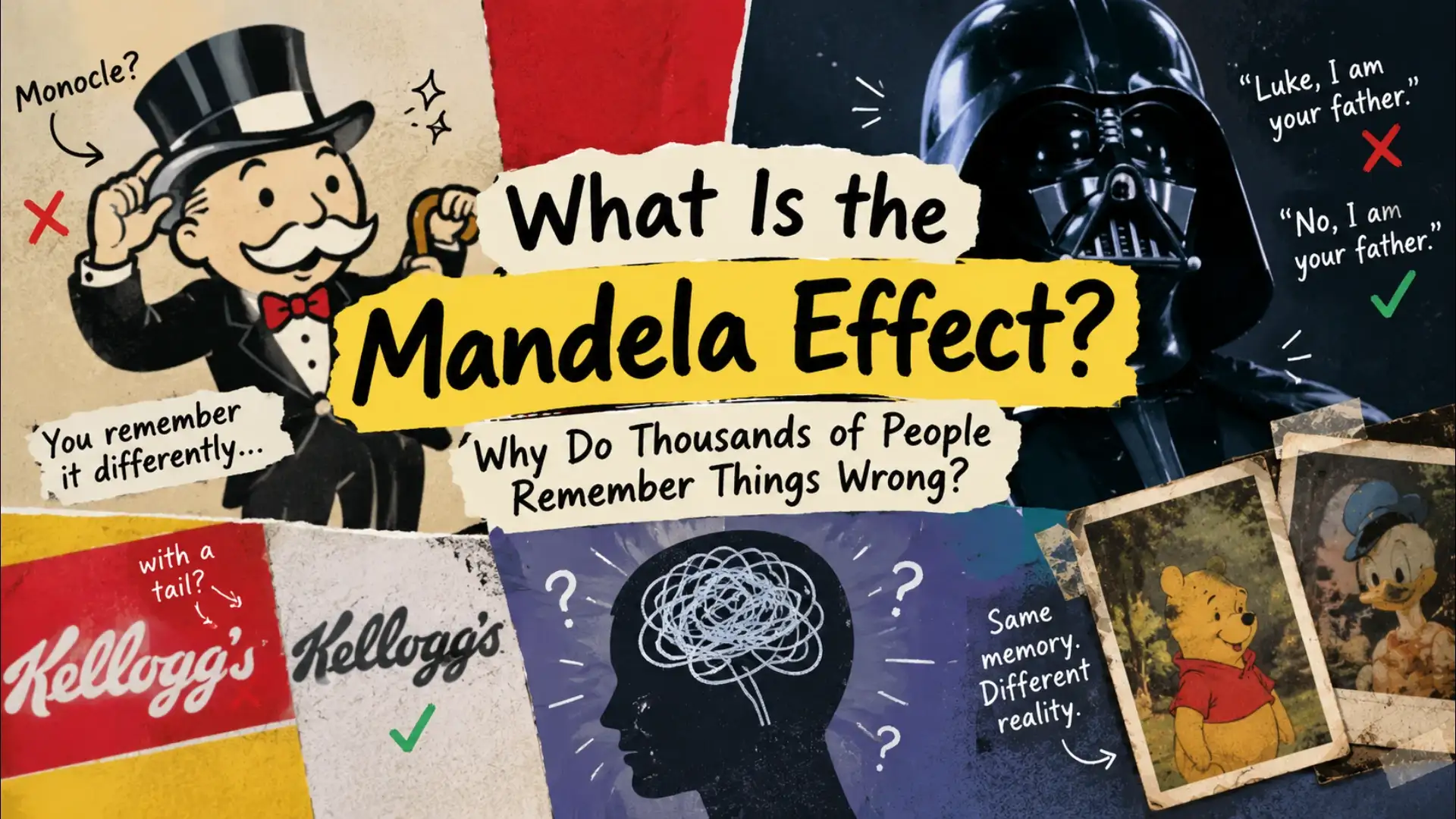
The term was coined by Fiona Broome in 2009 after she discovered that many people shared her incorrect memory of Nelson Mandela dying in prison in the 1980s. Mandela was actually released from prison in 1990, later became South Africa's president and died in 2013.
That means memories can change. Missing details can be filled in with things that seem logical. New information can also influence what we believe we originally saw or heard. Psychologists have long documented how misleading information can distort later memory.
A monocle. So even though the Monopoly Man does not wear one, the detail can feel completely believable. Researchers studying visual versions of the Mandela Effect have found that people can repeatedly make similar mistakes when recalling familiar images.
It is a fun theory, but there is no scientific evidence that the Mandela Effect proves people have moved between universes. Psychological explanations involving false memory, suggestion, association and misinformation have much stronger scientific support.
But confidence does not always equal accuracy. A false memory can feel incredibly real, which is one reason researchers study memory so seriously, especially when it comes to eyewitness accounts and misinformation.
Sometimes your brain remembers what actually happened. And sometimes it remembers what would have made sense to happen.
So the next time you discover that your favourite movie quote was never actually said the way you remember it, don't panic. You probably haven't entered a parallel universe. Your brain may have simply filled in the blanks, and apparently, thousands of other brains did exactly the same thing.
So, What Exactly Is the Mandela Effect?
The Mandela Effect is a term used when a large group of people share the same false memory . They remember an event, name, image or detail in a particular way, even though that is not how it actually happened.The term was coined by Fiona Broome in 2009 after she discovered that many people shared her incorrect memory of Nelson Mandela dying in prison in the 1980s. Mandela was actually released from prison in 1990, later became South Africa's president and died in 2013.
But How Can So Many People Remember the Same Thing Wrong?
This is where it gets interesting. Memory is not like a video recording stored perfectly inside your brain. When you remember something, your brain reconstructs it using pieces of information, associations and details you have collected over time.That means memories can change. Missing details can be filled in with things that seem logical. New information can also influence what we believe we originally saw or heard. Psychologists have long documented how misleading information can distort later memory.
Your Brain Loves Filling in the Gaps
Imagine seeing the Monopoly Man in your head. He wears a suit and a top hat and carries a cane. Your brain already connects those things with the classic image of a wealthy old businessman. And what is another thing we often associate with that stereotype?A monocle. So even though the Monopoly Man does not wear one, the detail can feel completely believable. Researchers studying visual versions of the Mandela Effect have found that people can repeatedly make similar mistakes when recalling familiar images.
The Internet Can Make It Even Stronger
Now imagine you vaguely remember something one way. Then you go online and find thousands of people saying, “Wait, I remember it exactly like that too!” Suddenly, your uncertain memory starts feeling more convincing. Social media can spread incorrect details extremely quickly. When people repeatedly see the same wrong version of something, it can reinforce the feeling that their memory must be correct. This doesn't necessarily mean people are deliberately lying; false memories can feel just as real and vivid as accurate ones.Is the Mandela Effect Proof of Parallel Universes?
This is where the Mandela Effect becomes even more entertaining. Some people believe shared false memories could be evidence of alternate timelines, parallel universes or what internet culture likes to call a “glitch in the Matrix".It is a fun theory, but there is no scientific evidence that the Mandela Effect proves people have moved between universes. Psychological explanations involving false memory, suggestion, association and misinformation have much stronger scientific support.
The Creepiest Part Is How Certain You Can Feel
Perhaps the strangest thing about the Mandela Effect is not simply remembering something incorrectly. It is being completely convinced that you are right. You might remember where you were when you heard something. You might remember seeing a particular logo dozens of times. The memory can feel detailed, familiar and impossible to question.But confidence does not always equal accuracy. A false memory can feel incredibly real, which is one reason researchers study memory so seriously, especially when it comes to eyewitness accounts and misinformation.
So, Should We Trust Our Memories?
Probably, but not blindly. Most of our everyday memories help us function perfectly well. The Mandela Effect does not mean your entire life is a collection of imaginary events. It simply reminds us that memory is more flexible than we like to believe.Sometimes your brain remembers what actually happened. And sometimes it remembers what would have made sense to happen.
Your Brain Might Be More Creative Than You Think
The Mandela Effect is fascinating because it makes us question something we normally trust without thinking: our own memory. Thousands of people can confidently remember the same incorrect detail, not because reality changed, but because human memory is imperfect, reconstructive and influenced by the information around us.So the next time you discover that your favourite movie quote was never actually said the way you remember it, don't panic. You probably haven't entered a parallel universe. Your brain may have simply filled in the blanks, and apparently, thousands of other brains did exactly the same thing.
Next Story