
What Makes Chanderi Sarees Special? Explore Their Weave, Motifs and Heritage

Chanderi, a historic town in Madhya Pradesh, is closely associated with one of India's recognised handloom traditions. Its textiles are known for their light feel, delicate appearance and decorative motifs.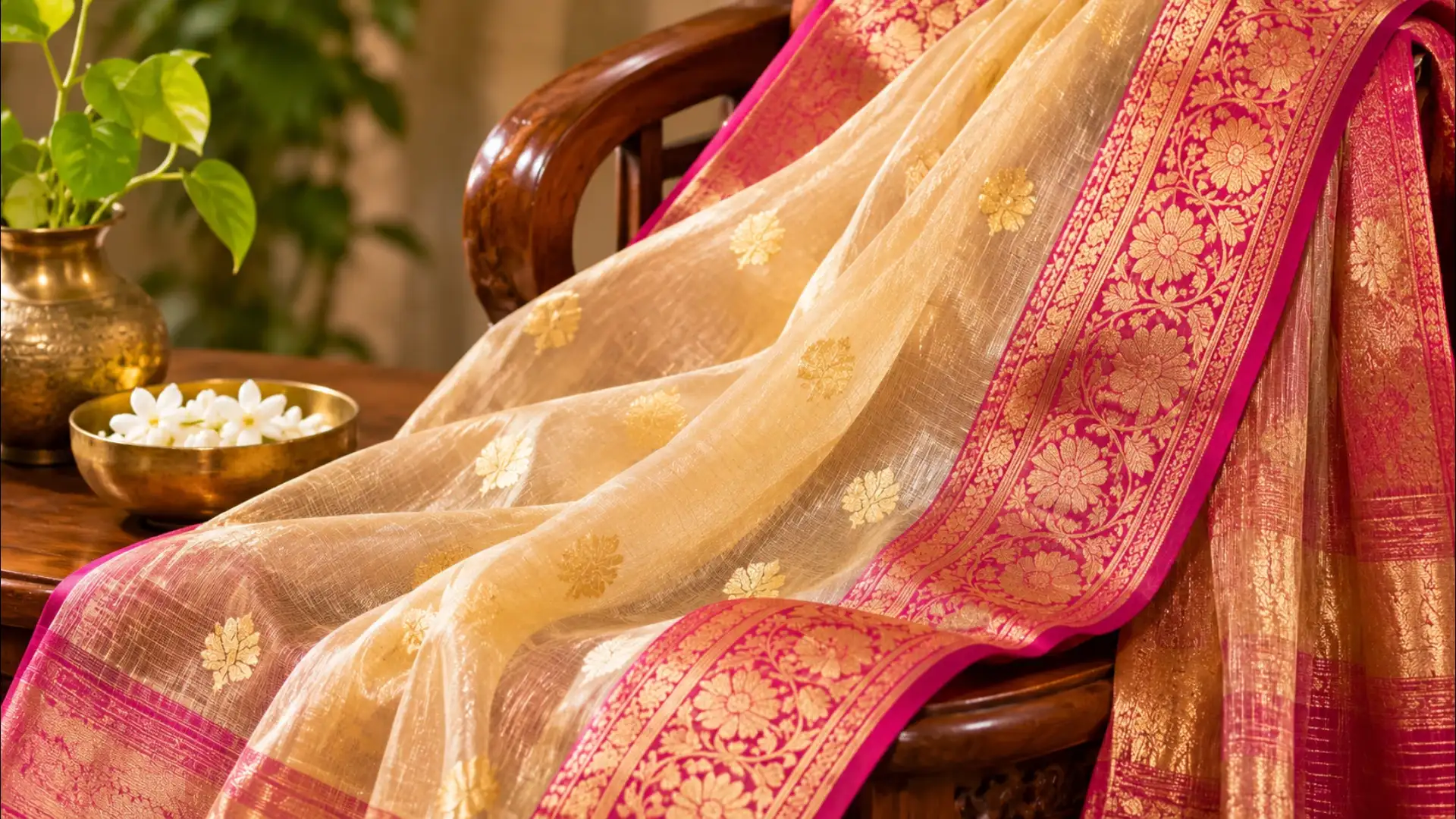
Chanderi sarees are often chosen for festive occasions, family functions and formal gatherings. Their appeal comes from the combination of fabric texture, weaving techniques and carefully placed decorative details.
The name is also protected under India's Geographical Indications system. The official registry records Chanderi Sarees as a registered product associated with Madhya Pradesh.
The textile is often described as having a slightly transparent appearance. Its texture allows the fabric to fall gracefully, which is one reason it is used for sarees, dupattas and dress materials.
The precise composition can vary between products, so buyers should check the fabric description rather than assuming every Chanderi textile has the same fibre content.
The process requires coordination and attention to detail. Even a relatively simple design needs careful preparation because the pattern and spacing must remain consistent throughout the fabric.
The finished textile reflects the combined work involved in selecting yarn, preparing the loom and completing the weave.
Some sarees feature delicate motifs spread across the body, while others have more elaborate borders and pallus.
The placement of zari details can also change the overall appearance. A subtle border may create an understated look, while a more decorative pallu can make the saree suitable for a formal occasion.
The choice depends on how the saree will be worn. A lighter design may be suitable for daytime gatherings, while a more decorative piece can work for festive occasions.
When shopping, look closely at the relationship between the body, border and pallu. A well-balanced design often makes the textile appear elegant without requiring excessive decoration.
It is also useful to ask whether the textile is handwoven and where it was produced. The GI registration protects the regional product identity, but buyers should still seek details about the particular item and its maker.
Examine the weave, the alignment of motifs and the finishing around the edges. Ask for a bill and retain the product description for future reference.
Choosing genuine handloom products and buying from reliable artisan or handloom sources can help maintain interest in traditional textile work.
Chanderi sarees are often chosen for festive occasions, family functions and formal gatherings. Their appeal comes from the combination of fabric texture, weaving techniques and carefully placed decorative details.
The name is also protected under India's Geographical Indications system. The official registry records Chanderi Sarees as a registered product associated with Madhya Pradesh.
What makes Chanderi fabric distinctive?
Traditional Chanderi textiles are commonly associated with a blend of fine cotton and silk yarns. This combination contributes to the fabric's characteristic lightness and gentle sheen.The textile is often described as having a slightly transparent appearance. Its texture allows the fabric to fall gracefully, which is one reason it is used for sarees, dupattas and dress materials.
The precise composition can vary between products, so buyers should check the fabric description rather than assuming every Chanderi textile has the same fibre content.
The role of the handloom
The handloom is central to the traditional Chanderi weaving process. The weaver works with warp and weft threads to create the fabric, while decorative elements are incorporated according to the chosen design.The process requires coordination and attention to detail. Even a relatively simple design needs careful preparation because the pattern and spacing must remain consistent throughout the fabric.
The finished textile reflects the combined work involved in selecting yarn, preparing the loom and completing the weave.
Motifs that give Chanderi its character
Chanderi textiles are known for small decorative motifs, often called butis. These can include floral forms, traditional geometric patterns and nature-inspired designs.Some sarees feature delicate motifs spread across the body, while others have more elaborate borders and pallus.
The placement of zari details can also change the overall appearance. A subtle border may create an understated look, while a more decorative pallu can make the saree suitable for a formal occasion.
How to understand the different designs
Chanderi sarees are available in a variety of styles. Some focus on a simple body with a contrasting border, while others feature repeated motifs or more detailed woven patterns.The choice depends on how the saree will be worn. A lighter design may be suitable for daytime gatherings, while a more decorative piece can work for festive occasions.
When shopping, look closely at the relationship between the body, border and pallu. A well-balanced design often makes the textile appear elegant without requiring excessive decoration.
What should buyers check?
The first step is to ask for clear information about the fabric composition. Chanderi products can vary, so buyers should confirm whether the item is made from cotton, silk or a blend.It is also useful to ask whether the textile is handwoven and where it was produced. The GI registration protects the regional product identity, but buyers should still seek details about the particular item and its maker.
Examine the weave, the alignment of motifs and the finishing around the edges. Ask for a bill and retain the product description for future reference.
Why the tradition matters
Chanderi weaving represents more than a particular style of saree. It connects the town's identity with the skills of its weaving community.Choosing genuine handloom products and buying from reliable artisan or handloom sources can help maintain interest in traditional textile work.
Next Story