
What to Do With That Blank Wall You've Been Ignoring All Summer

Every home has one. The wall that's been bare since you moved in. The one you walk past daily and think "I should do something with that" and then you don't. Let's fix it this weekend. Here are three approaches, depending on your style and budget.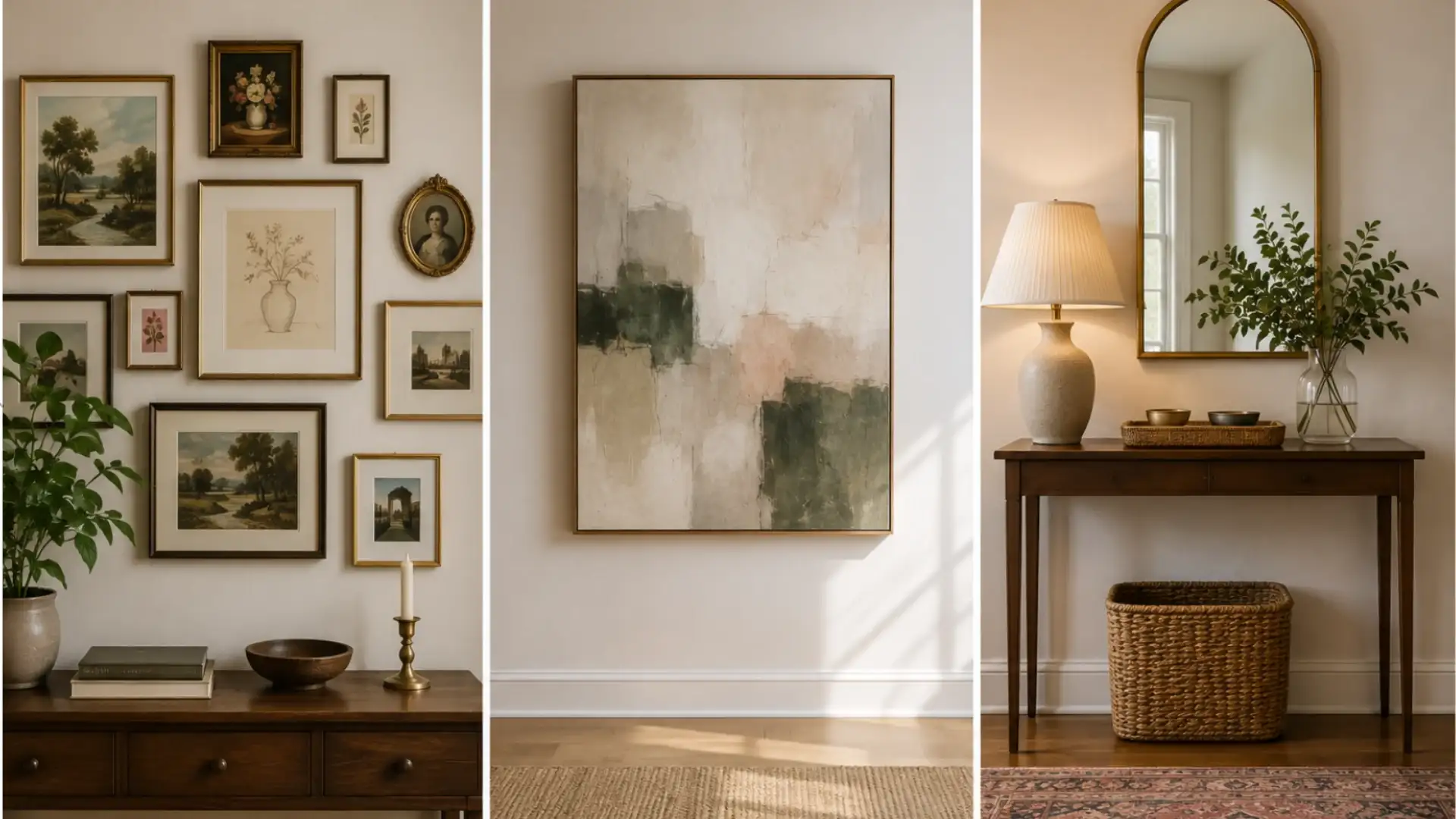
The Gallery Wall (for the maximalist). Gather 5–9 frames in varying sizes. Mix art, photos, and a small mirror or textile piece. Lay them out on the floor first to find an arrangement that works start with the largest piece in the center and build outward. Use paper templates taped to the wall to test spacing before you hammer any nails. Keep the frames within a consistent color family (all black, all wood, all gold) to keep the collection feeling intentional rather than chaotic.
The Oversized Statement (for the minimalist). One large piece of art at least 36 inches wide makes a stronger impression than a cluster of small pieces. It anchors the room and requires zero curation. If original art is out of budget, try a large canvas print from an online retailer, a woven textile wall hanging, or a vintage map in a substantial frame. The key is scale: too small reads as an accident.
The Functional Wall (for the pragmatist). Turn the blank wall into something useful. A pegboard system for plants and small shelves. A floor-to-ceiling bookshelf (lean a ladder against it for drama). A narrow console table with a lamp, a tray for keys, and a large mirror above it. Functional walls earn their keep while also looking designed.
One rule applies to all three approaches: hang everything at eye level. For most rooms, that means the center of your arrangement or piece should sit about 57–60 inches from the floor. That's gallery standard, and it works because it aligns with the natural sightline of an average-height person.
Your blank wall has potential. It just needs a decision.
The Gallery Wall (for the maximalist). Gather 5–9 frames in varying sizes. Mix art, photos, and a small mirror or textile piece. Lay them out on the floor first to find an arrangement that works start with the largest piece in the center and build outward. Use paper templates taped to the wall to test spacing before you hammer any nails. Keep the frames within a consistent color family (all black, all wood, all gold) to keep the collection feeling intentional rather than chaotic.
The Oversized Statement (for the minimalist). One large piece of art at least 36 inches wide makes a stronger impression than a cluster of small pieces. It anchors the room and requires zero curation. If original art is out of budget, try a large canvas print from an online retailer, a woven textile wall hanging, or a vintage map in a substantial frame. The key is scale: too small reads as an accident.
You may also like
- Raksha Bandhan 2026 Gift Ideas: Give Your Sister Something Special and Useful She'll Remember for Years
- Chanchalguda jail experience opens today in Hyderabad: All details
- Raksha Bandhan 2026: Know the History of Rakhi and Why This Festival Is So Special
- In the early 1900s, Theodore Roosevelt's camping trip helped create one of America's largest national parks
- In 1975, he met a Swedish woman in Delhi and fell in love; when she returned home, this Indian man bought a Rs 60 bicycle and cycled 6,000 miles across continents to reach her
The Functional Wall (for the pragmatist). Turn the blank wall into something useful. A pegboard system for plants and small shelves. A floor-to-ceiling bookshelf (lean a ladder against it for drama). A narrow console table with a lamp, a tray for keys, and a large mirror above it. Functional walls earn their keep while also looking designed.
One rule applies to all three approaches: hang everything at eye level. For most rooms, that means the center of your arrangement or piece should sit about 57–60 inches from the floor. That's gallery standard, and it works because it aligns with the natural sightline of an average-height person.
Your blank wall has potential. It just needs a decision.






Loving Newspoint? Download the app now
