
Planning a Winter Birdwatching Trip? Here Is Everything You Should Carry

Winter birdwatching can be a rewarding way to spend time outdoors, especially when migratory birds arrive at wetlands, lakes, forests and grasslands. However, early mornings can be bitterly cold, and long hours spent standing quietly require a little preparation. Packing the right clothing, equipment and everyday essentials can make your trip more comfortable and help you observe birds without disturbing their natural behaviour.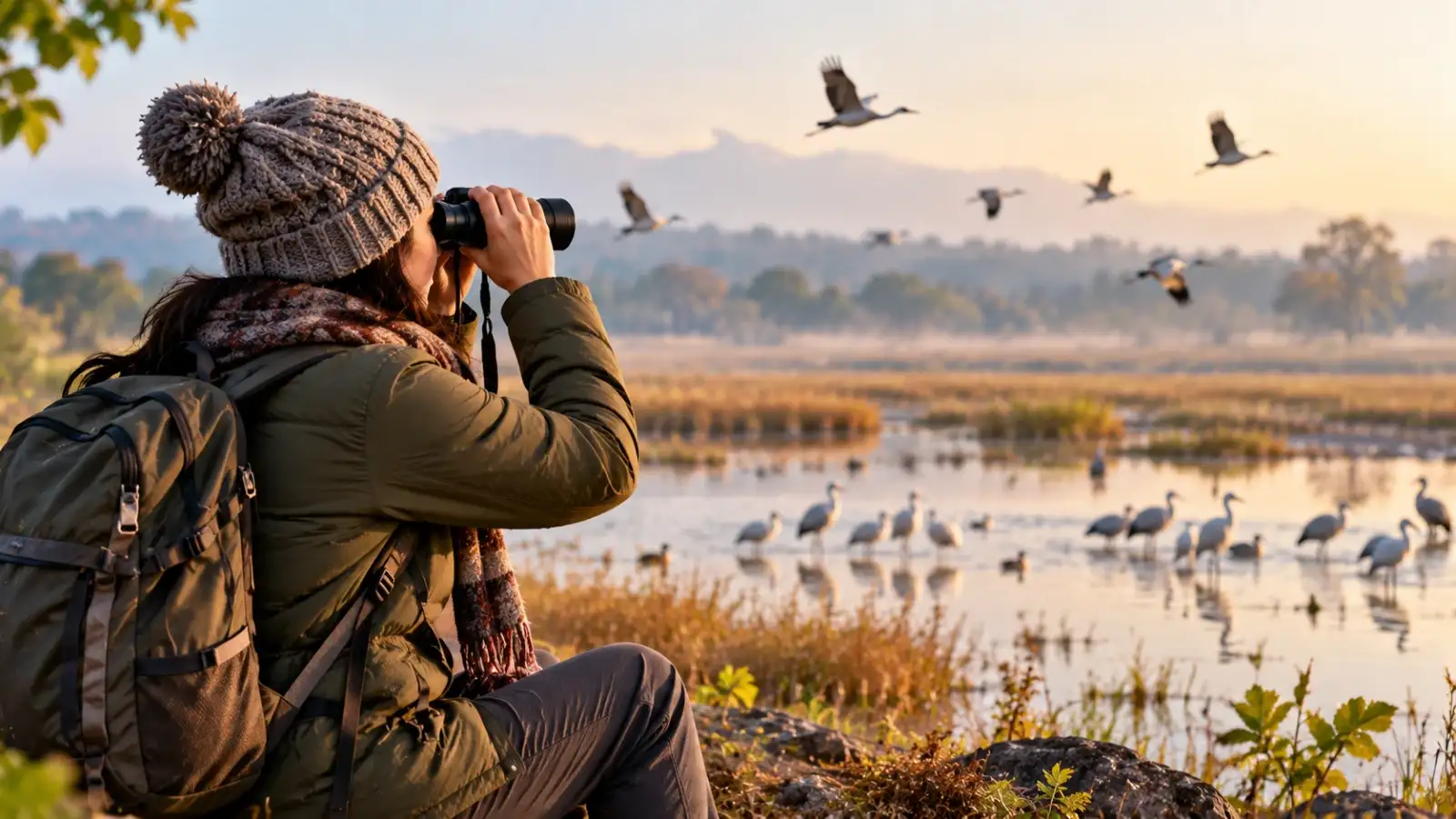
Whether you are visiting a nearby lake or travelling to a well-known bird sanctuary, a thoughtful packing list will help you stay warm, protect your equipment and enjoy the experience. Here is what to carry before heading out on your winter birdwatching adventure.
Start with a comfortable base layer, add a fleece or woollen mid-layer, and finish with a wind-resistant or waterproof outer jacket if needed. Warm trousers, a scarf, gloves and a woollen cap can provide additional protection.
Choose muted colours such as brown, olive, beige and grey. These shades can help you blend into the surroundings more naturally than bright clothing. Comfortable, quiet fabrics are also useful because sudden movements and noise may disturb nearby birds.
For beginners, 8x42 binoculars are a popular option because they offer a useful balance between magnification, brightness and ease of handling. If you already own binoculars, check that the lenses are clean and the focus wheel works smoothly before leaving home.
Carry a soft cleaning cloth and a protective case to prevent scratches. Avoid touching the lenses with your fingers, as this can leave marks that affect visibility.
Pack a lightweight rain jacket or compact umbrella if rain is possible. A small waterproof cover for your backpack can also protect your belongings from unexpected showers.
If you expect to walk for several hours, wear moisture-wicking socks and consider carrying an extra pair.
Carry a regional bird field guide or download an identification app before travelling. Offline access is particularly helpful in remote areas where mobile internet may be unreliable.
You can also note the date, time and weather conditions. Over time, these records may help you recognise seasonal patterns and understand which birds visit particular habitats.
A small thermos filled with tea or another warm drink can be comforting during an early morning outing. Keep tissues, hand sanitiser, personal medication, sunscreen and lip balm in your bag as well.
Even on cloudy winter days, exposed skin can be affected by sunlight and wind. Sunglasses may also help reduce glare when observing birds near water.
A lightweight tripod or monopod may be useful for longer sessions, although it is not essential for every trip. A power bank can help keep your phone charged, particularly if you use it for navigation or bird identification.
Avoid carrying unnecessary equipment. A lighter backpack makes walking easier and helps you move quietly through natural habitats.
A small first-aid kit is sensible for outdoor trips. If you are visiting a remote area, let someone know your route and expected return time.
Most importantly, maintain a respectful distance from birds. Avoid loud conversations, sudden movements, flash photography and playing recorded bird calls to attract wildlife. Never approach nests or interfere with feeding and resting birds. Follow local sanctuary guidelines and stay on permitted paths.
Before setting out, check local conditions and research which birds are commonly seen during the season. With the right essentials and a patient approach, you can spend more time observing wildlife and less time worrying about the weather or forgotten items.
Whether you are visiting a nearby lake or travelling to a well-known bird sanctuary, a thoughtful packing list will help you stay warm, protect your equipment and enjoy the experience. Here is what to carry before heading out on your winter birdwatching adventure.
1. Warm Clothing for Cold Mornings
Birdwatching often begins around sunrise, when temperatures can be particularly low. Instead of wearing one thick jacket, dress in layers so you can adjust to changing weather conditions.Start with a comfortable base layer, add a fleece or woollen mid-layer, and finish with a wind-resistant or waterproof outer jacket if needed. Warm trousers, a scarf, gloves and a woollen cap can provide additional protection.
Choose muted colours such as brown, olive, beige and grey. These shades can help you blend into the surroundings more naturally than bright clothing. Comfortable, quiet fabrics are also useful because sudden movements and noise may disturb nearby birds.
2. Binoculars for Better Bird Observation
A reliable pair of binoculars is one of the most useful items for a birdwatching trip. They allow you to observe feather patterns, beak shapes and other identifying features without approaching birds too closely.For beginners, 8x42 binoculars are a popular option because they offer a useful balance between magnification, brightness and ease of handling. If you already own binoculars, check that the lenses are clean and the focus wheel works smoothly before leaving home.
Carry a soft cleaning cloth and a protective case to prevent scratches. Avoid touching the lenses with your fingers, as this can leave marks that affect visibility.
3. Comfortable Shoes and Weather Protection
The terrain around birdwatching locations can vary from paved paths to muddy trails and damp grass. Wear comfortable walking shoes or hiking boots with good grip. Waterproof footwear can be helpful when visiting wetlands or areas with morning dew.Pack a lightweight rain jacket or compact umbrella if rain is possible. A small waterproof cover for your backpack can also protect your belongings from unexpected showers.
If you expect to walk for several hours, wear moisture-wicking socks and consider carrying an extra pair.
4. A Notebook, Field Guide and Bird Identification App
A small notebook is useful for recording the birds you spot, their colours, calls, behaviour and location. These observations can help you identify unfamiliar species later.Carry a regional bird field guide or download an identification app before travelling. Offline access is particularly helpful in remote areas where mobile internet may be unreliable.
You can also note the date, time and weather conditions. Over time, these records may help you recognise seasonal patterns and understand which birds visit particular habitats.
5. Water, Snacks and Personal Essentials
Cold weather can make you less aware of thirst, so carry a reusable water bottle and drink regularly. Pack easy-to-eat snacks such as nuts, fruit, roasted chickpeas or homemade sandwiches.A small thermos filled with tea or another warm drink can be comforting during an early morning outing. Keep tissues, hand sanitiser, personal medication, sunscreen and lip balm in your bag as well.
Even on cloudy winter days, exposed skin can be affected by sunlight and wind. Sunglasses may also help reduce glare when observing birds near water.
6. Camera and Other Useful Accessories
If you enjoy wildlife photography, bring a camera with a suitable telephoto lens, fully charged batteries and enough memory card space. Cold conditions can reduce battery performance, so keep spare batteries in an inside pocket to help them stay warm.A lightweight tripod or monopod may be useful for longer sessions, although it is not essential for every trip. A power bank can help keep your phone charged, particularly if you use it for navigation or bird identification.
Avoid carrying unnecessary equipment. A lighter backpack makes walking easier and helps you move quietly through natural habitats.
7. Safety and Responsible Birdwatching Items
Check the weather forecast, opening hours and access rules of your destination before leaving. Carry identification, emergency contact details and any permits required by the site.A small first-aid kit is sensible for outdoor trips. If you are visiting a remote area, let someone know your route and expected return time.
Most importantly, maintain a respectful distance from birds. Avoid loud conversations, sudden movements, flash photography and playing recorded bird calls to attract wildlife. Never approach nests or interfere with feeding and resting birds. Follow local sanctuary guidelines and stay on permitted paths.
Make Your Winter Birdwatching Trip More Enjoyable
A successful winter birdwatching trip depends on preparation rather than carrying the most equipment. Warm layers, comfortable footwear, binoculars, water and a simple observation kit will cover most basic needs. Add a camera or field guide according to your interests and destination.Before setting out, check local conditions and research which birds are commonly seen during the season. With the right essentials and a patient approach, you can spend more time observing wildlife and less time worrying about the weather or forgotten items.
Next Story