
What to See in Dholavira: A Journey Into India's Harappan Heritage

In the dry landscape of Kutch, Gujarat, lies Dholavira, an archaeological site that offers a fascinating look at one of the ancient urban settlements of the Harappan civilisation . Located on Khadir Island, the site is known for its planned layout, stone structures, fortified sections and sophisticated water management arrangements.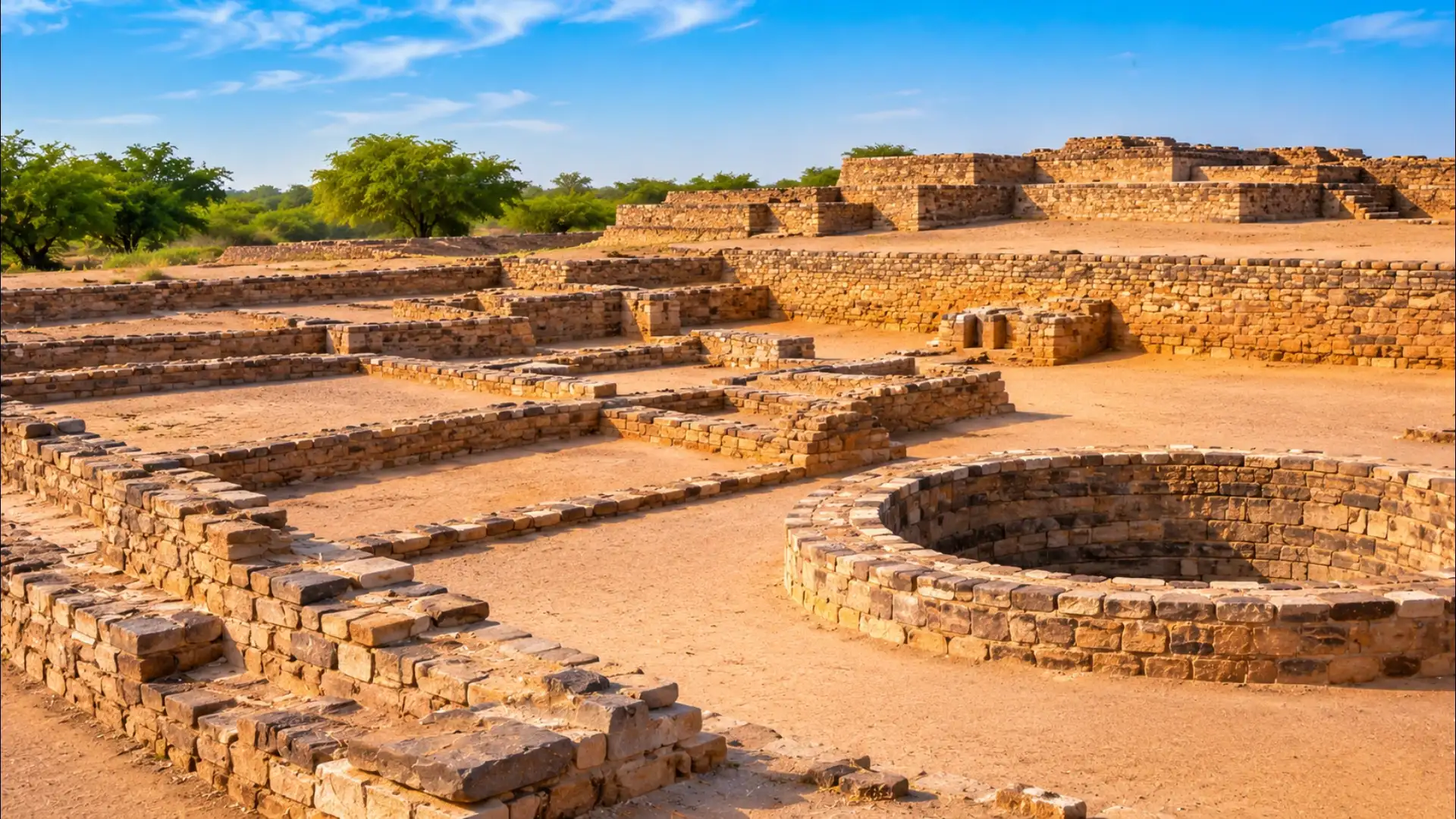
Dholavira was occupied over a long period, broadly from around 3000 BCE to 1500 BCE. Its remains help visitors understand how people organised settlements, used available materials and managed scarce water resources in a challenging environment.
The site was inscribed on the UNESCO World Heritage List in 2021, making it an important destination for travellers interested in archaeology and Indian heritage.
The walled city included a fortified castle, a middle town and a lower town. Different sections were separated through walls and gateways, suggesting a planned approach to the organisation of residential and public spaces.
As you explore the remains, look for the layout of streets, the foundations of buildings and the stonework used in construction. These details help visitors imagine how the settlement may have functioned when it was inhabited.
The Harappan inhabitants developed a network of reservoirs and channels to collect and manage available water. The remains demonstrate how the settlement made use of seasonal water sources and local topography.
The reservoirs are among the most striking parts of the archaeological landscape. Take time to observe their size, placement and relationship with the fortified city.
Rather than viewing them as isolated structures, consider how they formed part of a larger system designed to support the settlement.
These discoveries provide clues about the skills and economic activities of the people who lived there. They also point to trade connections with other Harappan settlements and regions beyond the subcontinent.
The remains offer an insight into a society that had developed specialised crafts alongside organised urban spaces.
Check the latest road conditions, accommodation availability and transport arrangements before setting out. Do not assume that public transport or food facilities will be available at every point along the route.
Carry drinking water, sun protection and comfortable walking footwear. The archaeological site involves outdoor exploration, and shade may be limited.
Respect barriers and marked areas, and avoid touching or climbing on archaeological structures. Follow the instructions of site staff and preserve the surroundings for future visitors.
Dholavira is an important reminder that ancient Indian settlements developed sophisticated ways to organise urban life. Its reservoirs, fortifications and craft evidence make it a distinctive heritage destination in Gujarat.
Dholavira was occupied over a long period, broadly from around 3000 BCE to 1500 BCE. Its remains help visitors understand how people organised settlements, used available materials and managed scarce water resources in a challenging environment.
The site was inscribed on the UNESCO World Heritage List in 2021, making it an important destination for travellers interested in archaeology and Indian heritage.
Understand the layout of the ancient city
Dholavira was not simply a collection of houses. Its excavated remains reveal a carefully organised settlement with distinct areas.The walled city included a fortified castle, a middle town and a lower town. Different sections were separated through walls and gateways, suggesting a planned approach to the organisation of residential and public spaces.
As you explore the remains, look for the layout of streets, the foundations of buildings and the stonework used in construction. These details help visitors imagine how the settlement may have functioned when it was inhabited.
Explore the ancient water reservoirs
One of Dholavira's most remarkable features is its water management system. The settlement stood in an arid region where water was a valuable resource.The Harappan inhabitants developed a network of reservoirs and channels to collect and manage available water. The remains demonstrate how the settlement made use of seasonal water sources and local topography.
The reservoirs are among the most striking parts of the archaeological landscape. Take time to observe their size, placement and relationship with the fortified city.
Rather than viewing them as isolated structures, consider how they formed part of a larger system designed to support the settlement.
Look for evidence of craft and trade
Archaeological excavations at Dholavira have uncovered evidence of bead processing and objects made from materials such as shell, copper, stone and terracotta.These discoveries provide clues about the skills and economic activities of the people who lived there. They also point to trade connections with other Harappan settlements and regions beyond the subcontinent.
The remains offer an insight into a society that had developed specialised crafts alongside organised urban spaces.
How to plan your visit
Dholavira is a relatively remote destination, so travel arrangements need to be planned carefully. Kutch is the main regional base for organising a visit, but the journey to the archaeological site requires additional road travel.Check the latest road conditions, accommodation availability and transport arrangements before setting out. Do not assume that public transport or food facilities will be available at every point along the route.
Carry drinking water, sun protection and comfortable walking footwear. The archaeological site involves outdoor exploration, and shade may be limited.
Make the most of the experience
A visit to Dholavira is more rewarding when you understand the historical context before arriving. Read about the Harappan civilisation and the site's water systems so that the remains become easier to interpret.Respect barriers and marked areas, and avoid touching or climbing on archaeological structures. Follow the instructions of site staff and preserve the surroundings for future visitors.
Dholavira is an important reminder that ancient Indian settlements developed sophisticated ways to organise urban life. Its reservoirs, fortifications and craft evidence make it a distinctive heritage destination in Gujarat.
Next Story