
When Vishnu Awakens, Let Us Rise


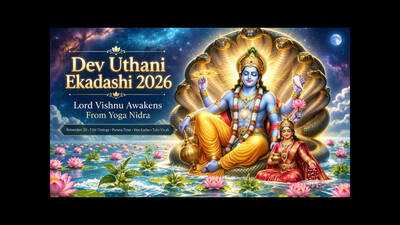
“Awaken, Govinda,” we pray, placing a tulsi leaf before Vishnu . There is tenderness in calling upon God to wake, as one might call to someone dearly loved. Dev Uthani Ekadashi celebrates Vishnu’s awakening from yogic repose. The prayer also turns towards us: what have we allowed to fall asleep within ourselves?
We may have grown accustomed to a strained relationship, an elderly parent waiting for our call, a promise we keep postponing. The festival asks us to become attentive again.
Ekadashi, the eleventh lunar day, has a spiritual interpretation involving eleven faculties: five of perception, five of action, and the mind. Imagine them as an inner council, each pulled towards its own desires. Devotion gives them a shared purpose. The eyes learn to notice suffering; the ears make room for another’s grief; the tongue discovers the grace of a gentle answer.
A day of upavasa, understood as dwelling near the Divine, becomes an exercise in such nearness. We create room for remembrance by loosening our grip on resentment and needless demands. We offer Vishnu a flower; we can also offer the stubbornness that has kept an apology unspoken.
This inward offering needs patience. The mind will wander during prayer. We can bring it back without anger, just as we would guide a child who has strayed. Each return is itself an act of devotion. In the quiet of remembrance, we begin to recognise a presence that our hurry had obscured.
The Gita’s counsel on moderation in food, work, sleep and wakefulness carries this attention into ordinary hours. The body has rhythms deserving our respect. To eat with gratitude, rest when needed and move with purpose is to care for the life entrusted to us.
As winter draws us towards warmth and stillness, the call to awaken acquires a gentle urgency. Step into the morning light. Walk beside someone who needs company. Take a blanket to a person who has none. The hands that arrange an offering can carry its kindness beyond the shrine.
Vishnu is revered as the preserver. His worship can deepen our willingness to preserve another’s dignity, a neglected relationship, the peace of a home. In caring for these, we honour Him.
We will eventually leave the place of prayer. Someone may speak sharply; a familiar irritation may return. There, in our response, the day’s observance can continue.
“Awaken, Govinda.” May the prayer find an answer in us.
Authored by: Shambo Samrat Samajdar and Shashank Joshi
We may have grown accustomed to a strained relationship, an elderly parent waiting for our call, a promise we keep postponing. The festival asks us to become attentive again.
Ekadashi, the eleventh lunar day, has a spiritual interpretation involving eleven faculties: five of perception, five of action, and the mind. Imagine them as an inner council, each pulled towards its own desires. Devotion gives them a shared purpose. The eyes learn to notice suffering; the ears make room for another’s grief; the tongue discovers the grace of a gentle answer.
A day of upavasa, understood as dwelling near the Divine, becomes an exercise in such nearness. We create room for remembrance by loosening our grip on resentment and needless demands. We offer Vishnu a flower; we can also offer the stubbornness that has kept an apology unspoken.
This inward offering needs patience. The mind will wander during prayer. We can bring it back without anger, just as we would guide a child who has strayed. Each return is itself an act of devotion. In the quiet of remembrance, we begin to recognise a presence that our hurry had obscured.
The Gita’s counsel on moderation in food, work, sleep and wakefulness carries this attention into ordinary hours. The body has rhythms deserving our respect. To eat with gratitude, rest when needed and move with purpose is to care for the life entrusted to us.
As winter draws us towards warmth and stillness, the call to awaken acquires a gentle urgency. Step into the morning light. Walk beside someone who needs company. Take a blanket to a person who has none. The hands that arrange an offering can carry its kindness beyond the shrine.
Vishnu is revered as the preserver. His worship can deepen our willingness to preserve another’s dignity, a neglected relationship, the peace of a home. In caring for these, we honour Him.
We will eventually leave the place of prayer. Someone may speak sharply; a familiar irritation may return. There, in our response, the day’s observance can continue.
“Awaken, Govinda.” May the prayer find an answer in us.
Authored by: Shambo Samrat Samajdar and Shashank Joshi
Next Story