
Beyond Antarctica, Incredible Destinations for Wild Penguin Encounters

Penguins are often associated with frozen landscapes, glaciers and endless fields of Antarctic ice, but most penguin species actually live outside the Antarctic continent. These remarkable flightless seabirds occupy a surprisingly wide range of environments, from the rocky shores of southern Africa and the temperate coastlines of New Zealand to volcanic islands close to the equator.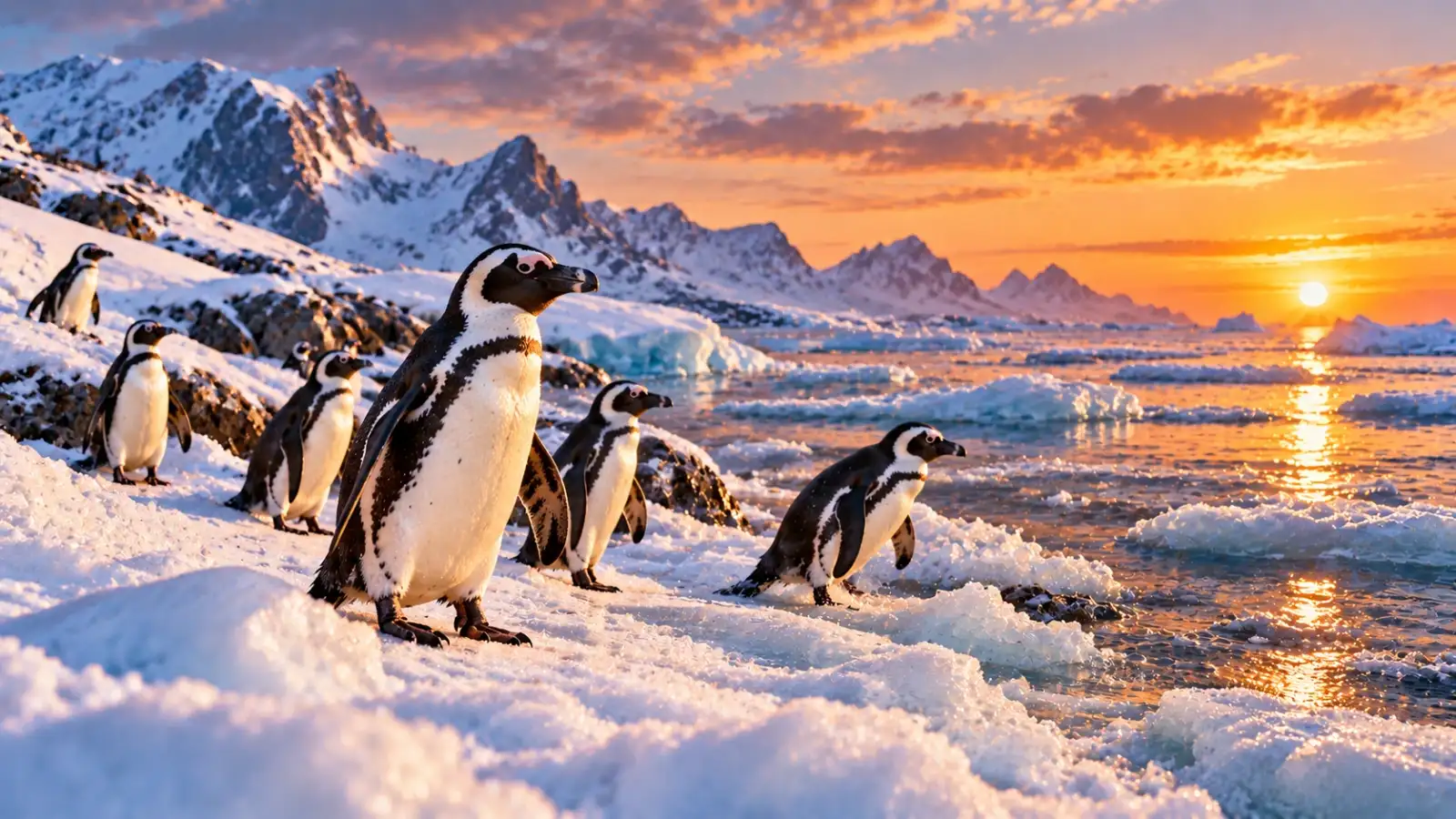
There are currently 18 recognised penguin species, and only a portion of them live on or around Antarctica. The rest are distributed across the Southern Hemisphere, with one remarkable exception. The Galápagos penguin lives around the equator, making it the only penguin species naturally found north of the equator.
For travellers, this means that seeing penguins in the wild does not necessarily require an expensive expedition to Antarctica. Several destinations offer opportunities to observe colonies in coastal habitats, although the species, viewing conditions and level of accessibility vary considerably.
The species is concentrated mainly around the western islands of Isabela and Fernandina, where cold, nutrient-rich waters provide the food supply these relatively small penguins need. Around 95% of the population is concentrated around these western islands, according to the Galápagos Conservancy.
Seeing a penguin swimming through warm-looking tropical waters, surrounded by volcanic rock and blue ocean, is part of what makes the Galápagos such a distinctive wildlife destination. However, these penguins are endangered and their population can be strongly affected by El Niño events, so responsible wildlife viewing is particularly important.
Boulders Beach near Simon's Town is among the best-known locations for viewing African penguins, but the broader Cape region also contains important coastal habitat. The experience is very different from watching Antarctic penguins because the birds can be seen moving between vegetation, rocks and the sea rather than across snow and ice.
Their presence also illustrates the challenges faced by wildlife living close to human settlements. African penguins are threatened by pressures including changes in food availability and environmental disturbance, making conservation and carefully managed tourism important parts of visiting their habitat.
Oamaru on the South Island is one of the best-known places to watch little penguins return from the sea. The birds are remarkably small compared with many Antarctic species, and their evening arrival creates a very different wildlife experience from the huge colonies associated with the far south.
The wider region also demonstrates how penguins can live surprisingly close to human settlements. Well-managed viewing areas allow visitors to observe the birds while reducing unnecessary disturbance.
Unlike the highly social appearance of some large penguin colonies , yellow-eyed penguins often use more secluded nesting areas. Their preference for relatively quiet coastal vegetation means that responsible observation is essential.
New Zealand's wildlife guidance notes the importance of keeping distance, remaining quiet and avoiding sudden movements around wild penguins. Carefully managed viewing facilities can provide an opportunity to observe the birds without forcing them to change their behaviour.
Gentoo penguins have a broad sub-Antarctic distribution, with major populations in the Falkland Islands and South Georgia. Their colonies can occupy coastal areas where the birds travel between breeding sites and the sea.
The Falklands are especially appealing for travellers who want to experience penguins alongside other wildlife. Large seabird colonies, seals and dramatic open landscapes create a broader ecosystem experience rather than a single-species attraction.
These islands are recognised for their exceptional wildlife and are among New Zealand's most highly protected natural environments. The Auckland Islands, for example, are important breeding grounds for yellow-eyed penguins and numerous seabirds.
Access is considerably more restricted than at mainstream tourist destinations. Visitor numbers are controlled, and reaching the islands generally requires specialised expedition-style travel. For those who can visit, however, the experience offers a glimpse of relatively untouched Southern Ocean ecosystems.
Unlike the towering emperor penguins of Antarctica, little penguins are compact and blue-grey in appearance. Their small size makes them easy to overlook during the day when many birds remain at sea, but coastal colonies become more active when birds return from feeding.
Australia's little penguins occupy a range of coastal habitats, although populations and colony distributions have changed over time. Offshore islands can provide particularly important refuge because they may have fewer terrestrial predators.
The attraction of Phillip Island lies partly in the scale of the natural event. Groups of tiny penguins can emerge from the ocean and make their way towards their nesting areas, often moving together along the shoreline.
Visitors should follow the site's rules closely and avoid using flash photography or approaching the animals. The purpose of responsible wildlife tourism is to observe the penguins without changing their natural behaviour.
New Zealand is particularly significant for penguin diversity. The country's tourism authority notes that 13 of the world's 18 penguin species have been recorded in New Zealand waters, while three species breed there regularly, including little blue, Fiordland crested and yellow-eyed penguins.
This makes the country especially interesting for travellers who want to combine penguin watching with a broader wildlife trip.
King penguins are one of the defining species of the island. Their enormous colonies can stretch across beaches and coastal plains, creating one of the most dramatic wildlife spectacles found anywhere in the Southern Hemisphere.
The island is remote and normally visited as part of expedition voyages rather than conventional holidays. Its isolation also means that strict environmental protocols are essential for protecting the wildlife.
The Australian Government describes the area as one of the wildest places on Earth, with large numbers of penguins and seals occupying its beaches. The islands also contain an exceptionally intact sub-Antarctic ecosystem with no known species introduced directly by humans.
This is not a conventional holiday destination. Access is extremely difficult and tightly controlled, meaning it is more relevant to expedition travellers and researchers than to ordinary wildlife tourists.
The Galápagos provides an especially striking example. Cold, nutrient-rich waters around the western islands allow Galápagos penguins to survive close to the equator.
This is why the idea that every penguin needs snow is misleading. Their evolutionary history is more closely tied to life in the ocean than to frozen landscapes.
Visitors should remain on designated paths, keep an appropriate distance, avoid touching or feeding penguins and follow local photography rules. In sensitive colonies, even apparently small disturbances can cause birds to change their routes or avoid returning to a nesting area.
New Zealand's conservation guidance specifically recommends keeping distance, remaining quiet and avoiding sudden movements when observing wild penguins.
The best encounters are not necessarily those where the greatest number of birds can be seen. Watching a little penguin emerge from the sea, spotting an African penguin moving through coastal vegetation or seeing a yellow-eyed penguin quietly approach its nesting area can reveal how differently these birds live across the Southern Hemisphere.
For travellers, that diversity is part of the attraction. Penguins do not belong exclusively to Antarctica. They are part of a much larger story involving oceans, islands, cold currents, coastal ecosystems and some of the world's most remarkable wildlife habitats.
There are currently 18 recognised penguin species, and only a portion of them live on or around Antarctica. The rest are distributed across the Southern Hemisphere, with one remarkable exception. The Galápagos penguin lives around the equator, making it the only penguin species naturally found north of the equator.
For travellers, this means that seeing penguins in the wild does not necessarily require an expensive expedition to Antarctica. Several destinations offer opportunities to observe colonies in coastal habitats, although the species, viewing conditions and level of accessibility vary considerably.
Galápagos Islands, Ecuador
Few penguin encounters are as unusual as seeing one in the Galápagos. The Galápagos penguin is the only penguin species naturally living at or just above the equator, surviving in an environment that looks very different from the frozen landscapes most people associate with these birds.The species is concentrated mainly around the western islands of Isabela and Fernandina, where cold, nutrient-rich waters provide the food supply these relatively small penguins need. Around 95% of the population is concentrated around these western islands, according to the Galápagos Conservancy.
Seeing a penguin swimming through warm-looking tropical waters, surrounded by volcanic rock and blue ocean, is part of what makes the Galápagos such a distinctive wildlife destination. However, these penguins are endangered and their population can be strongly affected by El Niño events, so responsible wildlife viewing is particularly important.
Cape Town and the Western Cape, South Africa
South Africa offers one of the most accessible opportunities to see wild penguins . African penguins live along the country's southern and southwestern coastline, where colonies have adapted to a landscape of rocky shores, beaches and relatively mild weather.Boulders Beach near Simon's Town is among the best-known locations for viewing African penguins, but the broader Cape region also contains important coastal habitat. The experience is very different from watching Antarctic penguins because the birds can be seen moving between vegetation, rocks and the sea rather than across snow and ice.
Their presence also illustrates the challenges faced by wildlife living close to human settlements. African penguins are threatened by pressures including changes in food availability and environmental disturbance, making conservation and carefully managed tourism important parts of visiting their habitat.
Oamaru, New Zealand
New Zealand is one of the world's most interesting countries for penguin watching because several species occur across its islands and surrounding waters. The little penguin, also known as the little blue penguin, is particularly associated with coastal colonies in the country.Oamaru on the South Island is one of the best-known places to watch little penguins return from the sea. The birds are remarkably small compared with many Antarctic species, and their evening arrival creates a very different wildlife experience from the huge colonies associated with the far south.
The wider region also demonstrates how penguins can live surprisingly close to human settlements. Well-managed viewing areas allow visitors to observe the birds while reducing unnecessary disturbance.
Otago Peninsula, New Zealand
The Otago Peninsula near Dunedin provides another opportunity to see penguins in a natural coastal environment. It is particularly associated with the yellow-eyed penguin, one of New Zealand's most distinctive and threatened penguin species.Unlike the highly social appearance of some large penguin colonies , yellow-eyed penguins often use more secluded nesting areas. Their preference for relatively quiet coastal vegetation means that responsible observation is essential.
New Zealand's wildlife guidance notes the importance of keeping distance, remaining quiet and avoiding sudden movements around wild penguins. Carefully managed viewing facilities can provide an opportunity to observe the birds without forcing them to change their behaviour.
Falkland Islands
The Falkland Islands offer an extraordinary concentration of seabird life and provide opportunities to see several penguin species. Gentoo penguins are particularly associated with the islands, while rockhopper, Magellanic and king penguins can also be encountered depending on the location.Gentoo penguins have a broad sub-Antarctic distribution, with major populations in the Falkland Islands and South Georgia. Their colonies can occupy coastal areas where the birds travel between breeding sites and the sea.
The Falklands are especially appealing for travellers who want to experience penguins alongside other wildlife. Large seabird colonies, seals and dramatic open landscapes create a broader ecosystem experience rather than a single-species attraction.
Stewart Island and New Zealand's Subantarctic Islands
For a more remote experience, New Zealand's Subantarctic Islands provide some of the most unusual penguin habitats outside Antarctica. The region includes the Snares, Auckland Islands, Campbell Island and other protected island groups.These islands are recognised for their exceptional wildlife and are among New Zealand's most highly protected natural environments. The Auckland Islands, for example, are important breeding grounds for yellow-eyed penguins and numerous seabirds.
Access is considerably more restricted than at mainstream tourist destinations. Visitor numbers are controlled, and reaching the islands generally requires specialised expedition-style travel. For those who can visit, however, the experience offers a glimpse of relatively untouched Southern Ocean ecosystems.
Tasmania, Australia
Tasmania is another place where travellers can encounter little penguins in the wild. These are the world's smallest penguins, and their colonies occur along parts of Australia's southern coastline and offshore islands.Unlike the towering emperor penguins of Antarctica, little penguins are compact and blue-grey in appearance. Their small size makes them easy to overlook during the day when many birds remain at sea, but coastal colonies become more active when birds return from feeding.
Australia's little penguins occupy a range of coastal habitats, although populations and colony distributions have changed over time. Offshore islands can provide particularly important refuge because they may have fewer terrestrial predators.
Phillip Island, Australia
Victoria's Phillip Island is one of Australia's best-known places for observing little penguins. The island supports a major colony and has developed carefully managed wildlife viewing infrastructure around the birds' return to shore.The attraction of Phillip Island lies partly in the scale of the natural event. Groups of tiny penguins can emerge from the ocean and make their way towards their nesting areas, often moving together along the shoreline.
Visitors should follow the site's rules closely and avoid using flash photography or approaching the animals. The purpose of responsible wildlife tourism is to observe the penguins without changing their natural behaviour.
Kaikōura and New Zealand's South Island Coast
New Zealand's South Island provides several opportunities to encounter penguins outside dedicated wildlife centres. Coastal areas around Kaikōura and other parts of the South Island can support penguin species alongside seals, dolphins and large seabird populations.New Zealand is particularly significant for penguin diversity. The country's tourism authority notes that 13 of the world's 18 penguin species have been recorded in New Zealand waters, while three species breed there regularly, including little blue, Fiordland crested and yellow-eyed penguins.
This makes the country especially interesting for travellers who want to combine penguin watching with a broader wildlife trip.
The Subantarctic Islands Around South Georgia
South Georgia is technically outside Antarctica, although it lies deep in the Southern Ocean and belongs to the sub-Antarctic world. It is therefore very different from destinations such as South Africa or New Zealand, but it deserves a place on any list of major wild penguin habitats.King penguins are one of the defining species of the island. Their enormous colonies can stretch across beaches and coastal plains, creating one of the most dramatic wildlife spectacles found anywhere in the Southern Hemisphere.
The island is remote and normally visited as part of expedition voyages rather than conventional holidays. Its isolation also means that strict environmental protocols are essential for protecting the wildlife.
Heard Island and the McDonald Islands
For travellers interested in extremely remote wildlife destinations, Australia's Heard and McDonald Islands represent one of the most isolated options. The island group lies in the Southern Ocean and is protected as a World Heritage site.The Australian Government describes the area as one of the wildest places on Earth, with large numbers of penguins and seals occupying its beaches. The islands also contain an exceptionally intact sub-Antarctic ecosystem with no known species introduced directly by humans.
This is not a conventional holiday destination. Access is extremely difficult and tightly controlled, meaning it is more relevant to expedition travellers and researchers than to ordinary wildlife tourists.
Why Penguins Live in Such Different Places
The existence of penguins in tropical and temperate environments can seem surprising, but their distribution is closely connected to ocean conditions. Penguins depend on marine ecosystems for food, and cold, productive currents can support abundant fish and other prey even when the land itself is far from icy.The Galápagos provides an especially striking example. Cold, nutrient-rich waters around the western islands allow Galápagos penguins to survive close to the equator.
This is why the idea that every penguin needs snow is misleading. Their evolutionary history is more closely tied to life in the ocean than to frozen landscapes.
How to Watch Wild Penguins Responsibly
Penguins may look comfortable around people in some tourist destinations, but that does not mean they should be approached closely. They are wild animals, and unnecessary disturbance can affect feeding, nesting, resting and movement.Visitors should remain on designated paths, keep an appropriate distance, avoid touching or feeding penguins and follow local photography rules. In sensitive colonies, even apparently small disturbances can cause birds to change their routes or avoid returning to a nesting area.
New Zealand's conservation guidance specifically recommends keeping distance, remaining quiet and avoiding sudden movements when observing wild penguins.
Penguins Are Not Just an Antarctic Attraction
From volcanic islands on the equator to windswept beaches in New Zealand and rugged coastlines in South Africa, penguins occupy a much wider range of habitats than their popular image suggests.The best encounters are not necessarily those where the greatest number of birds can be seen. Watching a little penguin emerge from the sea, spotting an African penguin moving through coastal vegetation or seeing a yellow-eyed penguin quietly approach its nesting area can reveal how differently these birds live across the Southern Hemisphere.
For travellers, that diversity is part of the attraction. Penguins do not belong exclusively to Antarctica. They are part of a much larger story involving oceans, islands, cold currents, coastal ecosystems and some of the world's most remarkable wildlife habitats.
Next Story