
Where to Travel to See the Northern and Southern Lights

Few natural spectacles have the power to make people forget everything else around them. One moment the sky appears perfectly ordinary; minutes later, green, purple or pink curtains seem to ripple above the horizon. The aurora occurs when energetic particles associated with solar activity interact with Earth's magnetic field and atmosphere. The Northern Lights, or Aurora Borealis , occur around the Arctic, while their southern counterpart, the Aurora Australis , appears around Antarctica and the southern auroral zone.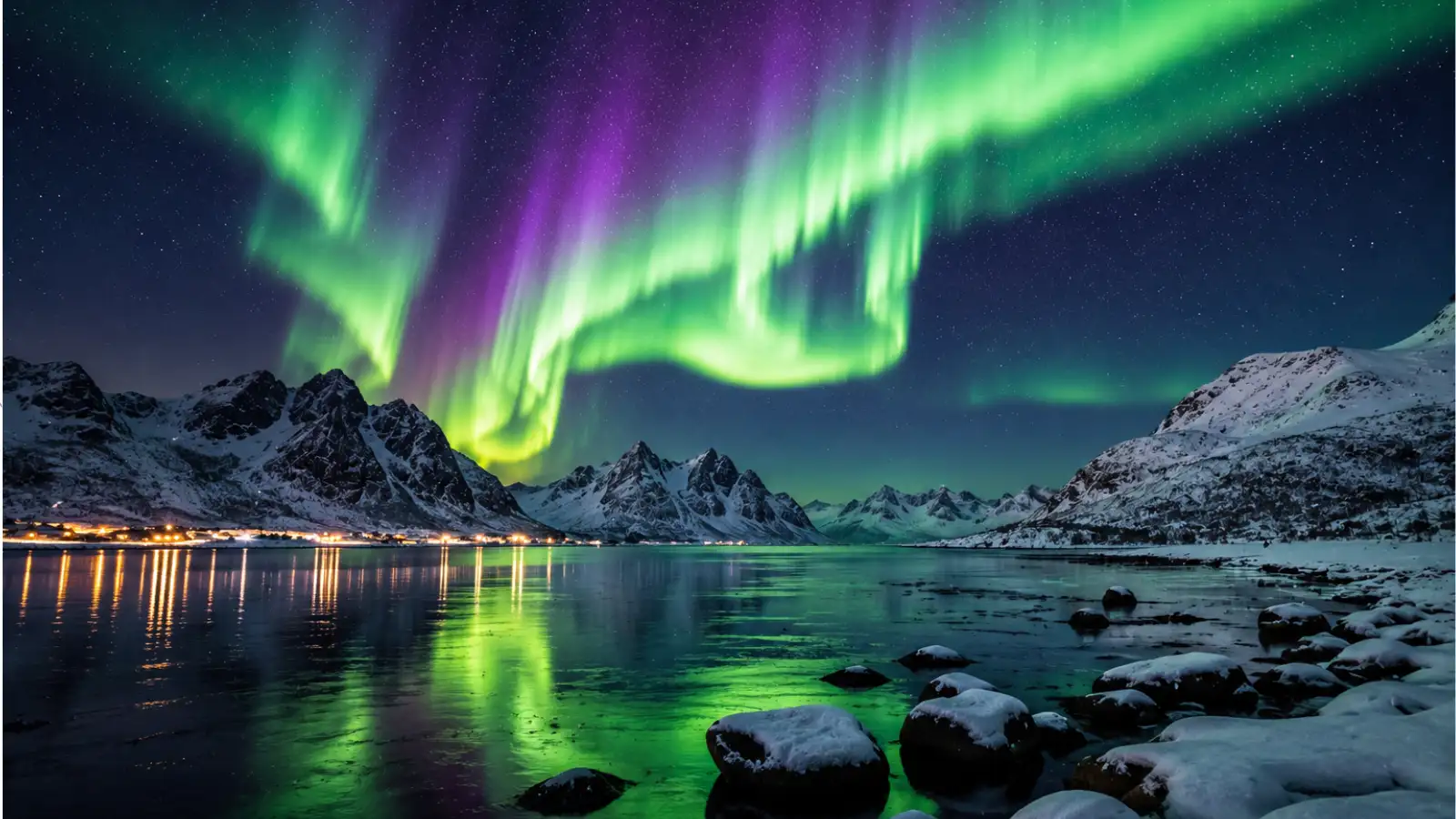
Darkness and clear skies are essential. Even strong auroral activity can be hidden by cloud or summer daylight.
Travellers should remember that no destination can guarantee an aurora on a particular night. Solar activity is unpredictable, so staying several nights improves the odds.
The farther away from towns you travel, the more impressive the sky can become.
New Zealand is another excellent option. Its southern locations benefit from dark skies, and the Aurora Australis is particularly associated with places such as Stewart Island and the South Island.
And unlike a fireworks show, there is no scheduled start time. That uncertainty is part of the magic.
Understanding the Aurora
Earth's magnetic field guides charged particles towards the polar regions, producing two broad auroral ovals. NOAA identifies the most favourable viewing zone as roughly between 60 and 75 degrees north and south latitude, although major geomagnetic storms can push auroras much farther towards the equator.Darkness and clear skies are essential. Even strong auroral activity can be hidden by cloud or summer daylight.
Norway, Finland and Sweden
Northern Norway is among the most famous Northern Lights destinations, particularly around Tromsø and the northern coastal regions. Finnish Lapland and Swedish Lapland are also popular because of their long winter nights and relatively low light pollution.Travellers should remember that no destination can guarantee an aurora on a particular night. Solar activity is unpredictable, so staying several nights improves the odds.
You may also like
- Struggling to Sleep at Night? 8 Simple Habits That May Help You Get Better Rest
- Smartphone has become a disease: Amish on parenting, books and Gen Z attention spans
- When grandparents tell stories, children gain more than memories: 3 science-backed benefits
- DU college's student group expands sustainable soap initiative
- PM Kisan Yojana: If four brothers farm the same land, who gets the ₹6,000? Find out here..
Iceland and the Canadian Arctic
Iceland combines aurora viewing with dramatic volcanic landscapes, waterfalls and remote coastlines. In Canada, destinations such as Yukon, the Northwest Territories and northern Manitoba offer vast horizons and comparatively little artificial light.The farther away from towns you travel, the more impressive the sky can become.
Chasing the Southern Lights
The Aurora Australis receives less attention because fewer people live in the Southern Hemisphere's high latitudes. Tasmania is one of the best accessible destinations. Tourism Tasmania identifies southern locations such as Bruny Island, Cockle Creek and Mount Wellington as useful viewing points, with May to September offering longer nights.New Zealand is another excellent option. Its southern locations benefit from dark skies, and the Aurora Australis is particularly associated with places such as Stewart Island and the South Island.
The Most Important Rule
Do not plan an aurora holiday around one evening. Plan around darkness, weather and patience. The lights may appear for minutes or develop into a spectacular display lasting much longer.And unlike a fireworks show, there is no scheduled start time. That uncertainty is part of the magic.






Loving Newspoint? Download the app now
