
Why Do Aeroplane Windows Have Tiny Holes?

Look closely at an aeroplane window, and you will probably notice a tiny hole near the bottom of the inner pane. It looks almost too small to matter. But at cruising altitude, that little opening is part of a carefully designed system that helps the window handle the huge difference between the air inside and outside the aircraft.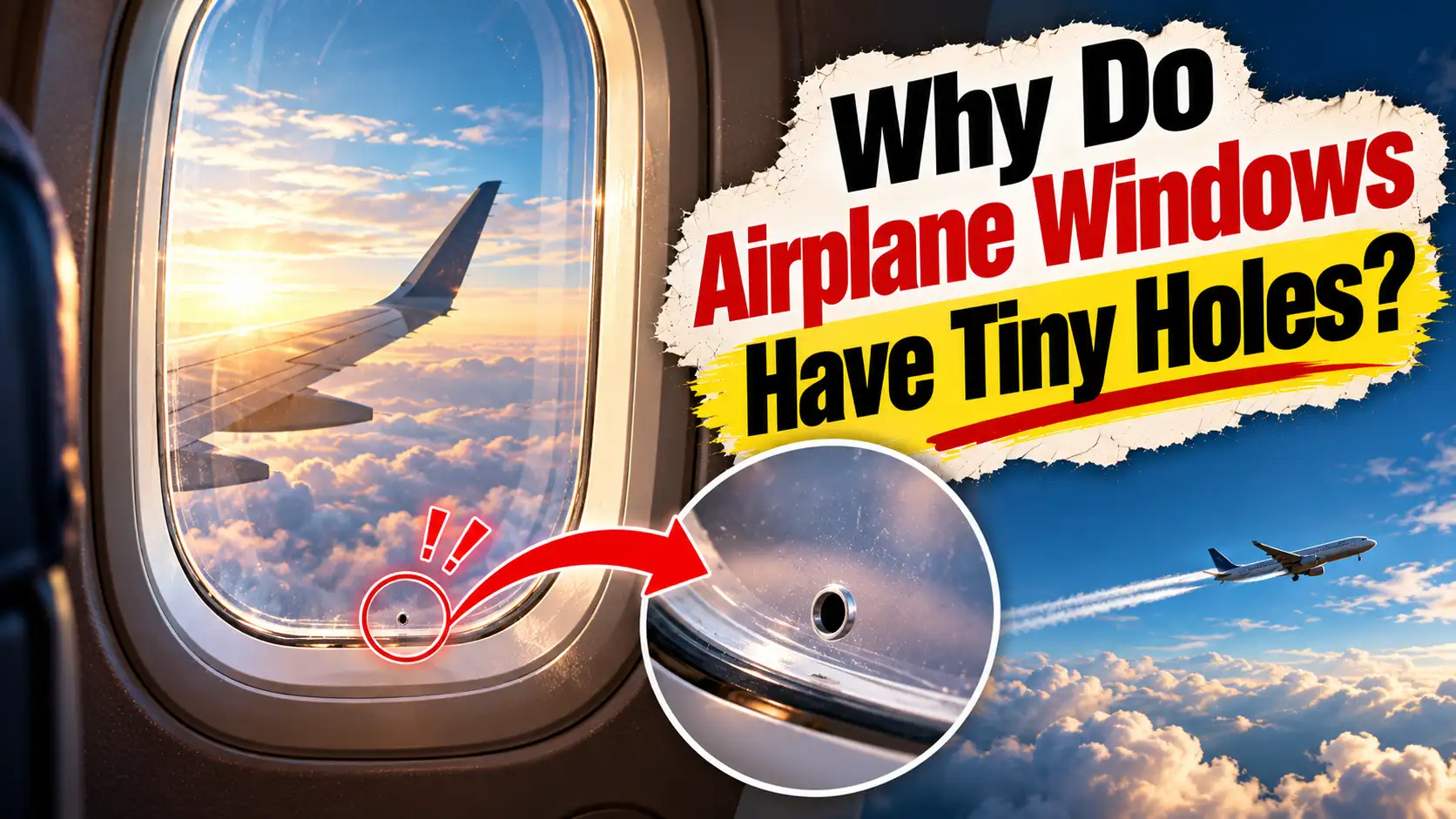
So that tiny hole is not a flaw. It is there because aeroplane windows have to deal with conditions that ordinary windows never experience.
The windows have to deal with that pressure difference every time the aircraft climbs, cruises and descends. That is why an aeroplane window is not simply a piece of glass fitted into the side of the aircraft.
Modern aircraft windows are built with multiple layers, with the outer pane forming the primary pressure barrier. The inner pane is there for additional protection and to create the finished cabin-side surface that passengers see. There is also a space between the layers. And that is where the tiny hole becomes important.
Think of it as giving the air between the panes a controlled way to equalise with the cabin. Without that opening, the pressure conditions between the layers could behave differently as the aircraft climbs and descends.
The hole also has another useful job. It can help reduce the buildup of moisture between the panes. When warm, humid cabin air meets colder surfaces, condensation can become an issue. Allowing the space between the panes to communicate with the cabin helps manage that environment and can reduce the chance of moisture becoming trapped there.
It is located in the inner pane and forms part of the layered window assembly. The outer pane and the surrounding structure provide the main barrier between the pressurised cabin and the extremely low-pressure environment outside. So the tiny opening is not a leak to the sky. It is a controlled part of the window's internal pressure-management system.
The next time you see that little dot near the bottom of your aeroplane window, don't worry that someone forgot to seal it. It is there precisely because the window is doing a job that an ordinary window never has to do. thought very carefully about what could happen without it.
So that tiny hole is not a flaw. It is there because aeroplane windows have to deal with conditions that ordinary windows never experience.
An Aeroplane Window Is Not Just A Window
At around 35,000 feet, the air outside an aircraft is far thinner than the air maintained inside the cabin. The cabin is pressurised to provide passengers with a breathable environment, creating a substantial pressure difference across the aircraft structure.The windows have to deal with that pressure difference every time the aircraft climbs, cruises and descends. That is why an aeroplane window is not simply a piece of glass fitted into the side of the aircraft.
Modern aircraft windows are built with multiple layers, with the outer pane forming the primary pressure barrier. The inner pane is there for additional protection and to create the finished cabin-side surface that passengers see. There is also a space between the layers. And that is where the tiny hole becomes important.
You may also like
- Lichen Planus of the Vulva: Symptoms, Causes, and Treatment
- What Your Brain Actually Does During a Near-Death Experience: The Biology Behind the Light
- '100 aircraft a day will feel very small': At 15, Naman Pushp built a drone during lockdown; six years later, he is the founder of a $37 million aerospace venture
- Dubai: Italian designer Bertrando di Renzo shares 5 tips to transform your dining table
- Why Was Karna Served Gold in Heaven? The Secret
The Hole Helps Manage Pressure
The small opening in the inner pane allows the air in the cabin to communicate with the space between the window layers. This helps ensure that the pressure difference is primarily carried by the outer pane and the main window structure rather than creating an unnecessary pressure difference across the inner pane.Think of it as giving the air between the panes a controlled way to equalise with the cabin. Without that opening, the pressure conditions between the layers could behave differently as the aircraft climbs and descends.
The hole also has another useful job. It can help reduce the buildup of moisture between the panes. When warm, humid cabin air meets colder surfaces, condensation can become an issue. Allowing the space between the panes to communicate with the cabin helps manage that environment and can reduce the chance of moisture becoming trapped there.
Why Doesn't All The Cabin Air Escape?
This is probably the part that makes the tiny hole seem suspicious. If it allows air into the space between the panes, why doesn't cabin air simply escape through it? Because the hole does not go straight through the entire window to the outside.It is located in the inner pane and forms part of the layered window assembly. The outer pane and the surrounding structure provide the main barrier between the pressurised cabin and the extremely low-pressure environment outside. So the tiny opening is not a leak to the sky. It is a controlled part of the window's internal pressure-management system.
A Tiny Detail Handling A Huge Difference
An aeroplane window may look simple from your seat, but it has to deal with pressure changes, temperature differences, vibration and thousands of flight cycles. That makes the tiny hole a good example of how aircraft engineering often hides important functions inside ordinary-looking objects.The next time you see that little dot near the bottom of your aeroplane window, don't worry that someone forgot to seal it. It is there precisely because the window is doing a job that an ordinary window never has to do. thought very carefully about what could happen without it.






Loving Newspoint? Download the app now
