
Why Do Some Animals Have Eyes That Glow in the Dark? The Science Behind Nighttime Eye Shine

Have you ever noticed a cat's eyes shining brightly when a torch or vehicle headlight falls on its face at night? This unusual effect can make animal eyes appear as if they are glowing in the darkness. However, animals do not produce this light themselves. The shine occurs because certain species have a specialised structure behind their retinas that reflects incoming light. This adaptation helps many animals see more effectively in low-light conditions. From domestic cats and dogs to deer and crocodiles, reflective eyes are an interesting example of how wildlife has adapted to different environments.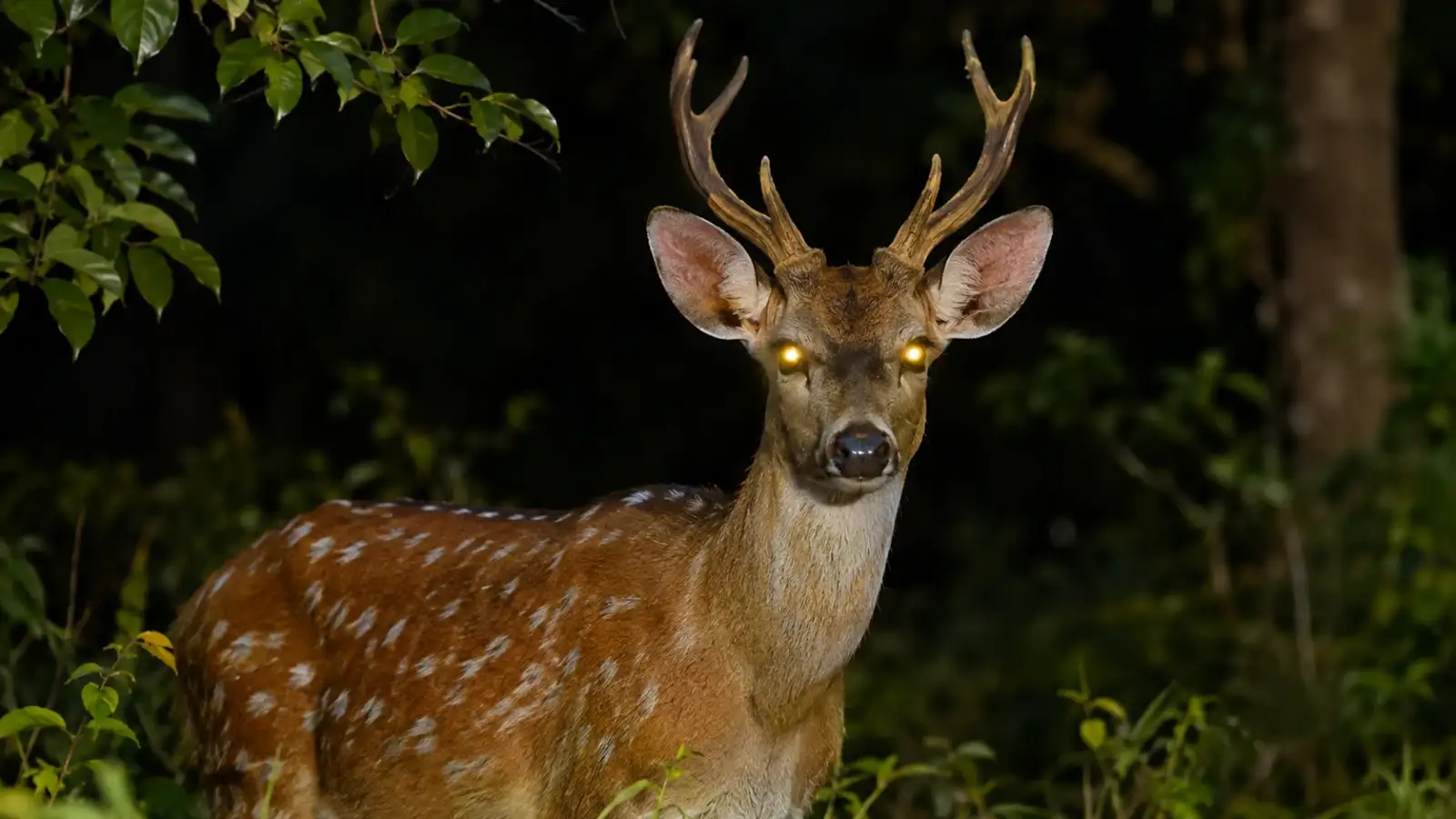
When light enters the eye, it passes through the retina, where specialised cells detect it. In animals with a tapetum lucidum, some light that passes through the retina is reflected back through the light-sensitive cells.
This gives the retina another opportunity to detect incoming light, improving vision in dim surroundings. The reflected light is what people notice as eye shine.
Cats often show greenish or yellowish reflections, while dogs may display green, blue or yellow shades. Deer can produce bright yellow or orange reflections when illuminated at night.
The colour depends on factors such as the structure and composition of the reflective layer, the arrangement of its cells and the angle of incoming light. Camera flash, torchlight and vehicle headlights can therefore produce different-looking reflections.
It can support activities such as:
Human vision is adapted primarily for daytime activity, although we can still see in dim conditions by using the light-sensitive cells in our retinas. Our eyes adjust to darkness through changes in pupil size and the sensitivity of retinal cells.
The absence of a reflective layer means humans do not have the same night-vision advantage as many nocturnal animals.
This is why the eyes of deer, cats and other animals can appear particularly bright on dark roads. The effect is most noticeable when the light source and observer are positioned close to the same line of sight.
It can also help drivers notice animals near roads at night, although the reflected light may appear suddenly and should never be treated as a substitute for cautious driving.
Some nocturnal animals rely on other adaptations, such as large pupils, highly sensitive retinas, specialised hearing or an enhanced sense of smell. Certain species also use a combination of these features to navigate and find food in darkness.
For example, owls have highly specialised eyes that gather available light efficiently, but they do not have the same reflective layer found in cats and many other mammals.
In extremely dark conditions, many species depend more heavily on hearing, smell, touch and other senses. Some animals also use echolocation, which allows them to detect their surroundings through sound rather than vision.
This shows that survival at night often depends on several senses working together.
The reflective eyes of animals are not actually glowing in the dark. The effect is caused by light bouncing off a specialised layer behind the retina, known as the tapetum lucidum. This adaptation helps many species make better use of limited light and navigate their surroundings after sunset. From household pets to wild deer, this fascinating feature demonstrates how animals have developed different ways to survive and function in low-light environments.
1. What Makes Some Animals' Eyes Reflect Light?
The main reason behind this phenomenon is a structure called the tapetum lucidum . It is a reflective layer found behind the retina in the eyes of many nocturnal and crepuscular animals.When light enters the eye, it passes through the retina, where specialised cells detect it. In animals with a tapetum lucidum, some light that passes through the retina is reflected back through the light-sensitive cells.
This gives the retina another opportunity to detect incoming light, improving vision in dim surroundings. The reflected light is what people notice as eye shine.
2. Why Do Animal Eyes Appear to Glow in Different Colours?
The colour of reflected eye shine varies between species and can sometimes differ between individuals of the same species.Cats often show greenish or yellowish reflections, while dogs may display green, blue or yellow shades. Deer can produce bright yellow or orange reflections when illuminated at night.
The colour depends on factors such as the structure and composition of the reflective layer, the arrangement of its cells and the angle of incoming light. Camera flash, torchlight and vehicle headlights can therefore produce different-looking reflections.
3. Why Is This Feature Useful for Nocturnal Animals ?
Animals that remain active after sunset need ways to detect objects in low-light environments. The tapetum lucidum helps improve their ability to use limited available light.It can support activities such as:
- Finding food in dim surroundings.
- Detecting movement in darkness.
- Navigating through forests and open landscapes.
- Identifying potential predators or threats.
- Moving safely during dawn, dusk and nighttime.
4. Which Animals Have Reflective Eyes?
Several animal groups have a tapetum lucidum, although its structure and effectiveness vary.- Cats: Domestic cats have a well-developed reflective layer that supports their vision in low light.
- Dogs: Many dogs have a tapetum lucidum, although the appearance of their eye shine varies.
- Deer: Their reflective eyes help them detect movement and navigate in dim woodland environments.
- Crocodiles: These reptiles have reflective structures that support vision in low-light conditions, particularly around water.
- Horses: Horses possess a tapetum lucidum, which contributes to their ability to see in dim surroundings.
- Cattle: Many cattle have reflective eye structures that can produce noticeable shine at night.
5. Why Do Humans Not Have Reflective Eyes?
Humans do not have a tapetum lucidum, which is why our eyes do not normally produce the same strong reflection seen in cats and dogs.Human vision is adapted primarily for daytime activity, although we can still see in dim conditions by using the light-sensitive cells in our retinas. Our eyes adjust to darkness through changes in pupil size and the sensitivity of retinal cells.
The absence of a reflective layer means humans do not have the same night-vision advantage as many nocturnal animals.
6. Why Do Animal Eyes Shine More Brightly in Headlights?
When a vehicle's headlights fall directly on an animal's eyes, the reflective layer sends some of that light back towards its source.This is why the eyes of deer, cats and other animals can appear particularly bright on dark roads. The effect is most noticeable when the light source and observer are positioned close to the same line of sight.
It can also help drivers notice animals near roads at night, although the reflected light may appear suddenly and should never be treated as a substitute for cautious driving.
7. Do All Nocturnal Animals Have Reflective Eyes?
No. Not every animal that is active at night has a tapetum lucidum.You may also like
- 3 tips to reduce cholesterol
- Who Was Devsena? The Goddess Behind Kartikeya's Birth
- No financial worries in your old age! Understand the 'super-combo' of EPF and NPS for a perfect 25-year retirement plan..
- Is seeing Chhath Puja in a dream auspicious or inauspicious? Here are 6 significant signs according to dream interpretation.
- Ginger Storage Tips: Does ginger dry out quickly? A magical way to keep it fresh for up to 1 month.
Some nocturnal animals rely on other adaptations, such as large pupils, highly sensitive retinas, specialised hearing or an enhanced sense of smell. Certain species also use a combination of these features to navigate and find food in darkness.
For example, owls have highly specialised eyes that gather available light efficiently, but they do not have the same reflective layer found in cats and many other mammals.
8. Can Animals See in Complete Darkness?
The tapetum lucidum improves the use of available light, but it cannot create light where none exists. Even animals with excellent night vision need at least some light to form visual images.In extremely dark conditions, many species depend more heavily on hearing, smell, touch and other senses. Some animals also use echolocation, which allows them to detect their surroundings through sound rather than vision.
This shows that survival at night often depends on several senses working together.
The reflective eyes of animals are not actually glowing in the dark. The effect is caused by light bouncing off a specialised layer behind the retina, known as the tapetum lucidum. This adaptation helps many species make better use of limited light and navigate their surroundings after sunset. From household pets to wild deer, this fascinating feature demonstrates how animals have developed different ways to survive and function in low-light environments.






Loving Newspoint? Download the app now
