
Why Do Deep-Sea Animals Glow in the Dark? The Science Behind Nature's Underwater Lights

The deep ocean is one of the darkest environments on Earth, yet many of its inhabitants can produce their own light. From tiny drifting organisms to unusual fish with glowing organs, these animals use light in ways that help them survive in a challenging environment. This natural phenomenon, known as bioluminescence, allows certain marine creatures to attract prey, communicate, find potential mates or confuse predators. Although glowing animals may appear mysterious, their light serves practical biological purposes. Understanding why aquatic animals glow reveals how life has adapted to the ocean's darkness and how scientists continue to explore these remarkable underwater ecosystems.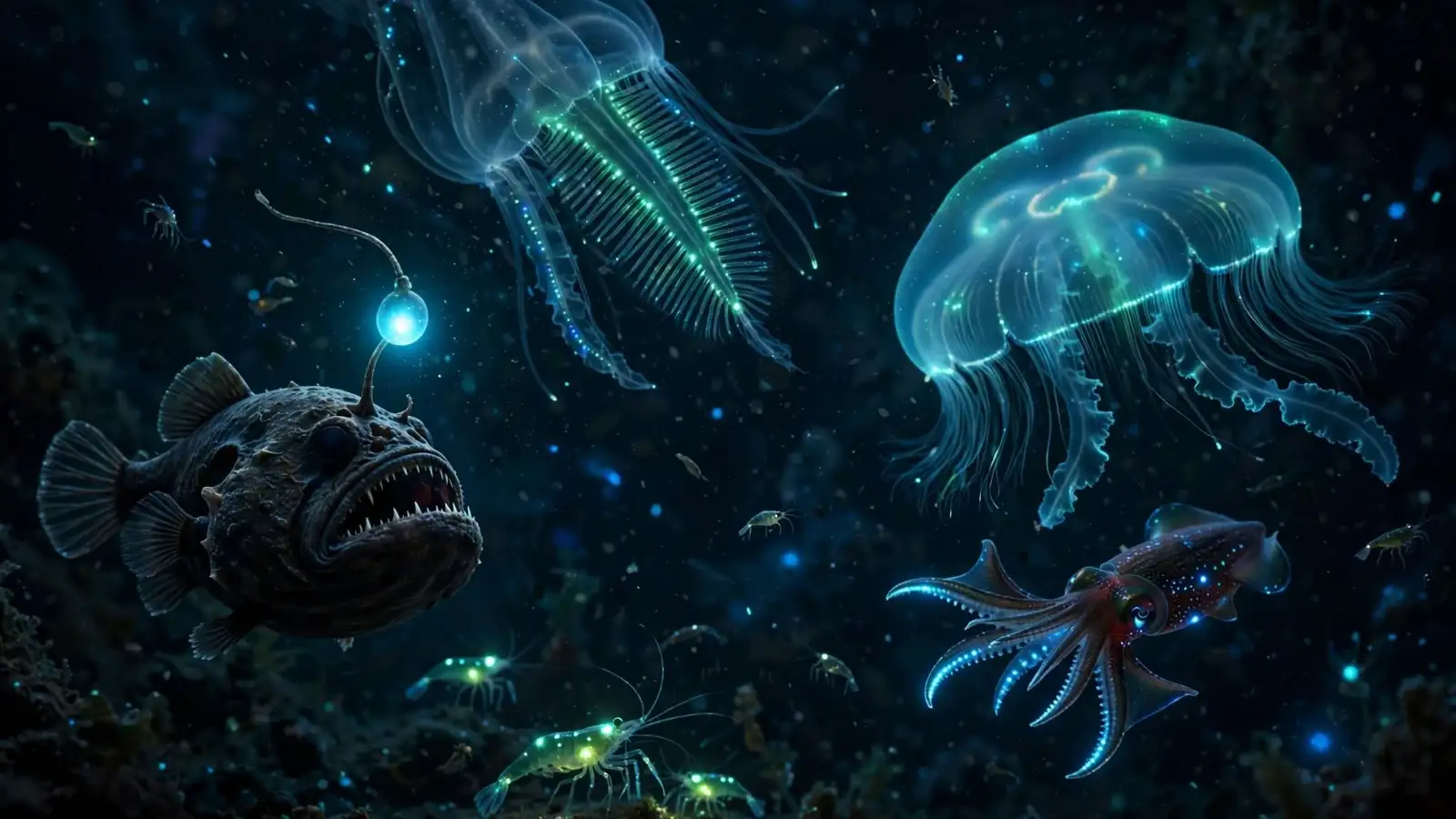
In many bioluminescent species, a light-producing molecule called luciferin reacts with oxygen, often with the help of an enzyme called luciferase. The reaction releases energy as light. However, the precise chemistry varies among organisms, and not every species uses the same system.
Some animals produce light within specialised organs called photophores. Others rely on light-producing bacteria that live inside or on their bodies.
Most marine bioluminescence appears blue or blue-green. These colours travel relatively well through seawater compared with many longer wavelengths, making them useful for signalling and visibility in the ocean.
In this environment, producing light can offer a major advantage. A glowing signal may be visible to another animal even when the surrounding water is almost completely dark.
However, light can also attract unwanted attention. Deep-sea animals therefore use different strategies, such as producing brief flashes, directing light towards specific areas or controlling when their light-producing organs are active.
The benefits depend on the species and its surroundings. For some animals, light helps with hunting. For others, it offers a way to avoid becoming another animal's meal.
The anglerfish is a well-known example. Many species have a specialised structure extending from the head, often tipped with a light-producing lure. In species that use bioluminescent bacteria , the glow helps make the lure stand out in the darkness.
Smaller animals may approach the light, giving the predator an opportunity to capture them. The exact behaviour varies between species, and scientists are still learning how different deep-sea animals respond to these signals.
Other predators use glowing body parts or light patterns in different ways to improve their chances of finding food.
Certain squid and small crustaceans release glowing material into the water when threatened. This can distract a predator or create a brief cloud of light, allowing the animal to move away.
Some species use a technique called counterillumination. They produce light on the underside of their bodies to match the faint light coming from above. This reduces the dark silhouette they would otherwise create when viewed from below.
By making their bodies harder to distinguish from the surrounding water, these animals can become less visible to predators that hunt by looking upwards.
Some species produce particular patterns or sequences of flashes. These signals can help distinguish individuals of the same species from other animals in the area.
The timing, colour and location of the light may all matter. In some animals, specialised light organs allow signals to be directed towards a particular part of the body or environment.
However, communication through bioluminescence is not equally well understood across all species. Scientists continue to investigate which patterns carry specific information and how animals interpret them.
In these partnerships, bacteria live in specialised organs or other suitable areas of an animal's body. The bacteria produce light, while the host provides a protected environment and access to nutrients.
Certain fish use this arrangement to illuminate lures or create signals. The relationship benefits the animal when the light supports activities such as hunting or communication, while the bacteria gain a place to live.
These partnerships are an example of how different organisms can work together in the marine environment. The details of the relationship vary, including how the bacteria are acquired and how their light production is controlled.
This does not mean that all bioluminescence is blue. Some organisms produce light in other colours, and the colour perceived by an observer can depend on the animal's biology and the surrounding environment.
Some deep-sea fish can detect red light even though much of the surrounding ocean is dark to red wavelengths. This gives certain species a specialised way to illuminate or observe nearby prey without making themselves as visible to other animals.
The relationship between light production and light detection is one of the most fascinating aspects of deep-sea biology.
Some microscopic plankton produce flashes when disturbed, creating glowing effects in coastal water under suitable conditions. Certain jellyfish and other marine organisms can also produce light near the surface.
The frequency and appearance of these displays depend on the species, water conditions and time of day. Glowing water is not necessarily a sign of pollution, but unusual discolouration or large blooms may require closer scientific assessment.
It is also important to distinguish bioluminescence from fluorescence. Bioluminescence involves a chemical reaction that produces light, while fluorescence occurs when an organism absorbs light from an external source and re-emits it at a different wavelength.
Bioluminescence helps many aquatic animals survive in environments where sunlight is limited or absent. Depending on the species, natural light can attract prey, confuse predators, support communication or help an animal blend into its surroundings. Some creatures produce light through their own chemical reactions, while others depend on glowing bacteria. Although scientists have discovered many of the mechanisms behind this phenomenon, the deep ocean still holds unanswered questions about how marine animals use light. These natural displays reveal the remarkable ways life adapts to one of Earth's most challenging habitats.
What Is Bioluminescence?
Bioluminescence is the production of light by a living organism through a chemical reaction. It occurs in a variety of animals, including certain fish, jellyfish, squid, crustaceans and microscopic marine organisms.In many bioluminescent species, a light-producing molecule called luciferin reacts with oxygen, often with the help of an enzyme called luciferase. The reaction releases energy as light. However, the precise chemistry varies among organisms, and not every species uses the same system.
Some animals produce light within specialised organs called photophores. Others rely on light-producing bacteria that live inside or on their bodies.
Most marine bioluminescence appears blue or blue-green. These colours travel relatively well through seawater compared with many longer wavelengths, making them useful for signalling and visibility in the ocean.
Why Is Glowing Useful in the Deep Ocean?
Sunlight becomes weaker as it travels deeper into the ocean. Below the sunlit surface layers, natural light declines significantly, and at great depths, sunlight is effectively absent.In this environment, producing light can offer a major advantage. A glowing signal may be visible to another animal even when the surrounding water is almost completely dark.
However, light can also attract unwanted attention. Deep-sea animals therefore use different strategies, such as producing brief flashes, directing light towards specific areas or controlling when their light-producing organs are active.
The benefits depend on the species and its surroundings. For some animals, light helps with hunting. For others, it offers a way to avoid becoming another animal's meal.
1. Attracting Prey With Natural Light
Some deep-sea predators use light to lure smaller animals within striking distance.The anglerfish is a well-known example. Many species have a specialised structure extending from the head, often tipped with a light-producing lure. In species that use bioluminescent bacteria , the glow helps make the lure stand out in the darkness.
Smaller animals may approach the light, giving the predator an opportunity to capture them. The exact behaviour varies between species, and scientists are still learning how different deep-sea animals respond to these signals.
Other predators use glowing body parts or light patterns in different ways to improve their chances of finding food.
2. Escaping Predators Through Glowing Defence
It may seem strange that an animal would produce light to avoid being seen, but bioluminescence can sometimes help a creature escape.Certain squid and small crustaceans release glowing material into the water when threatened. This can distract a predator or create a brief cloud of light, allowing the animal to move away.
Some species use a technique called counterillumination. They produce light on the underside of their bodies to match the faint light coming from above. This reduces the dark silhouette they would otherwise create when viewed from below.
By making their bodies harder to distinguish from the surrounding water, these animals can become less visible to predators that hunt by looking upwards.
3. Finding Mates and Communicating
Light can also act as a signal between members of the same species. In the vast darkness of the ocean, a visual signal may help animals locate potential mates or recognise others of their kind.Some species produce particular patterns or sequences of flashes. These signals can help distinguish individuals of the same species from other animals in the area.
The timing, colour and location of the light may all matter. In some animals, specialised light organs allow signals to be directed towards a particular part of the body or environment.
However, communication through bioluminescence is not equally well understood across all species. Scientists continue to investigate which patterns carry specific information and how animals interpret them.
4. Using Glowing Bacteria to Produce Light
Not every glowing marine animal makes its own light-producing chemicals. Some rely on symbiotic relationships with bioluminescent bacteria.In these partnerships, bacteria live in specialised organs or other suitable areas of an animal's body. The bacteria produce light, while the host provides a protected environment and access to nutrients.
Certain fish use this arrangement to illuminate lures or create signals. The relationship benefits the animal when the light supports activities such as hunting or communication, while the bacteria gain a place to live.
You may also like
- She failed UPSC 6 times, and her decade-long dream collapsed at 30; today she has taught around 900 kids and employed nearly 30 women: Meet Shruti Srivastava
- Food Processing May Affect the Body Differently Even When Meals Have the Same Nutrients
- Meet Ashaatti Ammumma: Kerala grandmother wins hearts by teaching kids to write in sand
- Keeping these 5 plants at home can attract wealth and prosperity
- A Tamil Nadu boy was denied access to a library in his own neighbourhood; years after he helped open one in Coimbatore, the number of graduates in his community has risen from just 4 to 30
These partnerships are an example of how different organisms can work together in the marine environment. The details of the relationship vary, including how the bacteria are acquired and how their light production is controlled.
5. Why Are Most Deep-Sea Lights Blue or Green?
Many deep-sea animals produce blue or blue-green light because these wavelengths travel efficiently through seawater. Red light is absorbed relatively quickly, making it less useful for signalling over long distances in most marine conditions.This does not mean that all bioluminescence is blue. Some organisms produce light in other colours, and the colour perceived by an observer can depend on the animal's biology and the surrounding environment.
Some deep-sea fish can detect red light even though much of the surrounding ocean is dark to red wavelengths. This gives certain species a specialised way to illuminate or observe nearby prey without making themselves as visible to other animals.
The relationship between light production and light detection is one of the most fascinating aspects of deep-sea biology.
Are All Glowing Marine Animals Found in Deep Water?
No. Although bioluminescence is strongly associated with the deep ocean, it also occurs in shallower waters.Some microscopic plankton produce flashes when disturbed, creating glowing effects in coastal water under suitable conditions. Certain jellyfish and other marine organisms can also produce light near the surface.
The frequency and appearance of these displays depend on the species, water conditions and time of day. Glowing water is not necessarily a sign of pollution, but unusual discolouration or large blooms may require closer scientific assessment.
It is also important to distinguish bioluminescence from fluorescence. Bioluminescence involves a chemical reaction that produces light, while fluorescence occurs when an organism absorbs light from an external source and re-emits it at a different wavelength.
Bioluminescence helps many aquatic animals survive in environments where sunlight is limited or absent. Depending on the species, natural light can attract prey, confuse predators, support communication or help an animal blend into its surroundings. Some creatures produce light through their own chemical reactions, while others depend on glowing bacteria. Although scientists have discovered many of the mechanisms behind this phenomenon, the deep ocean still holds unanswered questions about how marine animals use light. These natural displays reveal the remarkable ways life adapts to one of Earth's most challenging habitats.






Loving Newspoint? Download the app now
