
Why Are So Many Uttarakhand Villages Being Abandoned? The Story Behind Ghost Villages

In some parts of Uttarakhand, a village can look perfectly intact from the outside while having almost no permanent residents. Stone houses remain standing, terraces still mark the slopes and old paths connect one settlement to another. But the people who once gave these places their rhythm have moved elsewhere. The phenomenon is often described through the dramatic phrase “ ghost villages ”. NITI Aayog has noted that Uttarakhand has around 16,500 villages, with 734 described as ghost villages in one assessment. The reasons include limited employment, uneconomical landholdings and the aspirations of educated young people.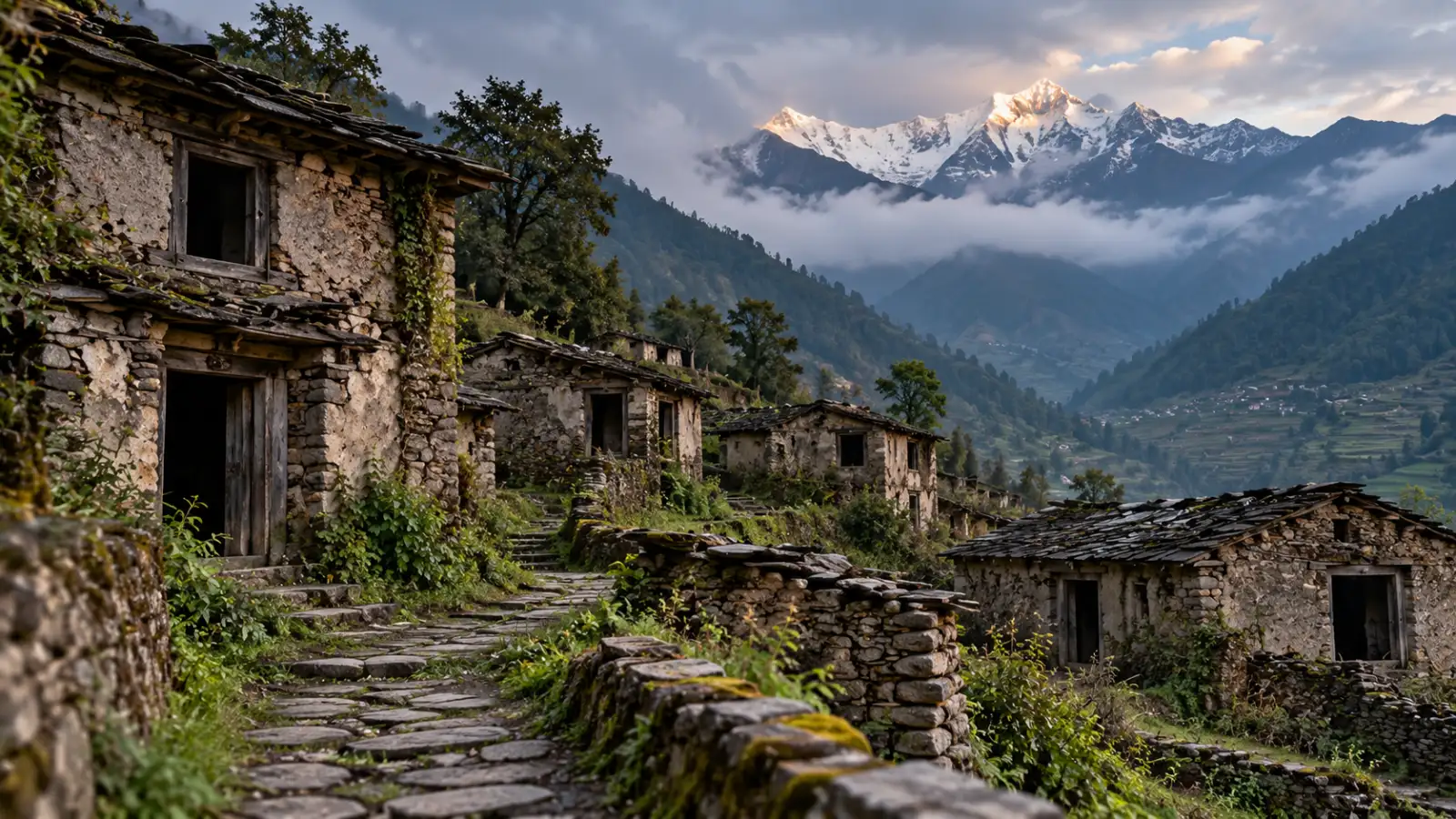
For many families, the decision begins with employment. Agriculture on steep, fragmented land can be difficult, while regular salaried work is concentrated in towns and cities.
Education creates another powerful pull. Young people who leave villages for colleges often find jobs elsewhere and eventually establish their households there.
Government assessments have also identified the concentration of economic opportunities in the plains as a major factor behind migration from hill areas.
Some houses are occupied seasonally. Families who have moved to Dehradun, Delhi or other cities may return during festivals, agricultural periods or family ceremonies.
There are also villages where a handful of older residents remain after younger generations have moved away.
That creates a peculiar landscape: buildings remain, but the population structure has changed dramatically.
Fields may stop being cultivated. Traditional water systems can become difficult to maintain. Local knowledge about crops, forests, livestock and mountain pathways may disappear when younger generations no longer practise it.
The environmental consequences can be complicated too. Reduced cultivation can allow vegetation to return in some places, but neglected terraces and infrastructure may deteriorate.
Uttarakhand's own programmes now focus on livelihoods and reverse migration . One state scheme, for example, identifies migration-affected villages and prioritises self-employment linked to agriculture, horticulture and animal husbandry.
The Uttarakhand Rural Development Department has documented a case in Munakot where a depopulated village began attracting families back through fruit plantation, livelihood development and plans to renovate old houses as homestays.
This suggests that migration does not always have to be a one-way process.
It raises a difficult question about what makes a place liveable. Roads and electricity matter, but so do schools, healthcare, employment and reliable incomes.
If young people can build viable livelihoods without permanently abandoning their ancestral villages, some of these settlements may have a future.
The real mystery, then, is not why people left. It is whether the mountains can create enough reasons for the next generation to return.
The Mountains Cannot Offer Every Opportunity
Migration is rarely caused by one factor.For many families, the decision begins with employment. Agriculture on steep, fragmented land can be difficult, while regular salaried work is concentrated in towns and cities.
Education creates another powerful pull. Young people who leave villages for colleges often find jobs elsewhere and eventually establish their households there.
Government assessments have also identified the concentration of economic opportunities in the plains as a major factor behind migration from hill areas.
Empty Houses Are Only One Part of the Story
An abandoned village is not necessarily completely empty forever.Some houses are occupied seasonally. Families who have moved to Dehradun, Delhi or other cities may return during festivals, agricultural periods or family ceremonies.
There are also villages where a handful of older residents remain after younger generations have moved away.
That creates a peculiar landscape: buildings remain, but the population structure has changed dramatically.
What Happens When People Leave?
The consequences extend beyond population numbers.Fields may stop being cultivated. Traditional water systems can become difficult to maintain. Local knowledge about crops, forests, livestock and mountain pathways may disappear when younger generations no longer practise it.
The environmental consequences can be complicated too. Reduced cultivation can allow vegetation to return in some places, but neglected terraces and infrastructure may deteriorate.
Uttarakhand's own programmes now focus on livelihoods and reverse migration . One state scheme, for example, identifies migration-affected villages and prioritises self-employment linked to agriculture, horticulture and animal husbandry.
Some Villages Are Trying to Come Back
There are encouraging examples.You may also like
- Waking Up Suddenly in the Middle of the Night? Experts Warn It Could Be a Sign of Insomnia or Sleep Apnea
- Invest just ₹10,000 per month starting at age 40; understand the monthly pension you will receive through this calculation..
- Salary vs. Savings Account: What is the difference between the two, and which account offers 8 major benefits?
- Aadhaar linking with ESIC has become mandatory; failure to do so could halt free medical treatment! Learn the step-by-step process..
- Can one FASTag be used for two vehicles? Know the NHAI rule
The Uttarakhand Rural Development Department has documented a case in Munakot where a depopulated village began attracting families back through fruit plantation, livelihood development and plans to renovate old houses as homestays.
This suggests that migration does not always have to be a one-way process.
Why These Villages Matter
The story of Uttarakhand's abandoned villages is ultimately about more than empty houses.It raises a difficult question about what makes a place liveable. Roads and electricity matter, but so do schools, healthcare, employment and reliable incomes.
If young people can build viable livelihoods without permanently abandoning their ancestral villages, some of these settlements may have a future.
The real mystery, then, is not why people left. It is whether the mountains can create enough reasons for the next generation to return.






Loving Newspoint? Download the app now
