
Why Do Some Beaches Glow Blue at Night? The Natural Science Behind This Magical Sight

Imagine standing on a quiet beach after sunset and watching the waves leave a trail of bright blue light along the shore. Every movement of the water seems to produce tiny glowing sparks, making the sea look almost magical. This unusual natural phenomenon is known as bioluminescence. It occurs when certain living organisms in the water produce light through a chemical reaction. Although it may look like something from a fantasy film, the glowing effect has a scientific explanation. Some coastal locations around the world experience this striking display under suitable environmental conditions.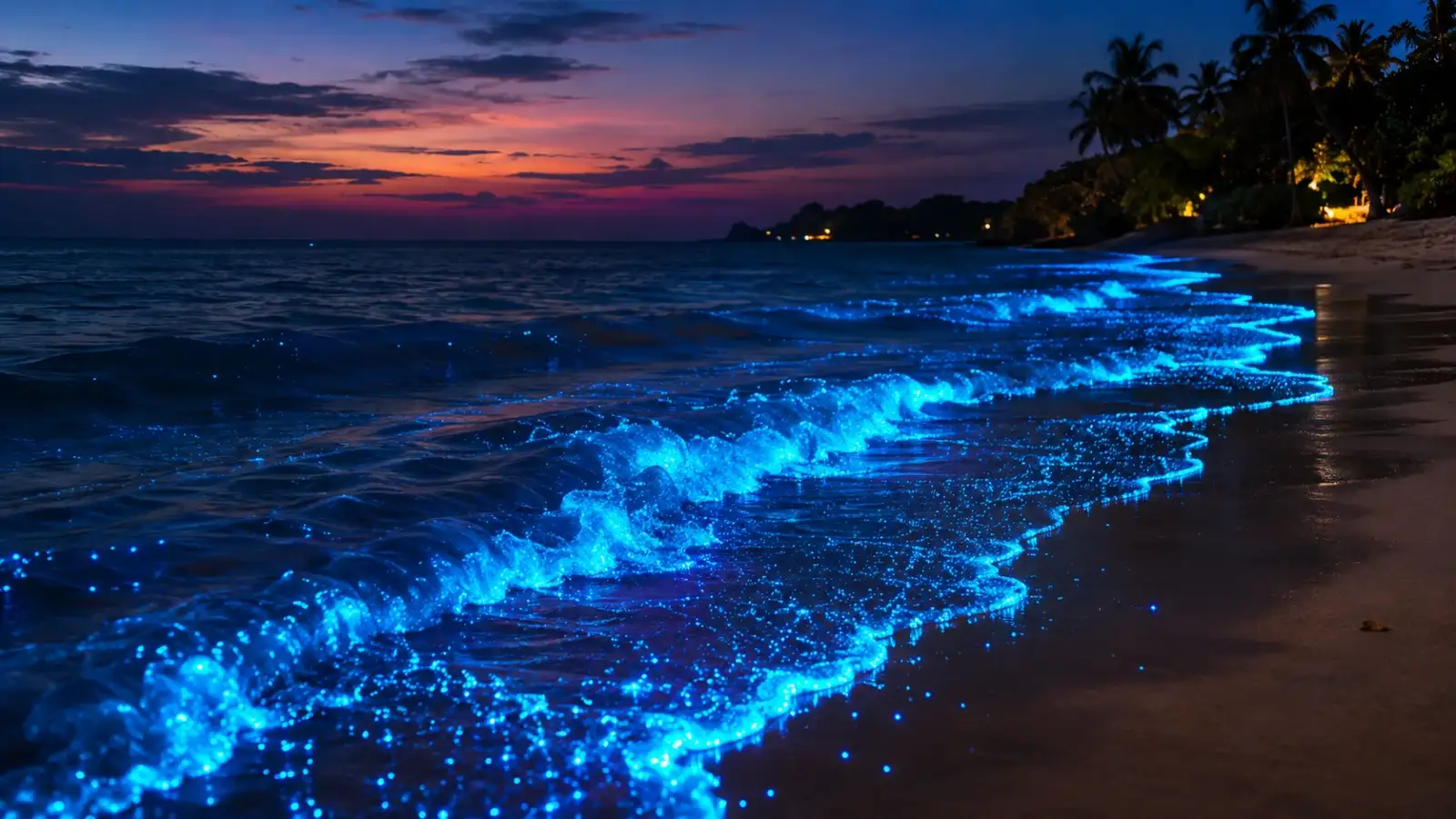
When disturbed by moving waves, swimming animals or footsteps in shallow water, some of them produce a brief flash of blue light. As countless organisms respond to movement, the shoreline can appear to glow.
When these substances react in the presence of oxygen, energy is released in the form of light. Different organisms use different biochemical systems, but the result is a natural glow that can be seen in dark surroundings.
The blue colour is particularly common in marine bioluminescence because blue light travels relatively well through seawater.
This is why the blue glow is often seen along the edges of waves or around objects moving through the water. The light may appear as tiny sparks, glowing foam or bright blue trails.
The intensity depends on the concentration of organisms, the amount of movement and the surrounding darkness.
Some organisms associated with bioluminescent displays may occur during algal blooms, and certain blooms can involve species that produce harmful toxins. The presence of blue light alone does not confirm whether the water is safe.
Visitors should follow local beach advisories, avoid swimming when warnings are issued and never drink seawater. It is also better to observe the display without disturbing marine life.
Blue-glowing beaches are an example of how extraordinary natural processes can transform an ordinary coastline after dark. The phenomenon is often caused by microscopic marine organisms that produce light when disturbed by moving water. Although the sight can be spectacular, it depends on specific environmental conditions and cannot be guaranteed at any beach. Understanding the science behind bioluminescence makes the experience even more fascinating, while reminding us to respect and protect delicate marine ecosystems.
1. Bioluminescent Plankton Create the Blue Glow
One of the main reasons some beaches glow at night is the presence of bioluminescent microorganisms, particularly certain types of dinoflagellates . These microscopic organisms live in marine and coastal waters.When disturbed by moving waves, swimming animals or footsteps in shallow water, some of them produce a brief flash of blue light. As countless organisms respond to movement, the shoreline can appear to glow.
2. The Science Behind Bioluminescence
Bioluminescence is the production of light by a living organism through a chemical reaction. In many bioluminescent organisms, the reaction involves a light-producing molecule called luciferin and an enzyme called luciferase.When these substances react in the presence of oxygen, energy is released in the form of light. Different organisms use different biochemical systems, but the result is a natural glow that can be seen in dark surroundings.
The blue colour is particularly common in marine bioluminescence because blue light travels relatively well through seawater.
3. Why Do Waves Make the Water Glow?
The glowing effect becomes visible when water movement stimulates the organisms responsible for producing light. Breaking waves, splashing water and currents can trigger flashes in large numbers of microorganisms.This is why the blue glow is often seen along the edges of waves or around objects moving through the water. The light may appear as tiny sparks, glowing foam or bright blue trails.
The intensity depends on the concentration of organisms, the amount of movement and the surrounding darkness.
4. What Conditions Help Create Glowing Beaches?
Bioluminescent displays do not happen equally often at every beach. Their appearance depends on several environmental factors.- Darkness: The glow is easier to notice away from bright artificial lights and during darker nights.
- Organism concentration: A larger number of bioluminescent organisms can create a more visible display.
- Water conditions: Temperature, nutrients, currents and other environmental factors can influence plankton populations.
- Water movement: Waves and disturbances can trigger light production in certain organisms.
5. Famous Places Where Beaches Can Glow at Night
Several coastal destinations are known for occasional bioluminescent displays.- Vaadhoo Island, Maldives: It is widely associated with glowing shorelines, where blue light can sometimes appear along the waves.
- Mosquito Bay, Puerto Rico: This bioluminescent bay is famous for its glowing water, largely associated with dinoflagellates.
- Toyama Bay, Japan: The bay is known for the blue glow produced by firefly squid, particularly during their seasonal appearances.
- Jervis Bay, Australia: Bioluminescent displays have occasionally been reported along its coastline.
6. Is the Glowing Water Safe to Touch?
Bioluminescence itself is a natural phenomenon, but glowing water should not automatically be considered safe for swimming.Some organisms associated with bioluminescent displays may occur during algal blooms, and certain blooms can involve species that produce harmful toxins. The presence of blue light alone does not confirm whether the water is safe.
Visitors should follow local beach advisories, avoid swimming when warnings are issued and never drink seawater. It is also better to observe the display without disturbing marine life.
Blue-glowing beaches are an example of how extraordinary natural processes can transform an ordinary coastline after dark. The phenomenon is often caused by microscopic marine organisms that produce light when disturbed by moving water. Although the sight can be spectacular, it depends on specific environmental conditions and cannot be guaranteed at any beach. Understanding the science behind bioluminescence makes the experience even more fascinating, while reminding us to respect and protect delicate marine ecosystems.
Next Story