
Why Does Being Left On Seen Feel Worse Than A Straight-Up No?

You send the message. Nothing unusual. Maybe you ask a question, make a plan or send something you think the other person will actually want to reply to. Then you see it. Seen. And that is it. No reply. Now you are checking your phone every few minutes, wondering whether you said something weird, whether they are annoyed with you or whether they are deliberately ignoring you. A straight-up no would probably hurt. But somehow, being left on seen can feel even worse. Why?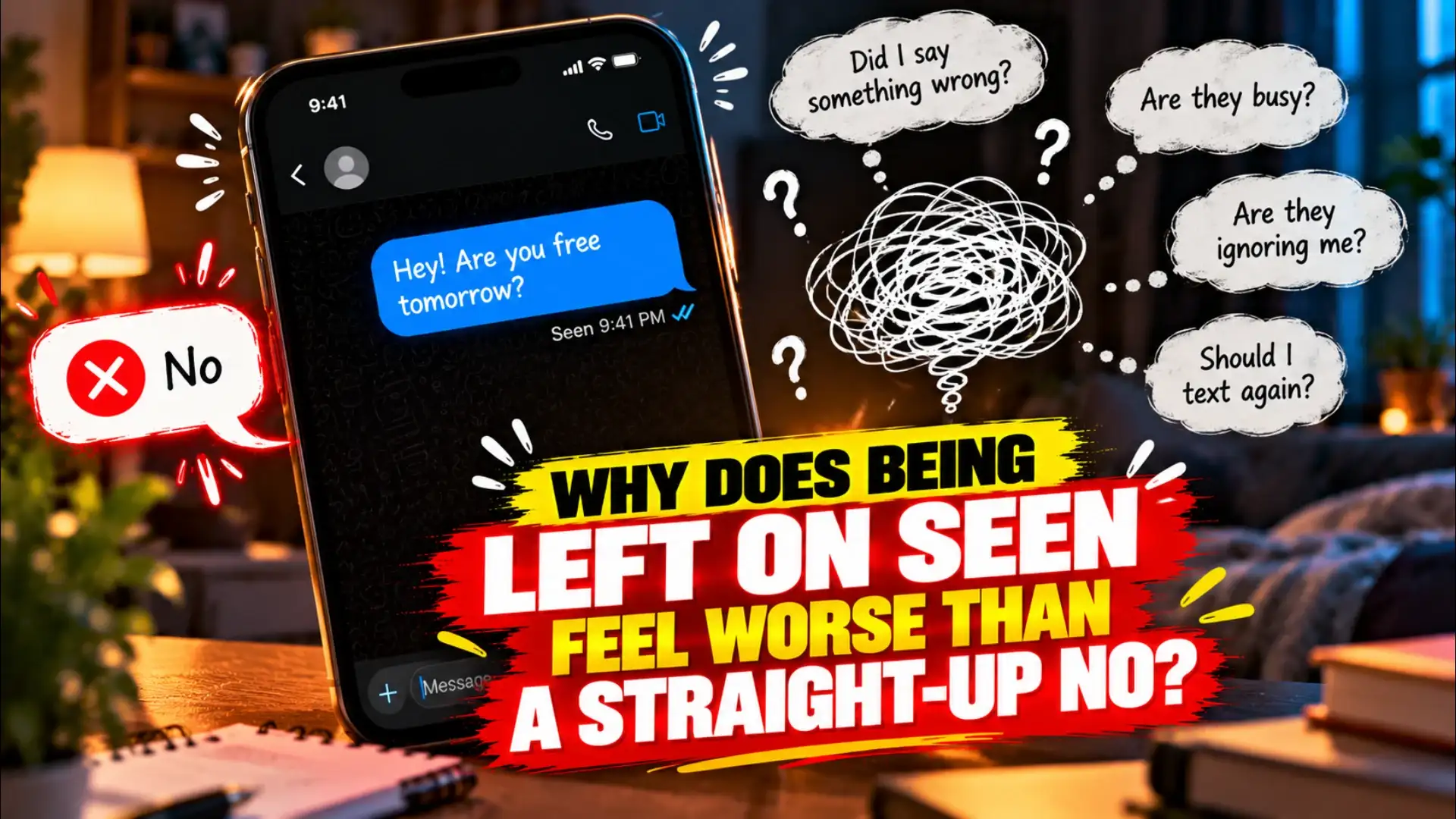
And the brain does not particularly enjoy unanswered questions. So you start trying to solve the mystery yourself. Maybe they are busy. Maybe they forgot. Maybe they do not know what to say. Maybe they are annoyed. Maybe they are deliberately avoiding me. The possibilities keep multiplying.
You reread your message. You look at the punctuation. You wonder whether that joke landed badly. You think about the last conversation you had. Suddenly, a message that took five seconds to send has become a full investigation. And none of those explanations may actually be true. They could simply be busy.
You know they saw it. So your brain naturally asks the next question: If they saw it, why haven't they replied? Of course, seeing a message and having the time, energy or answer to respond are completely different things. But emotionally, that distinction is easy to forget.
The phone has not changed. The conversation has not changed. But your attention keeps returning to it because there is still no resolution. That is part of what makes an unanswered message so mentally sticky.
And yes, sometimes people do deliberately avoid replying. The problem is that a seen receipt cannot tell you which one is happening. So the next time you find yourself analysing a three-word message for half an hour, remember that you may be trying to find certainty in a situation that simply does not provide it. A seen message is information. It is not an explanation. And sometimes, that little difference is exactly why it bothers us so much.
At Least A No Gives You An Answer
Rejection is unpleasant, but it is clear. If someone says they cannot come, does not agree or simply tells you they are not interested, you know what happened. Being left on seen gives you none of that certainty. You are left with a question instead of an answer.And the brain does not particularly enjoy unanswered questions. So you start trying to solve the mystery yourself. Maybe they are busy. Maybe they forgot. Maybe they do not know what to say. Maybe they are annoyed. Maybe they are deliberately avoiding me. The possibilities keep multiplying.
Your Brain Starts Filling In The Silence
When information is missing, we naturally try to make sense of it. The problem is that when you care about the person or the conversation, your guesses can become much more personal. A delayed reply suddenly feels like evidence.You reread your message. You look at the punctuation. You wonder whether that joke landed badly. You think about the last conversation you had. Suddenly, a message that took five seconds to send has become a full investigation. And none of those explanations may actually be true. They could simply be busy.
The Seen Receipt Makes It Feel More Personal
Before read receipts became common, silence was just silence. You could tell yourself the person had not seen the message. Now, platforms can sometimes show you that someone has opened it. That tiny word can completely change how the silence feels.You know they saw it. So your brain naturally asks the next question: If they saw it, why haven't they replied? Of course, seeing a message and having the time, energy or answer to respond are completely different things. But emotionally, that distinction is easy to forget.
Waiting Makes You Check More
The longer you wait, the more noticeable the absence of a reply becomes. You might open the chat. Close it. Open another app. Come back. Check whether they are online. Then check again.The phone has not changed. The conversation has not changed. But your attention keeps returning to it because there is still no resolution. That is part of what makes an unanswered message so mentally sticky.
It Does Not Always Mean Anything About You
This is probably the most important part. Being left on seen does not automatically mean someone is angry, losing interest or trying to make a point. People forget to reply. They get distracted. They open a message at the wrong time. They want to respond properly and then forget. Sometimes they simply do not know what to say.And yes, sometimes people do deliberately avoid replying. The problem is that a seen receipt cannot tell you which one is happening. So the next time you find yourself analysing a three-word message for half an hour, remember that you may be trying to find certainty in a situation that simply does not provide it. A seen message is information. It is not an explanation. And sometimes, that little difference is exactly why it bothers us so much.
Next Story