
Bishnupur's Terracotta Temples: The Fascinating Story Behind Their Unique Architecture

Bishnupur, a historic town in West Bengal's Bankura district, is widely recognised for its remarkable terracotta temples. Built mainly during the reign of the Malla kings, these structures showcase the region's distinctive architectural style and artistic traditions. Their walls feature detailed panels depicting scenes from Hindu epics, religious stories, everyday life and nature. Unlike temples made from stone or marble, many of Bishnupur's historic shrines were constructed using locally available bricks and terracotta. This combination of craftsmanship, history and cultural expression has made Bishnupur an important destination for heritage enthusiasts and architecture lovers.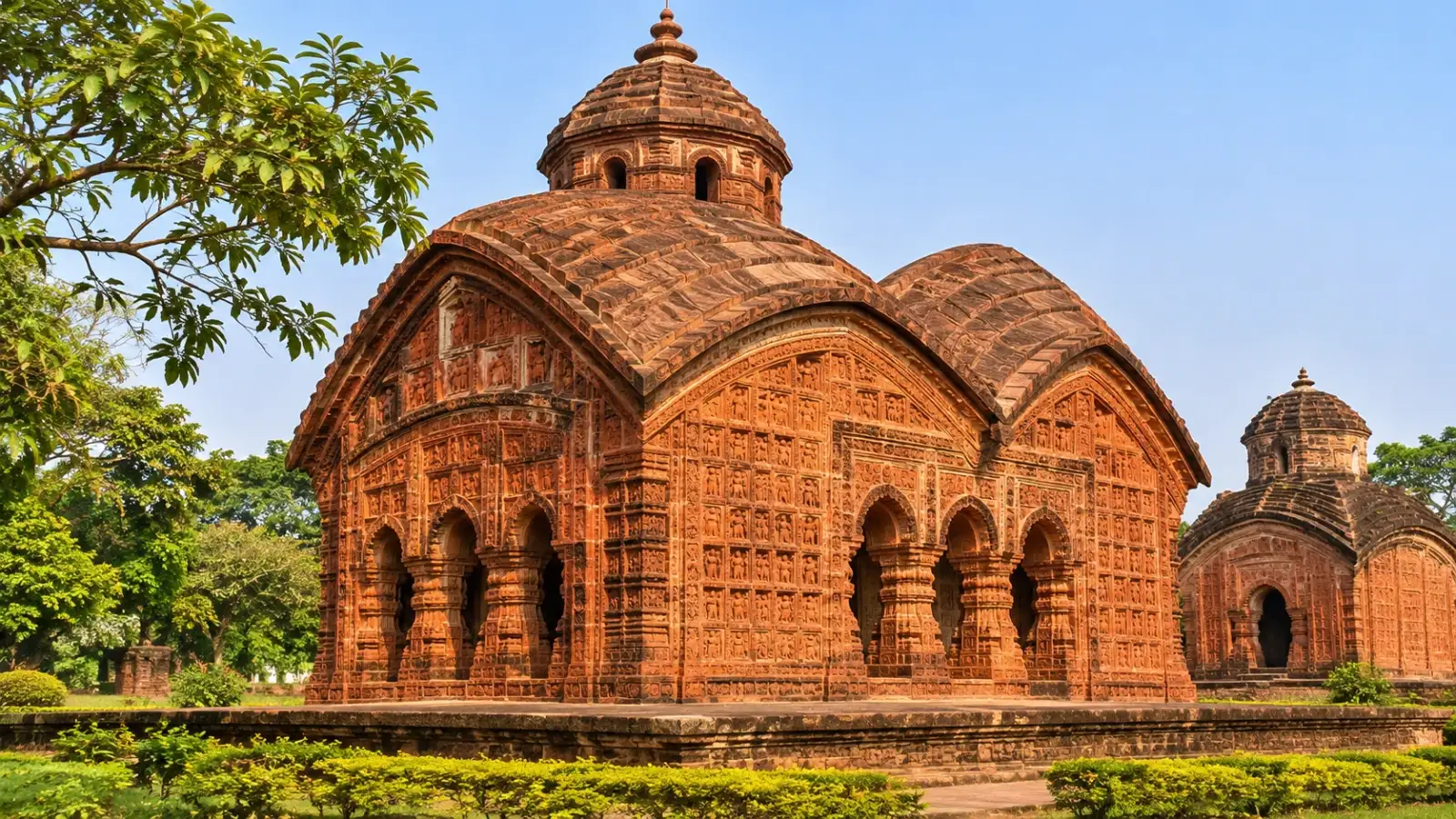
The Malla rulers encouraged local artisans to create religious structures that reflected their devotion as well as the artistic traditions of Bengal. Terracotta became a preferred decorative medium, helping craftsmen transform ordinary brick walls into detailed works of art.
Artisans moulded clay into intricate designs, dried the pieces and fired them to create durable terracotta elements. These were then used to decorate temple walls, entrances, pillars and facades.
The material allowed craftsmen to create detailed patterns and storytelling panels that would have been difficult to achieve using ordinary brickwork.
Some panels also depict musicians, dancers, animals, floral patterns, royal processions and aspects of everyday life. These carvings offer a glimpse into the religious beliefs, social customs and artistic imagination of the period.
The Bishnupur gharana of classical music is another important part of its heritage. These artistic traditions reflect the region's long association with royal patronage, skilled craftsmanship and cultural expression.
Bishnupur's terracotta temples are more than historic places of worship. They represent the architectural innovation, religious devotion and artistic skills that flourished under the Malla rulers. From the unusual structure of Rasmancha to the detailed carvings of Jor Bangla and Shyam Rai temples, every monument tells a story about Bengal's cultural past. For anyone interested in history, architecture and traditional Indian craftsmanship, Bishnupur offers a memorable heritage experience.
The History Behind Bishnupur's Terracotta Temples
Bishnupur flourished as the capital of the Malla kingdom , whose rulers played an important role in shaping the town's cultural identity. Many of its most famous temples were built between the 17th and 18th centuries, particularly under rulers who supported Vaishnavism and temple construction.The Malla rulers encouraged local artisans to create religious structures that reflected their devotion as well as the artistic traditions of Bengal. Terracotta became a preferred decorative medium, helping craftsmen transform ordinary brick walls into detailed works of art.
Why Were the Temples Built Using Terracotta?
One major reason behind Bishnupur's distinctive architecture was the limited availability of suitable building stone in the surrounding region. Local builders relied heavily on clay, which was readily available and could be shaped into bricks and decorative panels.Artisans moulded clay into intricate designs, dried the pieces and fired them to create durable terracotta elements. These were then used to decorate temple walls, entrances, pillars and facades.
The material allowed craftsmen to create detailed patterns and storytelling panels that would have been difficult to achieve using ordinary brickwork.
Famous Terracotta Temples to Explore in Bishnupur
Several temples in Bishnupur demonstrate the variety of architectural styles developed under the Malla rulers.1. Rasmancha
Rasmancha is among Bishnupur's most recognisable historic structures. Built by King Bir Hambir in the late 16th century, it has a distinctive pyramidal roof supported by arches. Unlike conventional temples, it was designed to display images of Krishna from surrounding temples during the Ras festival.2. Jor Bangla Temple
Also known as Keshta Rai Temple, this structure was built during the reign of King Raghunath Singha in the 17th century. Its architecture resembles two traditional Bengal-style huts joined together. The exterior features detailed terracotta panels showing mythological scenes and decorative patterns.3. Shyam Rai Temple
Built during the reign of King Raghunath Singha, Shyam Rai Temple is particularly famous for its five towers, known as the Pancha Ratna style. Its walls contain elaborate terracotta carvings depicting episodes from the life of Krishna and scenes from Hindu mythology.4. Madan Mohan Temple
Constructed under King Durjana Singha in the late 17th century, Madan Mohan Temple is dedicated to Lord Krishna. Its distinctive architectural design and richly decorated walls make it one of the town's important heritage attractions.What Do the Terracotta Carvings Represent?
The decorative panels are among the most fascinating features of Bishnupur's temples. They illustrate stories from the Ramayana and Mahabharata, along with scenes associated with Krishna's life.Some panels also depict musicians, dancers, animals, floral patterns, royal processions and aspects of everyday life. These carvings offer a glimpse into the religious beliefs, social customs and artistic imagination of the period.
Bishnupur's Connection With Other Traditional Arts
The town's cultural importance extends beyond temple architecture. Bishnupur is also known for its Baluchari silk sarees, which traditionally feature elaborate woven designs inspired by mythology and historical stories.The Bishnupur gharana of classical music is another important part of its heritage. These artistic traditions reflect the region's long association with royal patronage, skilled craftsmanship and cultural expression.
Bishnupur's terracotta temples are more than historic places of worship. They represent the architectural innovation, religious devotion and artistic skills that flourished under the Malla rulers. From the unusual structure of Rasmancha to the detailed carvings of Jor Bangla and Shyam Rai temples, every monument tells a story about Bengal's cultural past. For anyone interested in history, architecture and traditional Indian craftsmanship, Bishnupur offers a memorable heritage experience.
Next Story