
Why You Sometimes Wake Up Minutes Before Your Alarm

You know that oddly satisfying moment when you wake up, reach for your phone and realise you have beaten your alarm by two or three minutes? It feels almost too precise to be a coincidence. Your phone has not rung, nobody has woken you, and yet, somehow, you are already staring at the ceiling wondering whether to go back to sleep.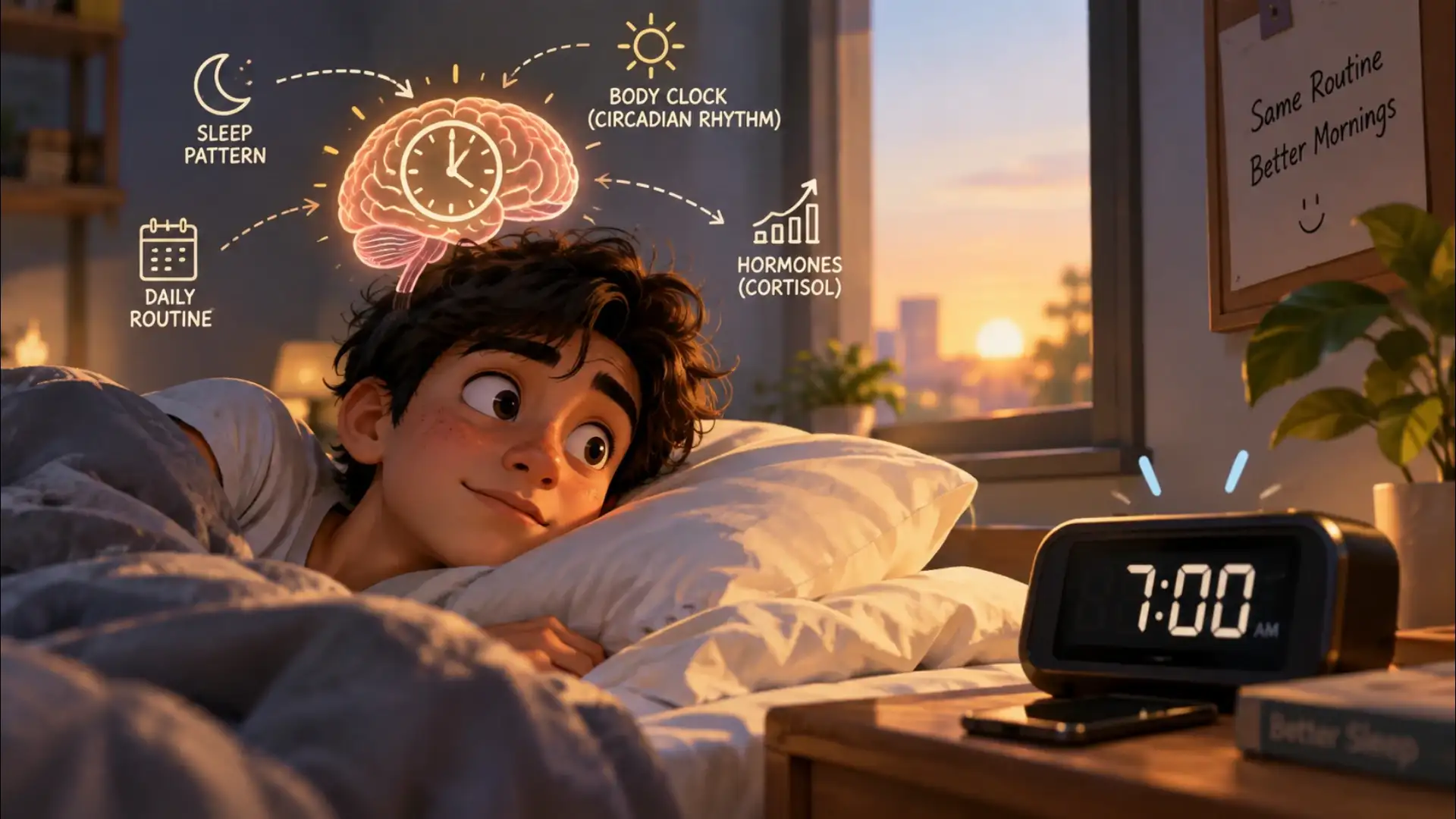
As morning approaches, the body gradually shifts towards a more alert state. Hormones, including cortisol, naturally rise around the time you wake, helping your body move from sleep towards wakefulness. So your system is not simply waiting for an alarm to suddenly tell it that morning has arrived.
There is another reason this can happen before an important morning. If you are worried about oversleeping for a flight, exam or meeting, your brain may stay more alert to the expected waking time. That does not mean it is consciously calculating the minutes, but your anticipation can influence how your sleep unfolds.
Light coming through the curtains, traffic outside, a change in temperature or even needing to use the bathroom can also wake you. You may then notice the time and assume your body predicted the alarm, when several small factors may have played a role.
So, the next time you wake up at 6:58am for a 7am alarm, you can give your brain some credit. Your internal clock may genuinely have helped prepare you for morning. And if you regularly wake up feeling refreshed before the alarm, your body may simply have become very good at recognising its routine.
Your Body Has Its Own Clock
Your body runs on a roughly 24-hour rhythm known as the circadian rhythm . It helps coordinate things such as sleep, wakefulness, body temperature and hormone activity. When you follow a fairly regular sleep schedule, your body starts getting familiar with when it is usually time to wake up.As morning approaches, the body gradually shifts towards a more alert state. Hormones, including cortisol, naturally rise around the time you wake, helping your body move from sleep towards wakefulness. So your system is not simply waiting for an alarm to suddenly tell it that morning has arrived.
You may also like
- Shrinking families, changing times: How city bonedi baris are adapting to change
- Pitru Paksha 2026: Start Date, End Date and Dos & Don'ts
- “Our handmade snow Bappa”: This is how Indian scientists celebrated Ganesh Chaturthi in Antarctica, one of the coldest places on Earth
- Aspiring actors should understand their strengths and how Bollywood functions, says actor Yash Ahlawat
- Can Aadhaar mistake one twin for another? Twin sisters from UP's Rampur face bizarre biometric problem after one twin flagged duplicate just before Class 10 board registration, fingerprints and retina match
Your Routine Gives Your Brain Clues
If you wake up around the same time every weekday, your brain gets plenty of clues about what to expect. Your usual bedtime, morning light, daily routine and even the sounds around your home can become part of that pattern. Eventually, waking at a particular time can become surprisingly predictable.There is another reason this can happen before an important morning. If you are worried about oversleeping for a flight, exam or meeting, your brain may stay more alert to the expected waking time. That does not mean it is consciously calculating the minutes, but your anticipation can influence how your sleep unfolds.
It Is Not Always Your Body Clock
Sometimes, there is nothing mysterious going on at all. Sleep happens in cycles, and you naturally move between deeper and lighter stages. If you happen to reach a lighter stage shortly before your alarm, waking up can be easier.Light coming through the curtains, traffic outside, a change in temperature or even needing to use the bathroom can also wake you. You may then notice the time and assume your body predicted the alarm, when several small factors may have played a role.
So, the next time you wake up at 6:58am for a 7am alarm, you can give your brain some credit. Your internal clock may genuinely have helped prepare you for morning. And if you regularly wake up feeling refreshed before the alarm, your body may simply have become very good at recognising its routine.






Loving Newspoint? Download the app now
