
The Clever Reason Some Buildings Use Revolving Doors

You walk towards the entrance of a hotel, and instead of pushing open a normal door, you step into a giant rotating circle. It looks a little dramatic, but there is a reason these doors became popular in busy buildings.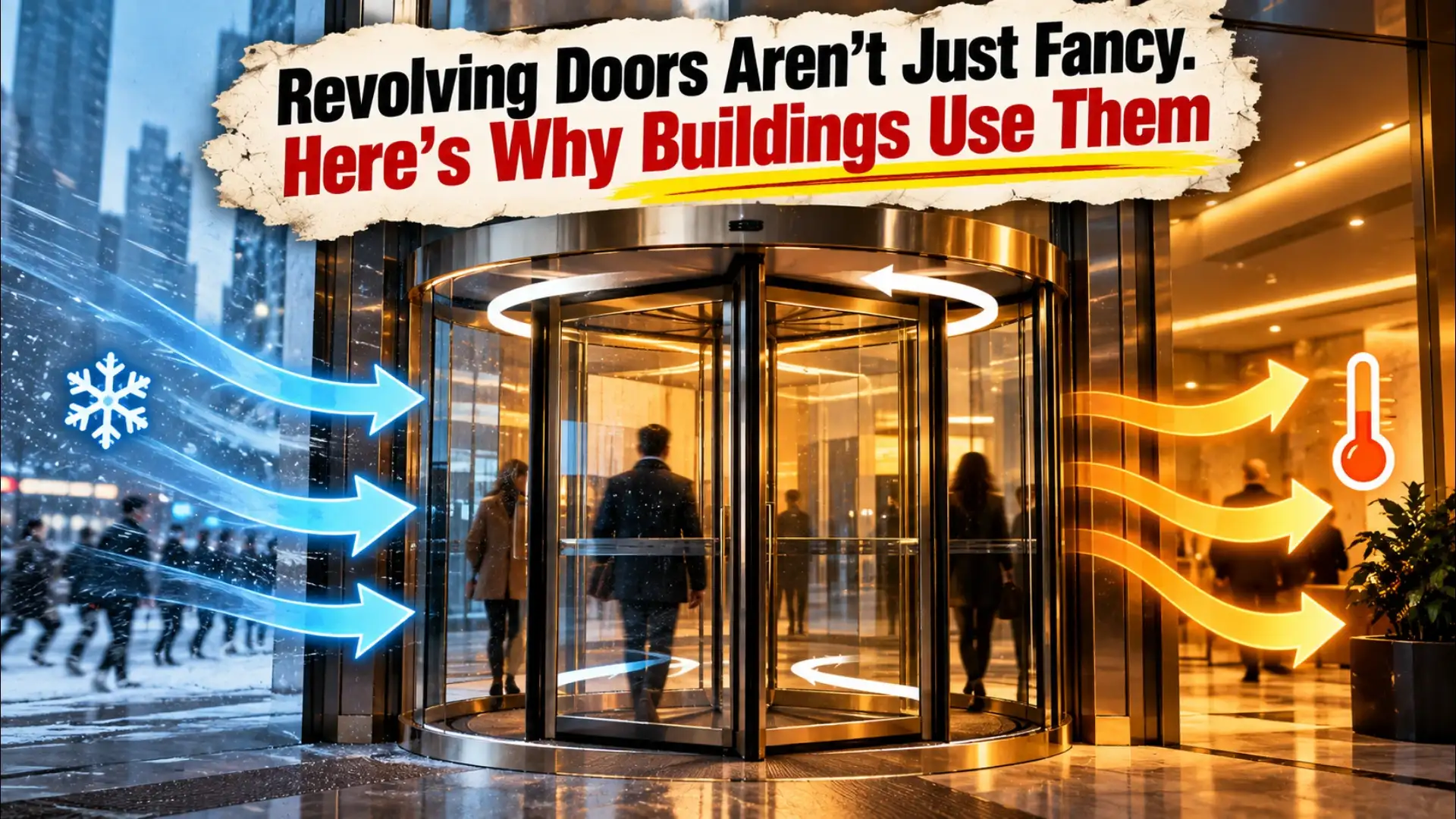
A revolving door changes that arrangement. Instead of creating one large opening that connects the street directly to the building interior, its rotating panels divide the entrance into separate compartments. As one section moves towards the outside, another remains closer to the inside.
This means there is generally no moment when the entire entrance is simply wide open. That can help reduce drafts and limit uncontrolled air exchange, particularly in buildings where maintaining a comfortable indoor temperature matters. During hot or cold weather, keeping conditioned air inside can also reduce the amount of work needed from heating or cooling systems.
It is not a magical energy-saving device, though. How much difference a revolving door makes depends on the building, its entrance design, how frequently the door is used and how well the system is maintained.
That makes the design useful in places such as hotels, office buildings, shopping centres and other high-traffic entrances. There is also a small comfort benefit. With a conventional door, opening it can create a sudden blast of outside air. A revolving door creates a more gradual transition between the indoor and outdoor environments.
It can also provide some shelter from wind and rain because people are not simply standing in a completely exposed doorway while waiting for the entrance to clear.
Accessibility therefore needs to be considered carefully, and buildings may provide a conventional door alongside the revolving entrance. Safety and emergency evacuation are another important consideration. A building's entrance and exit arrangements have to meet applicable building and fire-safety requirements, so a revolving door cannot simply replace every other type of exit.
So that dramatic spinning entrance is not just architectural decoration. It is essentially a clever solution to a very ordinary problem: how do you let lots of people move through a doorway without constantly opening the entire building to the outside?
They Help Control Airflow
A conventional door creates a direct opening between the inside and outside every time it swings open. In a busy building, that can happen hundreds or even thousands of times a day, allowing outdoor air to rush in and conditioned indoor air to escape.A revolving door changes that arrangement. Instead of creating one large opening that connects the street directly to the building interior, its rotating panels divide the entrance into separate compartments. As one section moves towards the outside, another remains closer to the inside.
This means there is generally no moment when the entire entrance is simply wide open. That can help reduce drafts and limit uncontrolled air exchange, particularly in buildings where maintaining a comfortable indoor temperature matters. During hot or cold weather, keeping conditioned air inside can also reduce the amount of work needed from heating or cooling systems.
It is not a magical energy-saving device, though. How much difference a revolving door makes depends on the building, its entrance design, how frequently the door is used and how well the system is maintained.
They Keep People Moving
There is another reason revolving doors make sense in busy buildings: they can handle a steady stream of people without requiring everyone to stop and open a separate door. Different people can occupy different sections of the rotating door at the same time. Someone can be entering while another person is leaving, with the rotating panels continuously separating the spaces.That makes the design useful in places such as hotels, office buildings, shopping centres and other high-traffic entrances. There is also a small comfort benefit. With a conventional door, opening it can create a sudden blast of outside air. A revolving door creates a more gradual transition between the indoor and outdoor environments.
It can also provide some shelter from wind and rain because people are not simply standing in a completely exposed doorway while waiting for the entrance to clear.
Why Don't All Buildings Have Them?
If revolving doors can control airflow and handle crowds, why don't we see them everywhere? Because they come with their own limitations. They require more space and mechanical components than a basic hinged door. They can also be less convenient for people carrying large objects, moving furniture or travelling with certain mobility aids.Accessibility therefore needs to be considered carefully, and buildings may provide a conventional door alongside the revolving entrance. Safety and emergency evacuation are another important consideration. A building's entrance and exit arrangements have to meet applicable building and fire-safety requirements, so a revolving door cannot simply replace every other type of exit.
That Spinning Shape Has A Job
The strange thing about revolving doors is that the basic idea is incredibly simple. A normal door gives you a choice: open or closed. A revolving door keeps moving while maintaining a partial barrier between the indoor and outdoor spaces.So that dramatic spinning entrance is not just architectural decoration. It is essentially a clever solution to a very ordinary problem: how do you let lots of people move through a doorway without constantly opening the entire building to the outside?
Next Story