
Why Do Cats Scratch Furniture Even When They Have a Scratching Post?

Buying a scratching post for your cat seems like a simple solution to scratched sofas, damaged chairs and torn curtains. Yet many cat owners discover that their pets continue scratching furniture even when a scratching post is available nearby. This behaviour can be frustrating, particularly when a new sofa or favourite armchair becomes a regular target.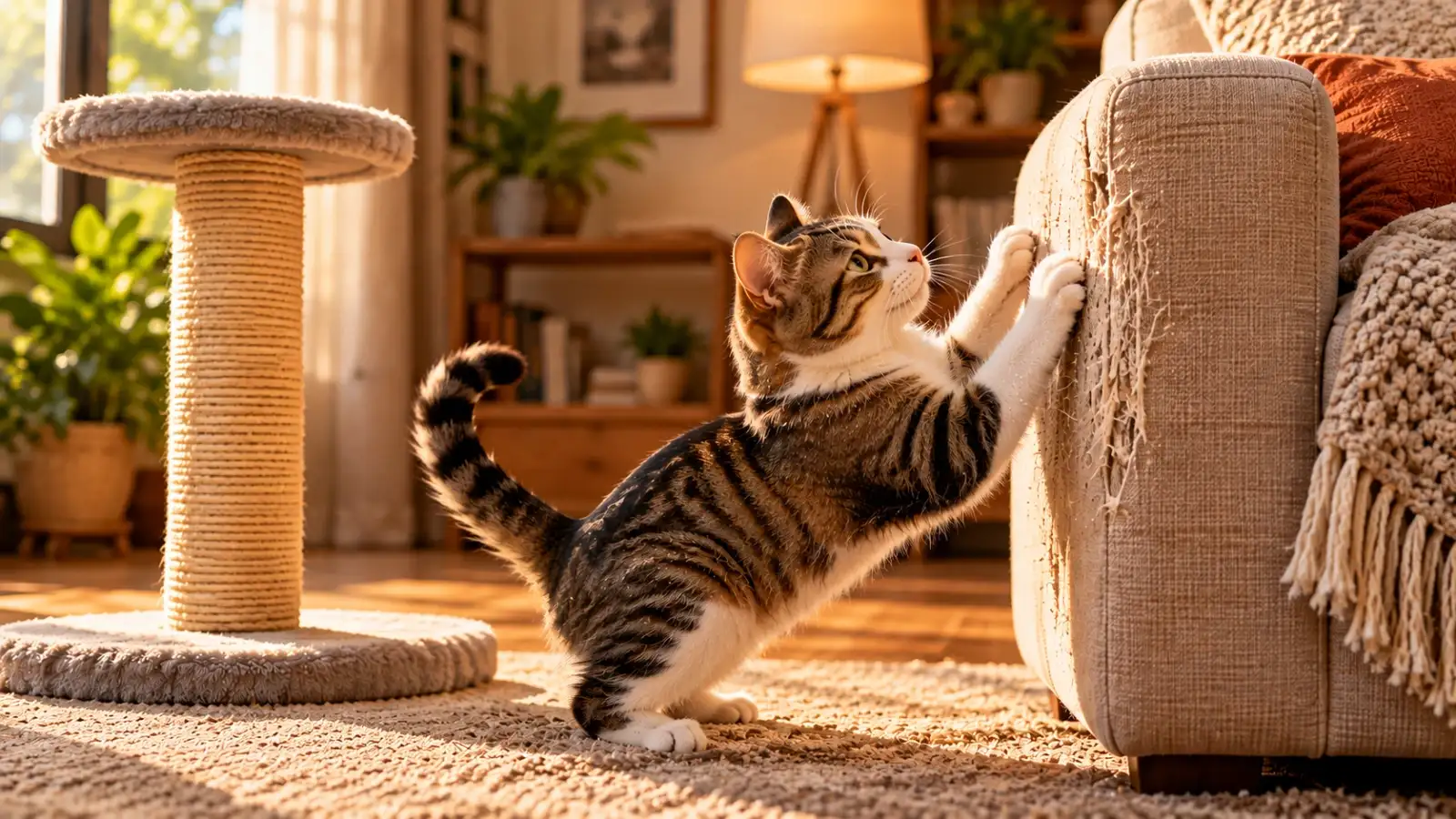
However, cats do not scratch furniture simply to annoy their owners. Scratching is a natural behaviour that helps cats maintain their claws, stretch their bodies, communicate through scent and mark familiar areas. A scratching post may be available, but it might not offer the right texture, height, stability or location to meet a cat's needs.
Understanding why cats scratch furniture is the first step towards changing the habit. Instead of trying to stop scratching completely, the goal is to make appropriate scratching surfaces more appealing than household furniture.
The texture matters because scratching involves more than making marks. Cats use their claws to grip and pull against a surface, so they often prefer materials that provide satisfying resistance. A smooth or loosely covered post may not offer the same experience as the fabric or texture of household furniture.
Try offering two or three different scratching surfaces rather than relying on a single design. A sturdy sisal post, a horizontal cardboard scratcher and a different textured option can help reveal your cat's preference. Once you identify the favourite material, you can place more suitable scratchers around the home.
Stability is equally important. A post that wobbles, tips over or slides across the floor can make a cat feel insecure. Even if the material is suitable, an unstable scratcher may be avoided because it does not provide enough resistance when the cat pulls downwards.
Choose a scratching post that allows your cat to stretch comfortably and remains firmly in place during use. Larger cats may need a taller or heavier model than smaller cats. If your cat prefers scratching horizontal surfaces, a flat scratcher or a gently angled board may work better than a vertical post.
Furniture can become a preferred target simply because it is positioned along a familiar route. A sofa in the living room, for example, may be more convenient than a post placed in an unused bedroom. Cats may also scratch near doorways, windows or other places where they regularly observe activity.
Try placing a scratching post close to the furniture your cat already targets. You can also position one near a favourite sleeping spot and another in a frequently used room. Once your cat begins using the new surface consistently, you can gradually test whether it can be moved a short distance without losing its appeal.
This explains why a cat might repeatedly scratch the same sofa arm, doorway or chair even when other scratching surfaces are available. The location may be important to the cat, particularly if it is a central part of the home or an area shared with other animals.
Changes in the household can influence this behaviour. Moving to a new home, introducing another pet, having unfamiliar visitors or rearranging furniture may make some cats scratch more frequently in prominent areas. Providing several scratching options in familiar locations can help meet this need without damaging valuable belongings.
Avoid punishing a cat for scratching in these places. Punishment can increase stress without teaching the animal where scratching is acceptable. Instead, provide a suitable alternative near the chosen spot and reward the cat when it uses that surface.
A scratching post may be available, but it may not recreate the same angle or resistance. For example, a cat that enjoys scratching the side of a sofa might not understand the appeal of a small horizontal cardboard pad.
Observe how your cat scratches before buying another product. Does it stand upright and pull downwards, stretch over the floor, or scratch at an angle? Match the replacement surface to that behaviour. A tall vertical post, a horizontal board or a slanted scratcher may be more effective depending on the cat's preference.
You can temporarily protect targeted furniture with suitable covers or pet-safe furniture protectors while encouraging use of the alternative. Avoid materials or deterrents that could trap claws, irritate paws or create a hazard if chewed.
In a multi-cat home, access can also matter. If a scratching post is placed in a narrow passage or an area where another cat regularly blocks the route, a less confident cat may choose furniture elsewhere. Providing multiple scratchers in separate locations gives each animal more opportunities to use an appropriate surface.
Consider placing scratchers in the rooms where your cats spend the most time. You do not necessarily need an expensive model in every room. A combination of sturdy posts, cardboard pads and other suitable surfaces can provide variety without taking up too much space.
Check the condition of each scratcher as well. Worn-out cardboard, loose rope or a damaged structure may become less appealing or unsafe. Replace or repair it when necessary so that it remains stable and comfortable to use.
Stress can also influence scratching patterns. Changes in routine, unfamiliar animals outside the window, loud noises or tension between household pets may affect how secure a cat feels. Scratching can become more noticeable around areas that carry familiar scents or are important to the animal.
Provide regular interactive play, accessible resting places, hiding spots and climbing opportunities. Keep feeding and play routines reasonably predictable, and introduce major household changes gradually where possible. In homes with several cats, make sure resources such as food bowls, litter trays, water and resting areas are available without unnecessary competition.
If scratching suddenly becomes excessive, appears alongside hiding, aggression, changes in appetite or litter tray habits, or causes self-injury, seek advice from a veterinarian. These changes should not automatically be dismissed as a behavioural problem.
You can encourage interest by playing near the post with a wand toy or placing a treat nearby. Some cats respond to catnip, although not all cats are affected by it. Let your cat investigate the post naturally rather than forcing its paws against the surface.
Reward appropriate scratching with praise, play or a small treat when your cat uses the post. At the same time, make the targeted furniture less accessible or less satisfying to scratch by using a suitable protective cover. If necessary, temporarily block access to a frequently damaged area while the new habit develops.
Keep your cat's claws appropriately maintained. If you are unsure how to trim them safely, ask a veterinarian or qualified groomer to demonstrate the technique. Never punish, shout at or physically frighten a cat for scratching. Consistent redirection is more likely to help than fear-based methods.
Make the furniture less tempting with a suitable protective cover and reward your cat for using the alternative. If the first scratcher is ignored, change its texture, position or stability rather than assuming your cat cannot be trained.
Be patient as the new habit develops. Scratching is a normal feline behaviour, so success means directing it towards appropriate surfaces rather than eliminating it altogether. With the right scratching options and a consistent approach, you can protect household furniture while allowing your cat to behave naturally.
However, cats do not scratch furniture simply to annoy their owners. Scratching is a natural behaviour that helps cats maintain their claws, stretch their bodies, communicate through scent and mark familiar areas. A scratching post may be available, but it might not offer the right texture, height, stability or location to meet a cat's needs.
Understanding why cats scratch furniture is the first step towards changing the habit. Instead of trying to stop scratching completely, the goal is to make appropriate scratching surfaces more appealing than household furniture.
1. The Scratching Post May Not Feel Right
Cats can be surprisingly particular about the surfaces they scratch. Some prefer rough sisal rope, while others favour corrugated cardboard, untreated wood or carpet-like textures. If a scratching post feels uncomfortable under their paws, they may continue choosing the sofa or another familiar surface.The texture matters because scratching involves more than making marks. Cats use their claws to grip and pull against a surface, so they often prefer materials that provide satisfying resistance. A smooth or loosely covered post may not offer the same experience as the fabric or texture of household furniture.
Try offering two or three different scratching surfaces rather than relying on a single design. A sturdy sisal post, a horizontal cardboard scratcher and a different textured option can help reveal your cat's preference. Once you identify the favourite material, you can place more suitable scratchers around the home.
2. The Scratching Post Is Too Short or Unstable
Many cats enjoy stretching their bodies fully while scratching. If a post is too short, they may not be able to extend their shoulders, back and legs comfortably. This can make a tall sofa arm or the side of a bed more appealing.Stability is equally important. A post that wobbles, tips over or slides across the floor can make a cat feel insecure. Even if the material is suitable, an unstable scratcher may be avoided because it does not provide enough resistance when the cat pulls downwards.
Choose a scratching post that allows your cat to stretch comfortably and remains firmly in place during use. Larger cats may need a taller or heavier model than smaller cats. If your cat prefers scratching horizontal surfaces, a flat scratcher or a gently angled board may work better than a vertical post.
3. The Location May Be Wrong
A scratching post placed in a quiet corner or hidden behind furniture may not attract much attention. Cats often scratch in areas where they spend time, pass regularly or feel comfortable. They may also scratch after waking up, making sleeping areas useful places for a suitable scratcher.Furniture can become a preferred target simply because it is positioned along a familiar route. A sofa in the living room, for example, may be more convenient than a post placed in an unused bedroom. Cats may also scratch near doorways, windows or other places where they regularly observe activity.
Try placing a scratching post close to the furniture your cat already targets. You can also position one near a favourite sleeping spot and another in a frequently used room. Once your cat begins using the new surface consistently, you can gradually test whether it can be moved a short distance without losing its appeal.
4. Scratching Helps Cats Mark Their Territory
Scratching is also a form of communication. Cats have scent glands in their paws, and scratching can leave both visible marks and scent signals. These signals help make familiar spaces recognisable and may provide a sense of security.This explains why a cat might repeatedly scratch the same sofa arm, doorway or chair even when other scratching surfaces are available. The location may be important to the cat, particularly if it is a central part of the home or an area shared with other animals.
Changes in the household can influence this behaviour. Moving to a new home, introducing another pet, having unfamiliar visitors or rearranging furniture may make some cats scratch more frequently in prominent areas. Providing several scratching options in familiar locations can help meet this need without damaging valuable belongings.
Avoid punishing a cat for scratching in these places. Punishment can increase stress without teaching the animal where scratching is acceptable. Instead, provide a suitable alternative near the chosen spot and reward the cat when it uses that surface.
5. Furniture May Offer a More Satisfying Scratching Experience
Some furniture materials are naturally appealing to cats. Upholstery can provide a firm grip, while woven fabric may catch the claws in a way that encourages repeated scratching. Sofa corners and chair arms are particularly attractive because they offer a vertical surface with enough room to pull downwards.A scratching post may be available, but it may not recreate the same angle or resistance. For example, a cat that enjoys scratching the side of a sofa might not understand the appeal of a small horizontal cardboard pad.
Observe how your cat scratches before buying another product. Does it stand upright and pull downwards, stretch over the floor, or scratch at an angle? Match the replacement surface to that behaviour. A tall vertical post, a horizontal board or a slanted scratcher may be more effective depending on the cat's preference.
You can temporarily protect targeted furniture with suitable covers or pet-safe furniture protectors while encouraging use of the alternative. Avoid materials or deterrents that could trap claws, irritate paws or create a hazard if chewed.
6. Your Cat May Need More Than One Scratching Post
A single scratching post may not be enough in a large home or a household with multiple cats. Cats can prefer different materials and locations, and one animal may avoid a scratcher that another cat uses frequently.In a multi-cat home, access can also matter. If a scratching post is placed in a narrow passage or an area where another cat regularly blocks the route, a less confident cat may choose furniture elsewhere. Providing multiple scratchers in separate locations gives each animal more opportunities to use an appropriate surface.
Consider placing scratchers in the rooms where your cats spend the most time. You do not necessarily need an expensive model in every room. A combination of sturdy posts, cardboard pads and other suitable surfaces can provide variety without taking up too much space.
Check the condition of each scratcher as well. Worn-out cardboard, loose rope or a damaged structure may become less appealing or unsafe. Replace or repair it when necessary so that it remains stable and comfortable to use.
7. Boredom and Stress Can Influence Scratching
Scratching is normal, but changes in the frequency or intensity of the behaviour may be linked to a cat's environment. Cats need opportunities to play, explore, climb, rest and engage in natural behaviours. A home with limited stimulation may leave some cats restless.Stress can also influence scratching patterns. Changes in routine, unfamiliar animals outside the window, loud noises or tension between household pets may affect how secure a cat feels. Scratching can become more noticeable around areas that carry familiar scents or are important to the animal.
Provide regular interactive play, accessible resting places, hiding spots and climbing opportunities. Keep feeding and play routines reasonably predictable, and introduce major household changes gradually where possible. In homes with several cats, make sure resources such as food bowls, litter trays, water and resting areas are available without unnecessary competition.
If scratching suddenly becomes excessive, appears alongside hiding, aggression, changes in appetite or litter tray habits, or causes self-injury, seek advice from a veterinarian. These changes should not automatically be dismissed as a behavioural problem.
8. How to Encourage Your Cat to Use the Scratching Post
The most effective approach is to make the preferred scratching surface easy to find and rewarding to use. Place it near the furniture your cat targets, choose a suitable texture and ensure that it does not wobble.You can encourage interest by playing near the post with a wand toy or placing a treat nearby. Some cats respond to catnip, although not all cats are affected by it. Let your cat investigate the post naturally rather than forcing its paws against the surface.
Reward appropriate scratching with praise, play or a small treat when your cat uses the post. At the same time, make the targeted furniture less accessible or less satisfying to scratch by using a suitable protective cover. If necessary, temporarily block access to a frequently damaged area while the new habit develops.
Keep your cat's claws appropriately maintained. If you are unsure how to trim them safely, ask a veterinarian or qualified groomer to demonstrate the technique. Never punish, shout at or physically frighten a cat for scratching. Consistent redirection is more likely to help than fear-based methods.
A Simple Plan to Protect Your Furniture
Start by observing which furniture your cat scratches and whether the behaviour is vertical, horizontal or angled. Choose a scratching surface that matches this preference, then place it directly beside the target area. Add another scratcher near a favourite sleeping place if needed.Make the furniture less tempting with a suitable protective cover and reward your cat for using the alternative. If the first scratcher is ignored, change its texture, position or stability rather than assuming your cat cannot be trained.
Be patient as the new habit develops. Scratching is a normal feline behaviour, so success means directing it towards appropriate surfaces rather than eliminating it altogether. With the right scratching options and a consistent approach, you can protect household furniture while allowing your cat to behave naturally.
Next Story