
Why Does Your Ceiling Fan Have Three Blades?

Look up at your ceiling fan, and you will probably see three blades spinning above you. But have you ever wondered why there are three? Why not two, four or even six? It turns out that the number of blades is not random. Fan designers have to balance several things at once, including airflow, motor power, noise, speed and energy use. And three blades often land in a practical middle ground.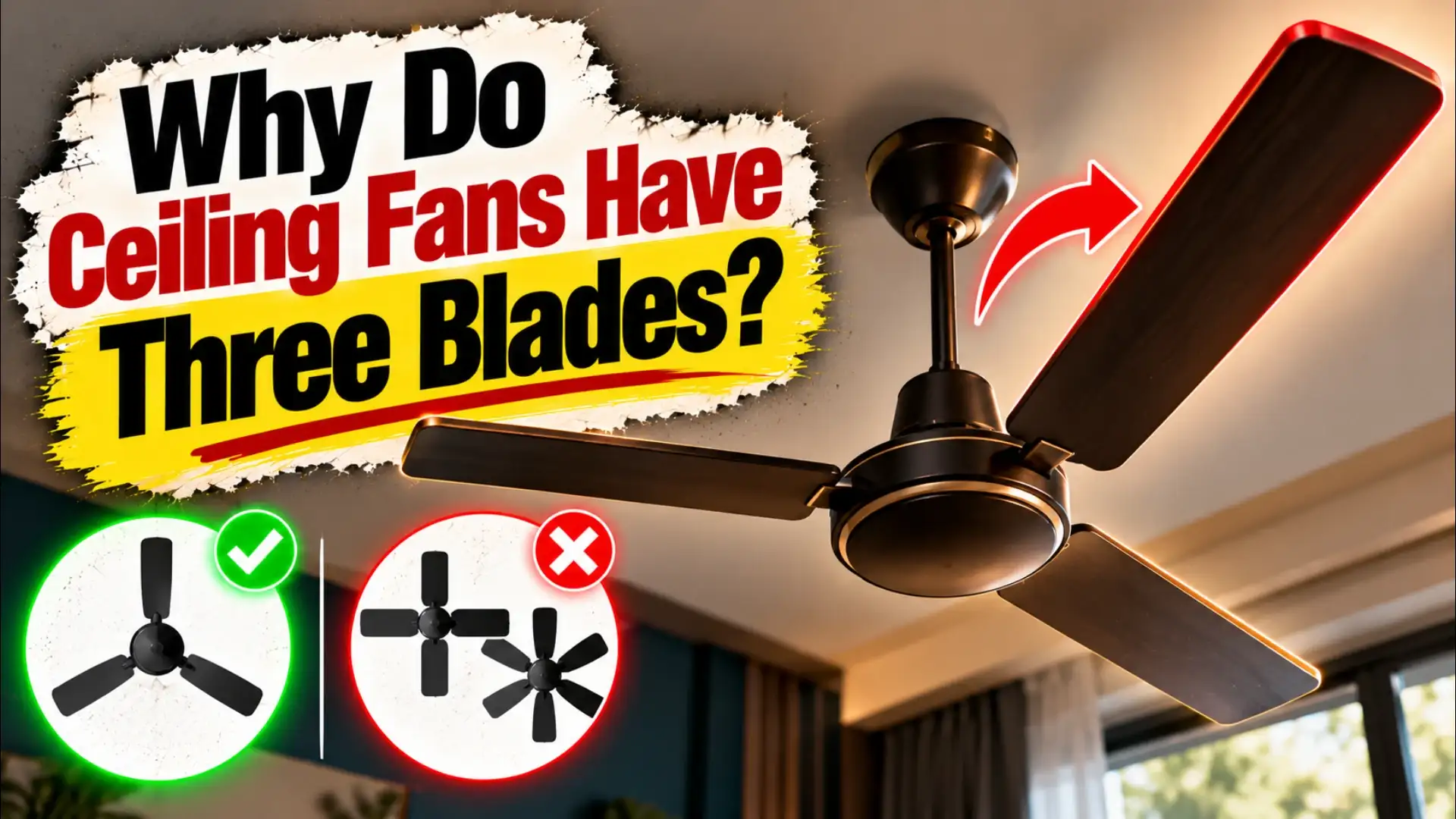
That does not automatically make a fan worse. More blades can move a larger volume of air under some designs, particularly when the fan is designed to operate at lower speeds. But there is a trade off.
A fan with fewer blades can generally spin faster without having as much blade area passing through the air on every rotation. This can make it easier to achieve strong airflow with a relatively compact motor. Three blades therefore offer a useful balance between the amount of air being moved and the work required from the motor.
Imagine two fans with three and five blades. If their blade shapes, motor speeds and dimensions are different, the five-blade fan does not automatically produce more useful airflow. In fact, adding blades can increase aerodynamic drag. The motor may need to work harder, and the fan may need to rotate more slowly depending on its design. So blade count is only one part of the equation.
Three blades are naturally spaced 120 degrees apart, giving the fan a stable and symmetrical arrangement. Four, five or more blades can also be perfectly balanced, of course. That is why fans with different numbers of blades exist. The choice comes down to what the manufacturer wants the fan to do.
More blades can also change the character of the airflow and allow a fan to achieve its intended performance at a different rotational speed. This is why comparing fans simply by counting their blades can be misleading.
The next time your ceiling fan starts spinning, those three blades may look incredibly simple. But behind that simple design is a surprisingly careful compromise between aerodynamics and engineering. So the answer to ‘Why three?’ is not simply because three is best.
It is because, for many common ceiling-fan designs, three blades provide a practical way to move plenty of air without making the motor fight unnecessary aerodynamic resistance.
Three Blades Give The Motor Less Work To Do
A ceiling fan works by rotating its blades through the air and creating a pressure difference that pushes air downwards and around the room. Adding more blades means putting more material into that rotation. It also means the motor has to move more blade surface through the air.That does not automatically make a fan worse. More blades can move a larger volume of air under some designs, particularly when the fan is designed to operate at lower speeds. But there is a trade off.
A fan with fewer blades can generally spin faster without having as much blade area passing through the air on every rotation. This can make it easier to achieve strong airflow with a relatively compact motor. Three blades therefore offer a useful balance between the amount of air being moved and the work required from the motor.
More Blades Do Not Automatically Mean More Air
This is probably the biggest misconception. You might think a six-blade fan should automatically move twice as much air as a three-blade fan. But fan performance depends on much more than blade count. The blade length, width, angle, shape, motor speed and overall design all affect how much air the fan can move.Imagine two fans with three and five blades. If their blade shapes, motor speeds and dimensions are different, the five-blade fan does not automatically produce more useful airflow. In fact, adding blades can increase aerodynamic drag. The motor may need to work harder, and the fan may need to rotate more slowly depending on its design. So blade count is only one part of the equation.
Why Not Just Use One Huge Blade?
Apart from looking rather ridiculous, a single blade would create a major balance problem. A rotating fan needs its mass distributed around the centre so that it spins smoothly. Multiple blades positioned evenly around the hub help keep the rotating assembly balanced.Three blades are naturally spaced 120 degrees apart, giving the fan a stable and symmetrical arrangement. Four, five or more blades can also be perfectly balanced, of course. That is why fans with different numbers of blades exist. The choice comes down to what the manufacturer wants the fan to do.
Then Why Do Some Fans Have Four Or More Blades?
Because there is no universal rule saying a ceiling fan must have three blades. Fans designed for different environments can use different blade counts and shapes. A fan intended to provide strong airflow at relatively high speed may use fewer blades, while another designed for quieter operation or a particular aesthetic may use more.More blades can also change the character of the airflow and allow a fan to achieve its intended performance at a different rotational speed. This is why comparing fans simply by counting their blades can be misleading.
Three Is Really A Design Compromise
The familiar three blade ceiling fan is popular because it can provide a useful combination of airflow, speed, efficiency, balance and motor requirements. It is not a magic number, and three blades do not automatically make one fan better than another.The next time your ceiling fan starts spinning, those three blades may look incredibly simple. But behind that simple design is a surprisingly careful compromise between aerodynamics and engineering. So the answer to ‘Why three?’ is not simply because three is best.
It is because, for many common ceiling-fan designs, three blades provide a practical way to move plenty of air without making the motor fight unnecessary aerodynamic resistance.
Next Story