
Seasonal Indian Foods: Why Traditional Indian Dishes Changed With the Seasons

Long before superstores stocked imported produce year round and electric fridges lined domestic kitchens, daily eating habits were guided strictly by the changing weather outside. Across the Indian subcontinent, traditional cooking was never a random selection of recipes. Instead, it was an intricate system designed to align body temperature, digestive capacity, and immunity with surrounding climatic shifts.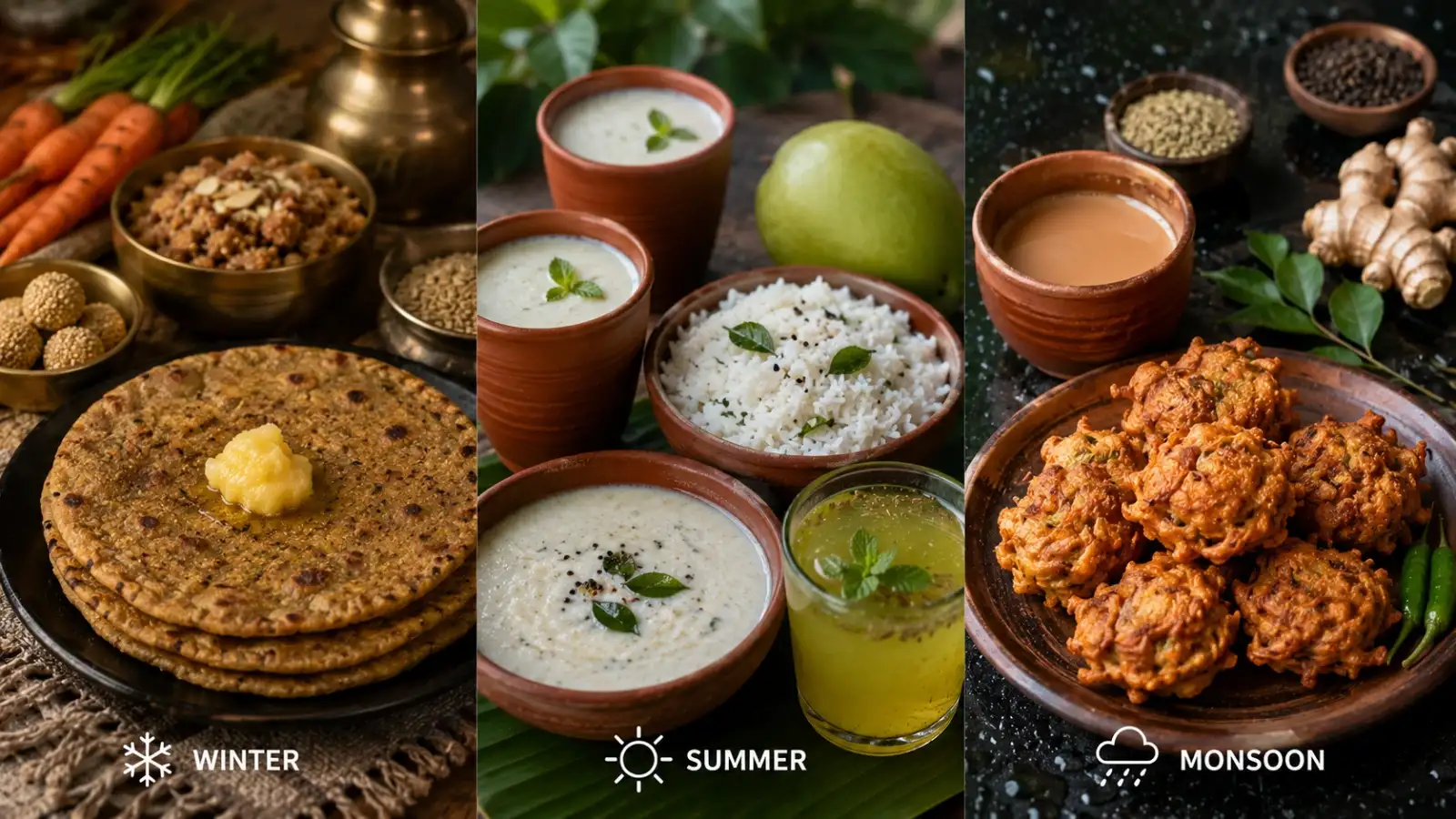
Ancient culinary wisdom recognized that eating heavy, heat producing meals in peak summer or chilled, raw foods during damp monsoons could disrupt internal physical harmony. Every region developed seasonal menus that celebrated local harvests while protecting human health against seasonal illnesses. Exploring why certain Indian foods were traditionally cooked only in specific seasons reveals how ancient wellness science, natural crop lifecycles, and regional preservation methods created a sustainable way of living.
Dishes like pearl millet flatbreads known as bajra roti, clarified butter, sesame seeds, unrefined jaggery, and dense root vegetables became seasonal staples. Pearl millet and sesame contain high oil content and slow burning carbohydrates that insulate the body against chilling winds.
Similarly, winter preparations like gajar ka halwa or warming herbal halwas enriched with edible gum and dry fruits were consumed exclusively during cold months. These hearty winter meals provided vital calories, strengthened joints, and boosted respiratory immunity when cold weather set in.
Summer cooking focused on water rich gourds like bottle gourd, ridge gourd, and ash gourd, alongside cooling dairy drinks like buttermilk, lassi, and curd rice. Green mangoes were boiled to create refreshing panna drinks that restored lost electrolytes and guarded against sunstroke.
Fermented rice preparations, water lily seeds, and refreshing mint chutneys were prepared daily to keep internal body systems cool. Cooking heavy meats or dense pulse dishes was deliberately minimized to prevent internal heat buildup and digestive discomfort during peak summer days.
Leafy green vegetables were strictly avoided during peak rains because humid soil conditions encouraged insect breeding and bacterial growth on broad leaves. Instead, monsoon cooking relied heavily on dried pulses, bitter gourd, turmeric, neem flowers, and digestive spices like bishop seeds and ginger. Frying crispy snacks like fritters and samosas became popular during rains not just for comfort, but because deep frying in hot oil ensured that food was thoroughly cooked, moisture free, and sterile.
By consuming ingredients strictly during their natural harvest window, communities enjoyed produce at peak nutritional potency without relying on chemical preservatives. Surplus summer fruits were sun dried or pickled using mustard oil and salt, creating preserved condiments that sustained households through sparse weather periods.
Ancient culinary wisdom recognized that eating heavy, heat producing meals in peak summer or chilled, raw foods during damp monsoons could disrupt internal physical harmony. Every region developed seasonal menus that celebrated local harvests while protecting human health against seasonal illnesses. Exploring why certain Indian foods were traditionally cooked only in specific seasons reveals how ancient wellness science, natural crop lifecycles, and regional preservation methods created a sustainable way of living.
Thermal balance and regulating body heat through winter dishes
During cold winter months, human metabolism naturally speeds up to keep internal body temperatures stable. To support this heightened energy requirement, traditional winter menus featured rich, dense, and warming ingredients that generated long lasting heat.Dishes like pearl millet flatbreads known as bajra roti, clarified butter, sesame seeds, unrefined jaggery, and dense root vegetables became seasonal staples. Pearl millet and sesame contain high oil content and slow burning carbohydrates that insulate the body against chilling winds.
Similarly, winter preparations like gajar ka halwa or warming herbal halwas enriched with edible gum and dry fruits were consumed exclusively during cold months. These hearty winter meals provided vital calories, strengthened joints, and boosted respiratory immunity when cold weather set in.
You may also like
- Understanding Global Anxiety: What Level 3 Means and How Millions Cope Across India and Pakistan
- Rising Temperatures Pose Severe Health Risks to the Elderly: New Study Warns South Asia
- Natural Relief: How Ginger and Traditional Home Remedies Cure Coughs and Colds
- Kylie Jenner Spotlights the Chic Lilian Bag at Malibu Wedding
- 6 Signs Someone Lies About Everything - Chanakya Niti
Summer cooling, light digestion, and natural hydration recipes
Conversely, when scorching summer heat settled across the plains, traditional kitchens shifted dramatically toward hydrating, light, and cooling recipes. Digestion naturally slows down during intense heat, making heavy, fried, or highly spiced meals difficult to process.Summer cooking focused on water rich gourds like bottle gourd, ridge gourd, and ash gourd, alongside cooling dairy drinks like buttermilk, lassi, and curd rice. Green mangoes were boiled to create refreshing panna drinks that restored lost electrolytes and guarded against sunstroke.
Fermented rice preparations, water lily seeds, and refreshing mint chutneys were prepared daily to keep internal body systems cool. Cooking heavy meats or dense pulse dishes was deliberately minimized to prevent internal heat buildup and digestive discomfort during peak summer days.
Monsoon immunity and digestive protection during damp weather
The arrival of the rainy season brought welcome relief from heat, but it also introduced high atmospheric humidity, contaminated water risks, and weakened digestive strength. Traditional monsoon eating rules were exceptionally strict to prevent foodborne infections and stomach upsets.Leafy green vegetables were strictly avoided during peak rains because humid soil conditions encouraged insect breeding and bacterial growth on broad leaves. Instead, monsoon cooking relied heavily on dried pulses, bitter gourd, turmeric, neem flowers, and digestive spices like bishop seeds and ginger. Frying crispy snacks like fritters and samosas became popular during rains not just for comfort, but because deep frying in hot oil ensured that food was thoroughly cooked, moisture free, and sterile.
Preserving seasonal harvests and regional biodiversity
Seasonal cooking was also driven by the natural lifecycles of indigenous crops and traditional preservation practices. Certain wild greens, berries, and edible flowers grow only during brief seasonal windows. For instance, tender neem buds were harvested in spring to purify blood, while wild leafy greens were gathered immediately after early rains.By consuming ingredients strictly during their natural harvest window, communities enjoyed produce at peak nutritional potency without relying on chemical preservatives. Surplus summer fruits were sun dried or pickled using mustard oil and salt, creating preserved condiments that sustained households through sparse weather periods.
Reconnecting with nature through seasonal eating
Understanding why certain Indian foods were traditionally cooked only in specific seasons highlights the profound wisdom of ancestral food culture. By aligning our modern diet with natural seasonal rhythms, we support personal vitality, honour regional biodiversity, and enjoy food at its absolute finest.





Loving Newspoint? Download the app now
