
Why Does Chai Taste Different When Boiled Longer? The Science Behind Strong, Flavourful Tea

Few beverages hold as much cultural affection or daily importance as a freshly brewed cup of spiced tea. Across millions of households and busy roadside stalls, the familiar bubbling sound of a pot on the stove marks the true start of the day. Every tea maker has their own personal ritual, from crushing fresh ginger and cardamom to adjusting the exact balance of milk, water, and sugar. However, the single most critical variable that shapes the final flavour profile is boiling time.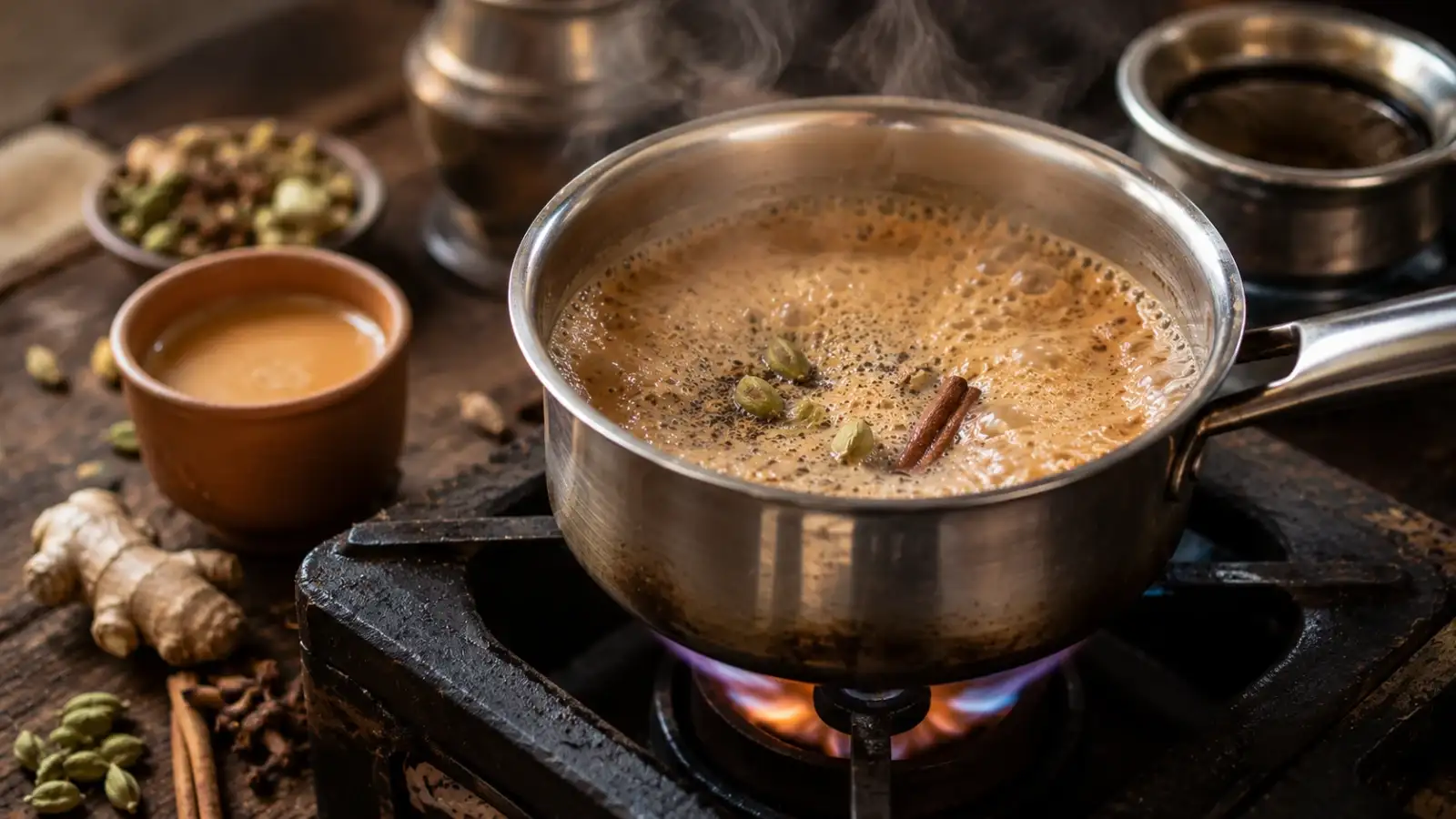
A quick, gentle simmer produces a light, fragrant drink, whereas leaving the pot to bubble away on high heat transforms it into a thick, strong, and intensely aromatic brew. Exploring why chai develops a different taste when boiled longer reveals how heat extraction, tannin concentration, milk caramelisation, and liquid evaporation fundamentally alter the chemistry inside your saucepan.
However, as you continue to boil the mixture, the structural cells of the tea leaf break down completely. Extended boiling forces high concentrations of astringent tannins out of the leaves and into the water. Tannins create a firm, sharp bitterness on the tongue and impart a dry, lingering sensation in the mouth. While over-brewing western black tea leads to an unpleasantly harsh bitterness, extended boiling in spiced tea balances out this sharpness through the addition of rich dairy fats and sugar, creating a deeper and far more robust flavour foundation.
As the milk simmers continuously, lactose sugars slowly caramelise against the hot metal base of the pan. This thermal process breaks down simple sugars into rich, butterscotch-like flavour compounds. At the same time, milk proteins alter their physical shape and bind directly with the harsh tea tannins, softening their bitter edge. This chemical union is precisely why chai develops a different taste when boiled longer, shifting from a thin, milky drink into a velvety, malt-flavoured beverage.
Furthermore, traditional spices like crushed ginger, cracked cardamom pods, cinnamon bark, and cloves require prolonged heat to release their heavy essential oils. A short simmer extracts only the top aromatic notes of cardamom, but an extended boil forces deep, fiery gingerol compounds out of the ginger root and warm eugenol out of the cloves. This moisture reduction creates a thick, concentrated beverage that coats the throat with comforting warmth.
A quick, gentle simmer produces a light, fragrant drink, whereas leaving the pot to bubble away on high heat transforms it into a thick, strong, and intensely aromatic brew. Exploring why chai develops a different taste when boiled longer reveals how heat extraction, tannin concentration, milk caramelisation, and liquid evaporation fundamentally alter the chemistry inside your saucepan.
Tannin extraction and the emergence of rich bitterness
The black tea leaves used in traditional brewing are packed with complex natural compounds known as polyphenols and tannins. When dried CTC tea granules hit hot water, delicate aromatic oils dissolve almost instantly, releasing floral and herbal notes into the liquid during the first two minutes.You may also like
- Understanding Global Anxiety: What Level 3 Means and How Millions Cope Across India and Pakistan
- Rising Temperatures Pose Severe Health Risks to the Elderly: New Study Warns South Asia
- Natural Relief: How Ginger and Traditional Home Remedies Cure Coughs and Colds
- Kylie Jenner Spotlights the Chic Lilian Bag at Malibu Wedding
- 6 Signs Someone Lies About Everything - Chanakya Niti
However, as you continue to boil the mixture, the structural cells of the tea leaf break down completely. Extended boiling forces high concentrations of astringent tannins out of the leaves and into the water. Tannins create a firm, sharp bitterness on the tongue and impart a dry, lingering sensation in the mouth. While over-brewing western black tea leads to an unpleasantly harsh bitterness, extended boiling in spiced tea balances out this sharpness through the addition of rich dairy fats and sugar, creating a deeper and far more robust flavour foundation.
Milk protein transformation and subtle caramelisation
The interaction between high heat and dairy components changes the overall texture and sweetness of the drink during a prolonged boil. Milk contains natural sugars known as lactose along with complex whey proteins. When milk is simmered alongside tea leaves and water for an extended period, it undergoes a mild version of the Maillard reaction, which is the same chemical reaction that browns bread crusts and roasts coffee beans.As the milk simmers continuously, lactose sugars slowly caramelise against the hot metal base of the pan. This thermal process breaks down simple sugars into rich, butterscotch-like flavour compounds. At the same time, milk proteins alter their physical shape and bind directly with the harsh tea tannins, softening their bitter edge. This chemical union is precisely why chai develops a different taste when boiled longer, shifting from a thin, milky drink into a velvety, malt-flavoured beverage.
Water evaporation and concentration of aromatic spices
Boiling is essentially a process of controlled reduction. As steam rises steadily from the bubbling saucepan, water content evaporates continuously while the solid ingredients remain behind. A longer boil reduces the total volume of liquid in the pot, significantly increasing the concentration of fats, sugars, and tea solubles per millilitre.Furthermore, traditional spices like crushed ginger, cracked cardamom pods, cinnamon bark, and cloves require prolonged heat to release their heavy essential oils. A short simmer extracts only the top aromatic notes of cardamom, but an extended boil forces deep, fiery gingerol compounds out of the ginger root and warm eugenol out of the cloves. This moisture reduction creates a thick, concentrated beverage that coats the throat with comforting warmth.
Striking the perfect balance for your ideal brew
Understanding why chai develops a different taste when boiled longer gives you complete control over your daily tea ritual. Whether you prefer a light, aromatic cup or a dark, boiled-down brew packed with bold spice notes, mastering boiling time allows you to engineer the exact sensory experience you crave every single day.





Loving Newspoint? Download the app now
