
Why Do Cats Knead Blankets and Cushions? Understanding This Adorable Behaviour

If you have a cat at home, you have probably noticed it gently pushing its paws in and out against a soft blanket, cushion or even your lap. This adorable habit, commonly known as kneading, often looks like a tiny baking session, with cats appearing to knead imaginary dough. While it may seem like a random behaviour, there are actually several reasons why cats knead blankets and cushions.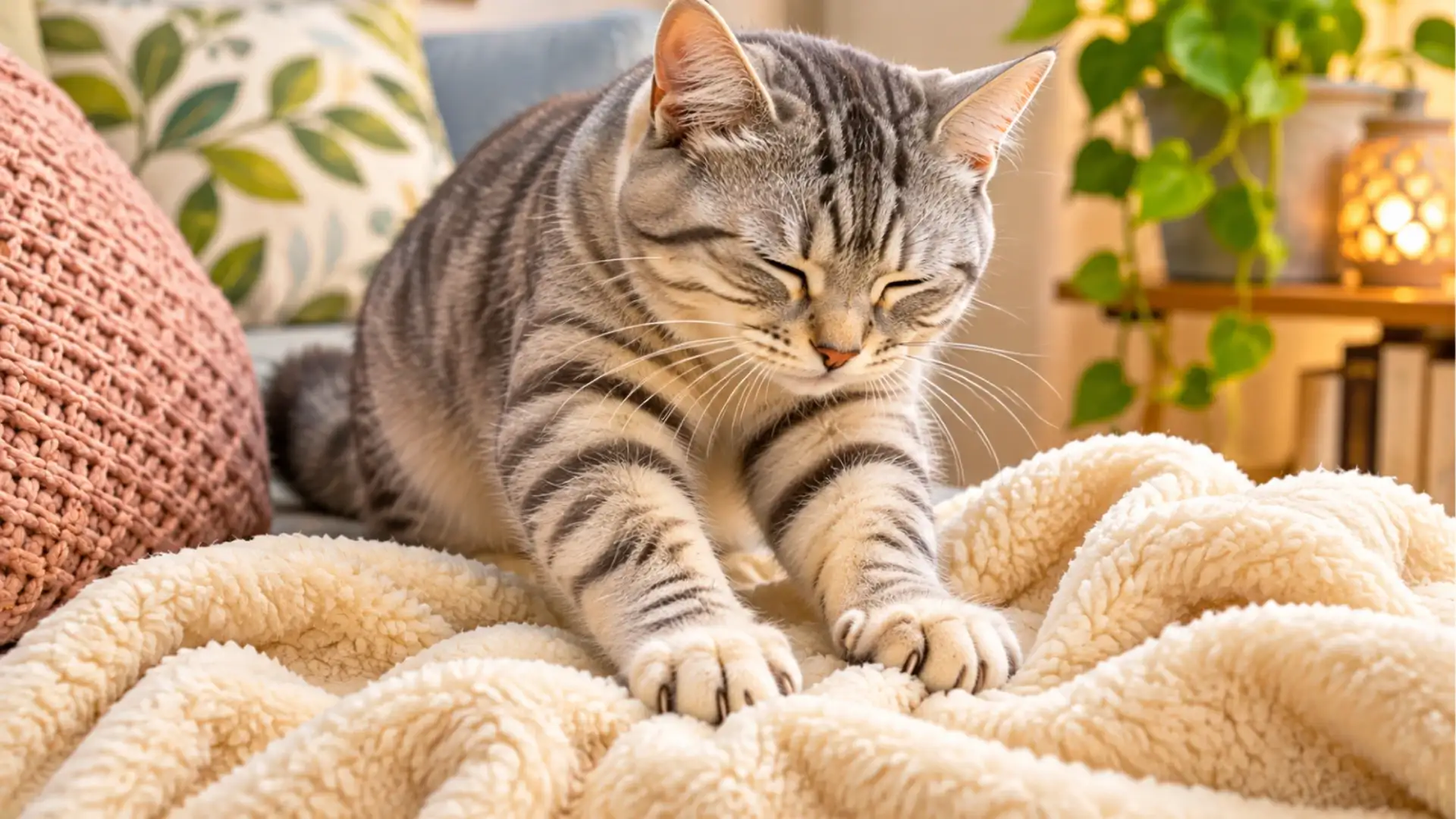
From expressing comfort and affection to marking their territory, kneading is a natural feline behaviour that can tell you quite a bit about your pet's emotional state. Some cats even purr, drool or curl up while doing it, making the entire experience even more endearing. So, what exactly makes cats knead soft surfaces, and what does this behaviour mean? Let's take a closer look.
As cats grow older, they often continue this familiar paw movement even when they are no longer nursing. Soft blankets, cushions and other comfortable surfaces may remind them of the warmth and security they experienced as kittens.
This is why kneading is often associated with feelings of comfort, relaxation and contentment. It is essentially a behaviour that many cats carry into adulthood.
Cats are naturally cautious animals, so they tend to relax more when they feel safe in their surroundings. Kneading can be part of this relaxed state, particularly when they are resting beside their favourite person or in a familiar spot.
You may also notice your cat closing its eyes, stretching its paws or curling up while kneading. These behaviours often accompany a comfortable and contented mood.
Cats have scent glands located in different parts of their bodies, including their paw pads. When they press their paws against a surface, they can leave behind their scent.
This is one way cats communicate with their environment and make familiar spaces smell like them. So, when your cat repeatedly kneads your favourite cushion or blanket, it may be leaving a little scent mark to make that space feel familiar.
It is a natural part of feline communication and territorial behaviour.
Wild cats and their ancestors are believed to have used paw movements to flatten grass, leaves and other vegetation before lying down. This could help create a more comfortable sleeping spot.
Domestic cats may retain this instinct, even though they now have soft cushions, cosy beds and blankets to sleep on.
So, the next time your cat spends a few minutes kneading its favourite blanket before curling up, it may simply be getting its sleeping space ready.
Cats do not always express affection in the same way dogs do. Some prefer sitting nearby, while others show their attachment through purring, rubbing against their owners or gently kneading them.
When a cat kneads on your lap, it may be combining feelings of comfort, familiarity and affection. In many cases, it is a sign that your pet enjoys being close to you.
Cats often stretch after waking up, changing positions or settling down. Kneading can be part of this natural movement, helping them stretch and relax their muscles.
You may notice your cat extending one paw at a time or alternating between its front paws while kneading. This is perfectly normal behaviour and usually nothing to worry about.
Cats naturally extend and retract their claws during this movement. It can also help them grip the surface they are pressing against.
Some cats knead with their claws fully extended, while others barely show them. The amount of claw movement varies from one cat to another.
If your cat's kneading becomes uncomfortable, you can place a thick blanket between your lap and its paws. Regular nail trimming can also help prevent accidental scratches.
Punishing or scolding your cat for kneading can create unnecessary stress. Instead, allow it to enjoy the behaviour as long as it is not causing harm.
If your cat tends to damage blankets or scratch your skin while kneading, try providing a soft, designated blanket or cushion. You can also gently redirect its paws towards a more suitable surface.
However, if kneading suddenly becomes excessive, appears compulsive or is accompanied by signs of pain, discomfort or unusual behaviour, it is worth consulting a veterinarian.
From expressing comfort and affection to marking their territory, kneading is a natural feline behaviour that can tell you quite a bit about your pet's emotional state. Some cats even purr, drool or curl up while doing it, making the entire experience even more endearing. So, what exactly makes cats knead soft surfaces, and what does this behaviour mean? Let's take a closer look.
1. A Behaviour They Learn as Kittens
One of the most common explanations for cat kneading goes back to their earliest days as kittens. When nursing, kittens use their front paws to gently press against their mother's belly. This movement helps stimulate milk flow and allows them to feed.As cats grow older, they often continue this familiar paw movement even when they are no longer nursing. Soft blankets, cushions and other comfortable surfaces may remind them of the warmth and security they experienced as kittens.
This is why kneading is often associated with feelings of comfort, relaxation and contentment. It is essentially a behaviour that many cats carry into adulthood.
2. A Sign That Your Cat Feels Safe and Happy
If your cat starts kneading a blanket while purring or settling down for a nap, it is often a sign that it feels comfortable and secure.Cats are naturally cautious animals, so they tend to relax more when they feel safe in their surroundings. Kneading can be part of this relaxed state, particularly when they are resting beside their favourite person or in a familiar spot.
You may also notice your cat closing its eyes, stretching its paws or curling up while kneading. These behaviours often accompany a comfortable and contented mood.
3. Marking Their Territory
Another interesting reason why cats knead blankets and cushions is that they may be marking their territory.Cats have scent glands located in different parts of their bodies, including their paw pads. When they press their paws against a surface, they can leave behind their scent.
This is one way cats communicate with their environment and make familiar spaces smell like them. So, when your cat repeatedly kneads your favourite cushion or blanket, it may be leaving a little scent mark to make that space feel familiar.
It is a natural part of feline communication and territorial behaviour.
4. Preparing a Comfortable Sleeping Spot
Have you ever noticed your cat kneading a blanket before settling down for a nap? This behaviour may be linked to an instinctive habit of preparing a comfortable resting place.Wild cats and their ancestors are believed to have used paw movements to flatten grass, leaves and other vegetation before lying down. This could help create a more comfortable sleeping spot.
Domestic cats may retain this instinct, even though they now have soft cushions, cosy beds and blankets to sleep on.
So, the next time your cat spends a few minutes kneading its favourite blanket before curling up, it may simply be getting its sleeping space ready.
5. Showing Affection Towards Their Humans
Kneading can also be a way for cats to express affection towards their favourite people. If your cat regularly kneads your lap, stomach or a blanket beside you, it may indicate that it feels comfortable and attached to you.Cats do not always express affection in the same way dogs do. Some prefer sitting nearby, while others show their attachment through purring, rubbing against their owners or gently kneading them.
When a cat kneads on your lap, it may be combining feelings of comfort, familiarity and affection. In many cases, it is a sign that your pet enjoys being close to you.
6. Stretching Their Muscles
Sometimes, kneading is simply a way for cats to stretch their bodies. The repeated movement of pressing their paws into a soft surface engages the muscles in their legs and paws.Cats often stretch after waking up, changing positions or settling down. Kneading can be part of this natural movement, helping them stretch and relax their muscles.
You may notice your cat extending one paw at a time or alternating between its front paws while kneading. This is perfectly normal behaviour and usually nothing to worry about.
Why Do Cats Knead With Their Claws Out?
If your cat kneads your blanket or lap with its claws extended, you might find the experience a little less adorable. However, this is generally a normal part of kneading.Cats naturally extend and retract their claws during this movement. It can also help them grip the surface they are pressing against.
Some cats knead with their claws fully extended, while others barely show them. The amount of claw movement varies from one cat to another.
If your cat's kneading becomes uncomfortable, you can place a thick blanket between your lap and its paws. Regular nail trimming can also help prevent accidental scratches.
Should You Stop Your Cat From Kneading?
In most cases, there is no reason to stop your cat from kneading. It is a natural behaviour that is generally associated with comfort, relaxation and instinct.Punishing or scolding your cat for kneading can create unnecessary stress. Instead, allow it to enjoy the behaviour as long as it is not causing harm.
If your cat tends to damage blankets or scratch your skin while kneading, try providing a soft, designated blanket or cushion. You can also gently redirect its paws towards a more suitable surface.
However, if kneading suddenly becomes excessive, appears compulsive or is accompanied by signs of pain, discomfort or unusual behaviour, it is worth consulting a veterinarian.
Final Thoughts
Next Story