
Why Do Dogs Tilt Their Heads When Humans Talk to Them? The Curious Behaviour Explained

Have you ever noticed your dog tilting its head when you call its name, ask a question or speak in a playful voice? This adorable reaction often makes owners feel that their pets are trying to understand every word. While dogs cannot understand human language in the same way people do, they are remarkably good at recognising familiar sounds, tones and expressions.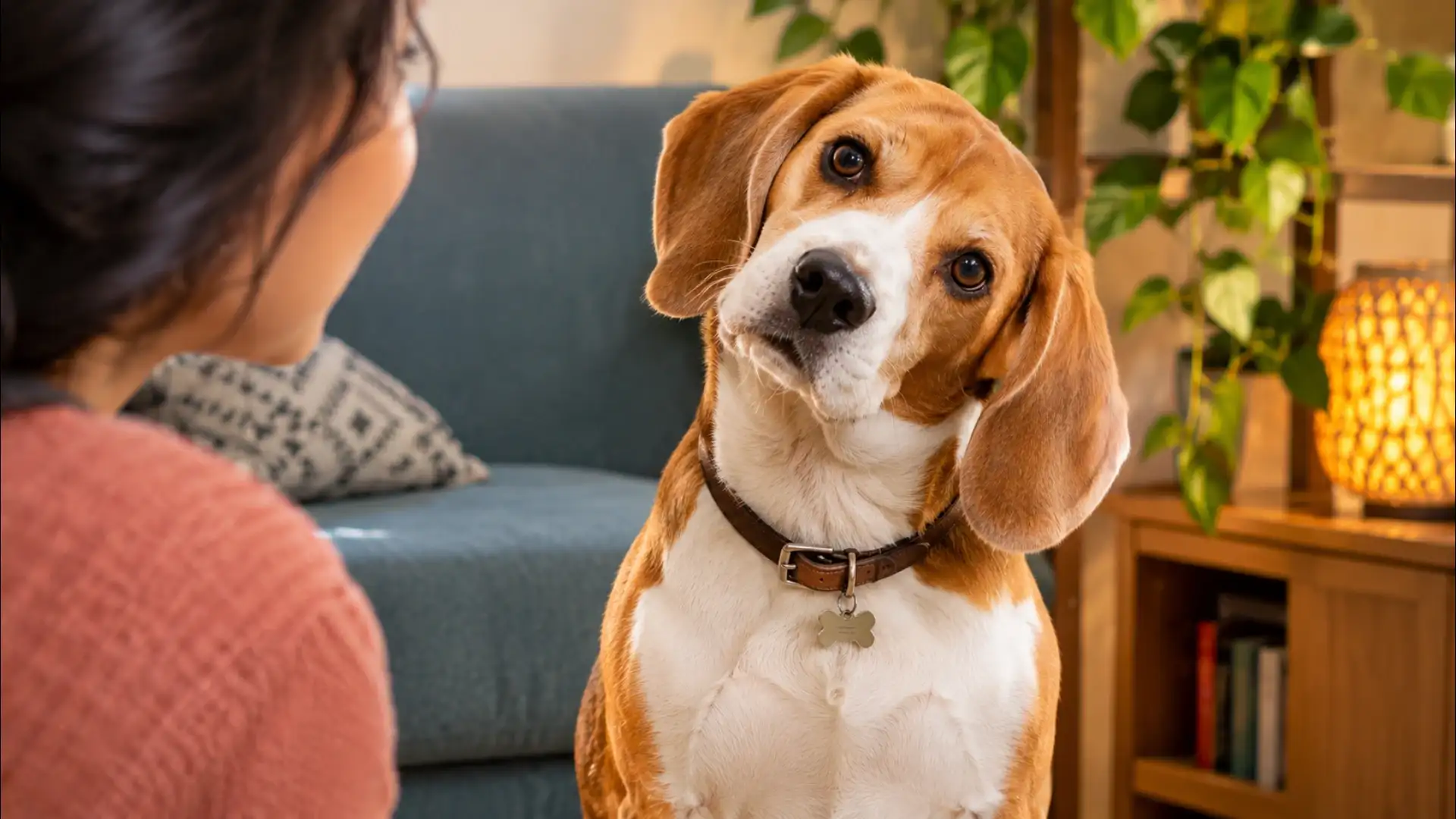
A head tilt may help a dog pay attention to something interesting or unfamiliar. However, this behaviour can have several explanations, and scientists are still studying exactly why dogs do it.
Changing the position of their head can also alter how sound reaches their ears. This may help them gather additional information about where a noise is coming from.
When they hear a familiar word, they may tilt their heads as they process the sound and anticipate what could happen next.
This remains a possible explanation rather than a confirmed reason for every head tilt.
However, this does not mean every head tilt indicates that a dog understands a particular word.
Contact a veterinarian if you notice these symptoms rather than assuming the behaviour is simply curiosity.
A head tilt may help a dog pay attention to something interesting or unfamiliar. However, this behaviour can have several explanations, and scientists are still studying exactly why dogs do it.
1. They Are Trying to Listen More Carefully
Dogs have a highly developed sense of hearing. When they hear an unfamiliar sound or a particular word, tilting their heads may help them pay closer attention to its source.Changing the position of their head can also alter how sound reaches their ears. This may help them gather additional information about where a noise is coming from.
2. They Recognise Familiar Words
Dogs can learn to associate certain words with everyday activities. Terms such as 'walk', 'food', 'treat' and their own names may attract their attention.When they hear a familiar word, they may tilt their heads as they process the sound and anticipate what could happen next.
3. They Are Reading Your Facial Expressions
Dogs observe human faces and body language closely. Some researchers suggest that a head tilt could help dogs get a clearer view of their owner's facial expressions, particularly when their muzzle partly blocks their line of sight.This remains a possible explanation rather than a confirmed reason for every head tilt.
4. Your Voice Makes Them Curious
A high-pitched voice, unusual pronunciation or sudden change in tone can catch a dog's attention. Puppies and adult dogs may tilt their heads when they hear something unexpected.You may also like
- Gastronomy, science and luxurious skincare: How Russian brands "Made in Russia" are changing the FMCG market
- Explained: How dangerous is the new COVID variant PJ.2.1 spreading worldwide? Should we worry in India or not?
- Easy Breakfast Recipe: Make spicy porridge at home, people are crazy about this recipe
- Weight Loss Drugs: Weight loss drugs are damaging your eyes. Do you know how dangerous they are?
- Death by Diabetes: How does increased sugar lead to death, and what causes the problem to increase?
5. They Have Learned That It Gets Attention
Dogs are quick to notice human reactions. If you smile, laugh, offer praise or give a treat whenever your dog tilts its head, it may repeat the behaviour because it receives a positive response.6. Certain Words May Make Them More Attentive
Research published in the journal Animal Cognition found that some dogs classified as gifted word learners tilted their heads more frequently when hearing familiar object names. The findings suggest that head tilting may sometimes be associated with focused attention and mental processing.However, this does not mean every head tilt indicates that a dog understands a particular word.
When Should You Be Concerned?
An occasional head tilt during conversation is generally normal. However, a persistent or sudden head tilt, particularly when accompanied by loss of balance, unusual eye movements, walking difficulties or signs of discomfort, could indicate an ear or neurological problem.Contact a veterinarian if you notice these symptoms rather than assuming the behaviour is simply curiosity.
A Small Gesture With Several Possible Meanings
A dog's head tilt may reflect curiosity, attention, sound processing or a learned response to human interaction. Although the exact reason can vary, this familiar gesture shows how closely dogs observe and respond to the people around them.





Loving Newspoint? Download the app now
