
Why Do Handloom Clothes Feel Different? The Science Behind Their Unique Texture

There is a reason a handloom cotton sari, shirt or dupatta can feel noticeably different from a factory-made fabric, even when both are made from similar fibres. The difference begins with how the yarns are handled and how the fabric is constructed. Handloom weaving allows variations in tension, yarn thickness and surface texture that can give the finished cloth a distinctive character. India's handloom traditions use a wide range of fibres, including cotton, silk, wool, linen and jute, with regional weaving techniques creating very different surfaces and finishes. What looks like a small irregularity can actually be evidence of the human process behind the cloth.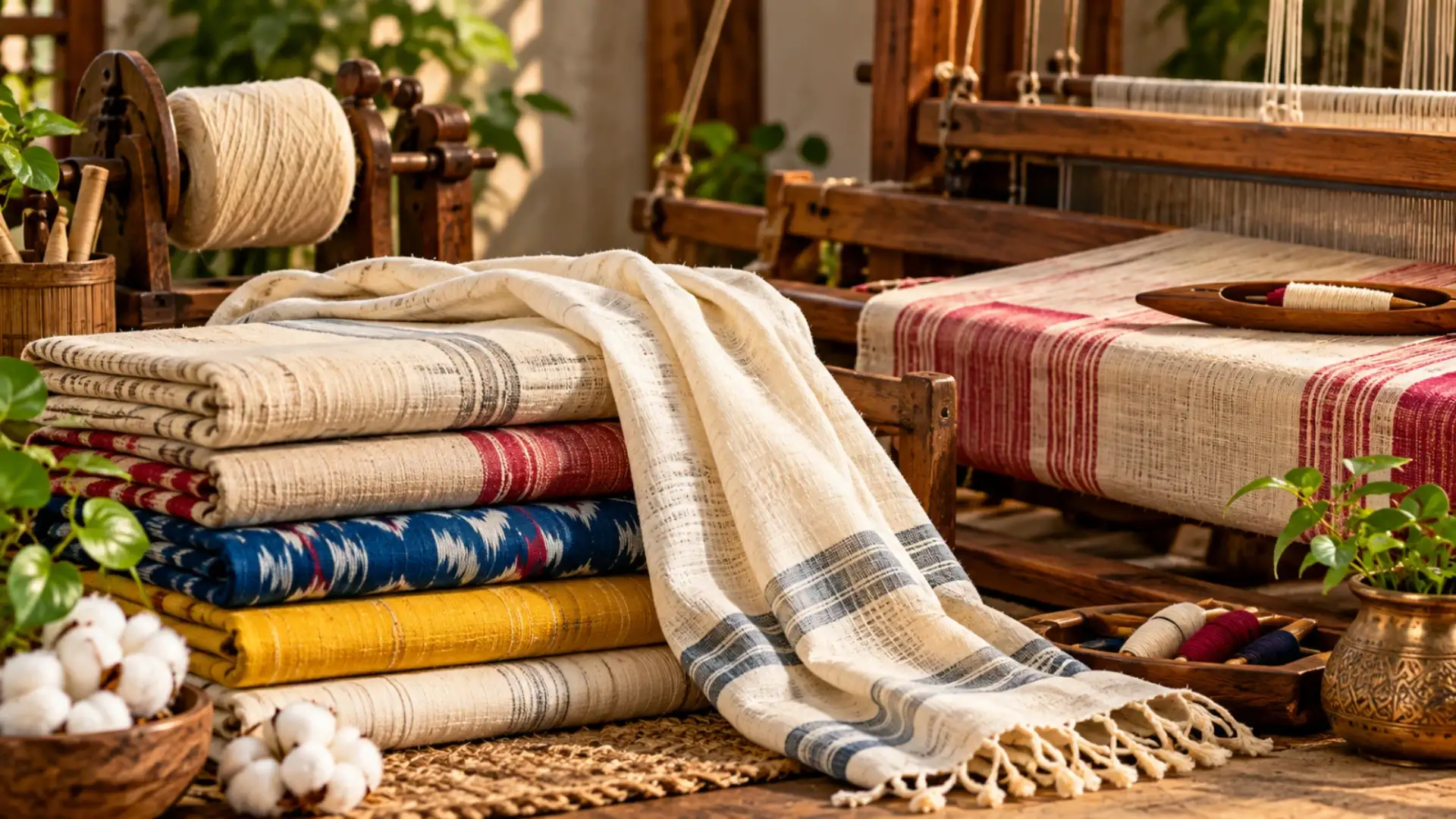
This does not mean every handloom fabric is rough or uneven. Fine handloom textiles can be extremely delicate. The difference is that the construction may retain subtle variations in yarn and tension.
These variations can influence the way light falls on the surface and how the fabric moves when worn.
The yarn's thickness, twist and interaction with other threads affect the finished surface.
This can create a fabric that feels slightly more tactile than a highly uniform machine-made material.
An Ikat, Chanderi or fine cotton handloom can fall differently from a tightly manufactured synthetic fabric. A handwoven textile may have a softer movement, while another may have more body depending on its weave and yarn.
For example, a handwoven Ikat shirt can have a subtle surface character that becomes more visible when the garment moves.
Small variations in colour, weave or yarn thickness can occur naturally in handmade textiles. Some consumers actually look for these characteristics because they distinguish hand-crafted fabric from highly standardised production.
However, genuine craftsmanship should not be confused with poor quality. Good handloom fabric still requires skilled weaving, appropriate yarn and careful finishing.
So, the next time a handloom garment feels slightly different in your hands, that difference may be telling you something. It is not simply about an old-fashioned production method. It is the physical result of a different relationship between yarn, loom, technique and human skill.
The Human Element in Weaving
A powerloom is designed for speed, consistency and large-scale production. Handloom weaving, by contrast, involves an artisan operating the loom and controlling the process manually.This does not mean every handloom fabric is rough or uneven. Fine handloom textiles can be extremely delicate. The difference is that the construction may retain subtle variations in yarn and tension.
These variations can influence the way light falls on the surface and how the fabric moves when worn.
Why the Texture Feels Different
One important factor is yarn. Handloom traditions often use hand-spun or specially prepared yarns, depending on the textile. Khadi, for example, is made from hand-spun yarn and handwoven fabric.The yarn's thickness, twist and interaction with other threads affect the finished surface.
This can create a fabric that feels slightly more tactile than a highly uniform machine-made material.
The Drape Can Change Too
Texture is only part of the story. Weaving structure also affects drape.An Ikat, Chanderi or fine cotton handloom can fall differently from a tightly manufactured synthetic fabric. A handwoven textile may have a softer movement, while another may have more body depending on its weave and yarn.
For example, a handwoven Ikat shirt can have a subtle surface character that becomes more visible when the garment moves.
Are Irregularities a Defect?
Not necessarily.Small variations in colour, weave or yarn thickness can occur naturally in handmade textiles. Some consumers actually look for these characteristics because they distinguish hand-crafted fabric from highly standardised production.
However, genuine craftsmanship should not be confused with poor quality. Good handloom fabric still requires skilled weaving, appropriate yarn and careful finishing.
Why Handloom Still Matters
The distinction is increasingly relevant as consumers become more interested in where clothing comes from. The Ministry of Textiles describes Indian handloom as an important cultural tradition and highlights its relatively low power use, small-batch flexibility and ability to adapt to market requirements.So, the next time a handloom garment feels slightly different in your hands, that difference may be telling you something. It is not simply about an old-fashioned production method. It is the physical result of a different relationship between yarn, loom, technique and human skill.
Next Story