
Sun, Spices, and Oils: Why Do Indian Pickles Taste Different From Region to Region

Step into any traditional kitchen across the Indian subcontinent and you will almost certainly spot a row of ceramic or glass jars resting on a sunny windowsill. Known as achar, uppinakai, or lonche depending on the local language, pickles are an indispensable element of everyday dining. A small dollop on the edge of a plate can elevate a simple meal of lentils and rice into a memorable feast. However, if you taste a mango pickle prepared in northern Punjab and compare it with one made in southern Andhra Pradesh or eastern Bengal, you might struggle to believe they were inspired by the same core fruit. One might taste pungent and mustard-heavy, another fiery hot and oil-rich, and another sweet, tangy, and deeply spiced. Exploring why Indian pickles taste different from region to region reveals how oil bases, regional spice profiles, souring agents, climate conditions, and sun-drying techniques shape local preservation heritage.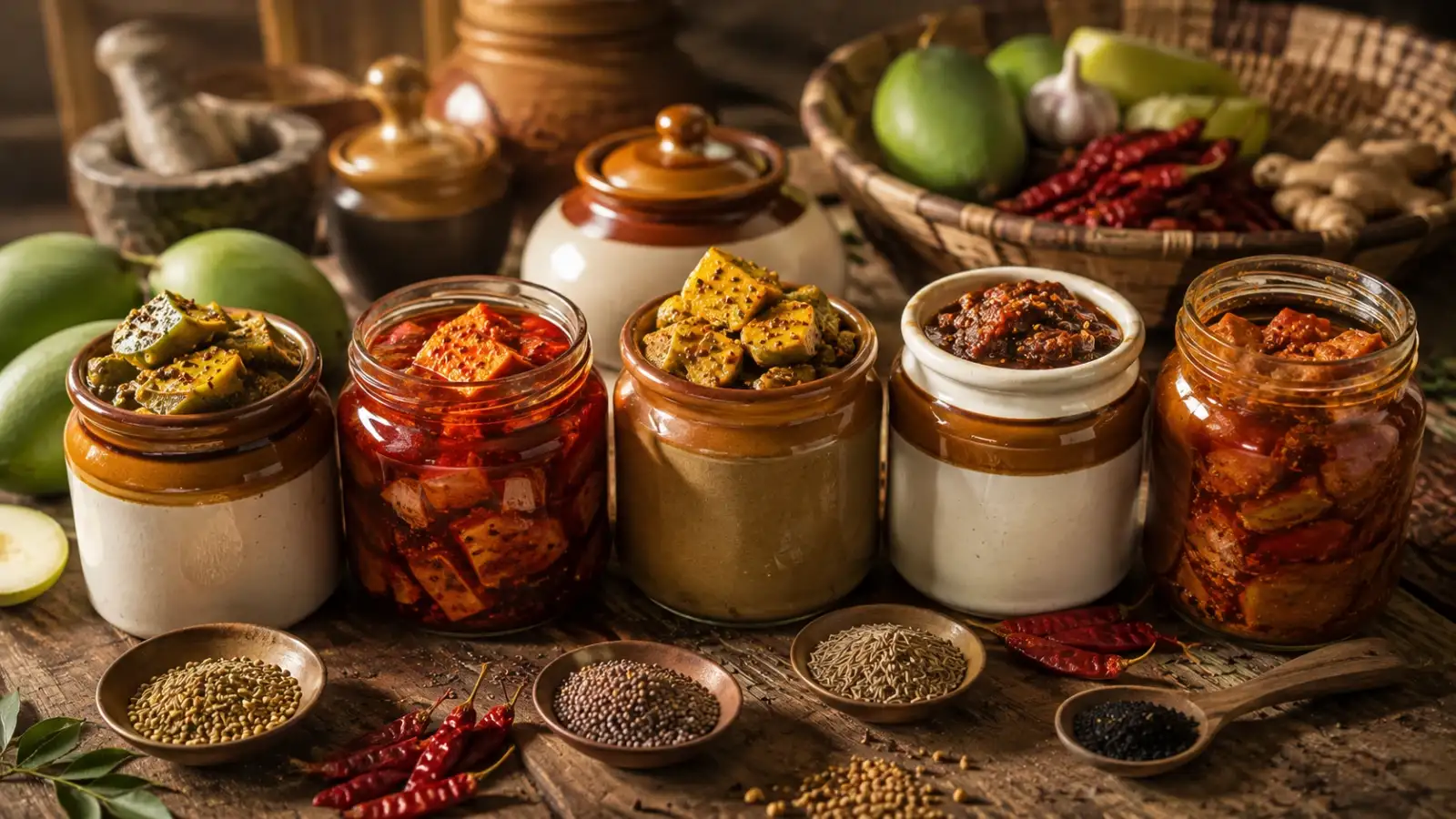
In northern and eastern states like Punjab, Uttar Pradesh, and Bengal, raw mustard oil is the undisputed king of the pickle jar. Pungent mustard oil contains natural allylisothiocyanate compounds that impart a sharp, nose-clearing kick and a distinct golden yellow hue. In southern states like Tamil Nadu and Andhra Pradesh, cooks rely on nut oils such as sesame oil or cold-pressed groundnut oil. Sesame oil provides a deep, nutty richness that softens intense chili heat. Meanwhile, along the tropical western coast, coconut oil is occasionally used to create quick, fresh pickles that feature a sweet, creamy aroma. Because oil acts as both a preservative and the primary flavour carrier, this single choice alters the taste completely.
In northern recipes, sourness comes naturally from raw unripe fruits, lemon juice, or dried green mango powder known as amchur. In western states like Goa and Maharashtra, vinegar introduced through historical trade routes provides a sharp, clean acidity. Southern households often use concentrated tamarind paste or kokum, a wild coastal fruit that imparts a fruity, dark red tartness. In the northeastern states, fermented bamboo shoots and acidic local citrus varieties like kazhi nemu give pickles an earthy, pungent sourness found nowhere else.
Northern recipes favor warm, aromatic whole spices like fennel seeds, fenugreek seeds, nigella seeds, and carom seeds, creating a balanced, fragrant profile. In contrast, Andhra Pradesh is world-famous for producing incredibly spicy pickles that use generous amounts of fiery red chili powder, garlic cloves, and toasted mustard powder. Bengal relies on its iconic five-spice blend consisting of cumin, nigella, fenugreek, aniseed, and mustard seeds. These distinct spice choices mean that even when using the exact same main ingredient, the final flavour spectrum shifts dramatically from sweet and spicy to fiery and bitter.
This slow sun-drying process evaporates excess water content, concentrating natural sugars and mellowing raw spice sharpness. In humid coastal or tropical southern areas where rain is frequent, sun-drying is difficult. Southern cooks developed quick-tempering techniques, sautéing spices and ingredients rapidly in hot oil before sealing them, resulting in fresh, sharp, and intensely vibrant preserves.
The choice of regional oil bases and oil character
The foundational character of any preserved condiment depends heavily on the base oil used to submerge the ingredients. Across different parts of the country, local agriculture historically determined which cooking oil was readily available.In northern and eastern states like Punjab, Uttar Pradesh, and Bengal, raw mustard oil is the undisputed king of the pickle jar. Pungent mustard oil contains natural allylisothiocyanate compounds that impart a sharp, nose-clearing kick and a distinct golden yellow hue. In southern states like Tamil Nadu and Andhra Pradesh, cooks rely on nut oils such as sesame oil or cold-pressed groundnut oil. Sesame oil provides a deep, nutty richness that softens intense chili heat. Meanwhile, along the tropical western coast, coconut oil is occasionally used to create quick, fresh pickles that feature a sweet, creamy aroma. Because oil acts as both a preservative and the primary flavour carrier, this single choice alters the taste completely.
Souring agents and acidic balance variations
While raw green mango is a universal favorite, different regions use wildly different ingredients to achieve that signature mouth-watering tartness. The type of acid used changes both the sharp bite and the lingering finish on the tongue.In northern recipes, sourness comes naturally from raw unripe fruits, lemon juice, or dried green mango powder known as amchur. In western states like Goa and Maharashtra, vinegar introduced through historical trade routes provides a sharp, clean acidity. Southern households often use concentrated tamarind paste or kokum, a wild coastal fruit that imparts a fruity, dark red tartness. In the northeastern states, fermented bamboo shoots and acidic local citrus varieties like kazhi nemu give pickles an earthy, pungent sourness found nowhere else.
You may also like
- 'It had been our dream since childhood': Six sets of twins at one Kerala wedding, as twin brothers marry twin sisters, with twin priests and twin altar boys
- 5 easy DIY hacks to create a luxury plant corner without spending a fortune
- Why do some houses always smell good, even without room fresheners?
- Dog Parents Alert: 7 Common Kitchen Foods That Can Be Dangerous for Your Pet
- Karnataka man spent nearly 3 hours in the Arabian Sea; rescuer Eshwar Malpe swam almost 3 nautical miles to reach him and bring him back
Regional spice blends and fiery heat choices
The spice mixture rubbed onto the fruit or vegetable acts as the unique flavour fingerprint of a region. Every territory relies on a signature blend passed down through generations.Northern recipes favor warm, aromatic whole spices like fennel seeds, fenugreek seeds, nigella seeds, and carom seeds, creating a balanced, fragrant profile. In contrast, Andhra Pradesh is world-famous for producing incredibly spicy pickles that use generous amounts of fiery red chili powder, garlic cloves, and toasted mustard powder. Bengal relies on its iconic five-spice blend consisting of cumin, nigella, fenugreek, aniseed, and mustard seeds. These distinct spice choices mean that even when using the exact same main ingredient, the final flavour spectrum shifts dramatically from sweet and spicy to fiery and bitter.
Climate variations and sun-drying traditions
Local weather conditions heavily influence traditional preservation methods. In hot, dry northern plains, raw ingredients like mangoes, lime wedges, and green chilis are tossed in salt and spices, then left in glazed earthenware jars under intense sun for weeks.This slow sun-drying process evaporates excess water content, concentrating natural sugars and mellowing raw spice sharpness. In humid coastal or tropical southern areas where rain is frequent, sun-drying is difficult. Southern cooks developed quick-tempering techniques, sautéing spices and ingredients rapidly in hot oil before sealing them, resulting in fresh, sharp, and intensely vibrant preserves.
Celebrating regional food heritage through every jar
Understanding why Indian pickles taste different from region to region offers a delicious window into local culture, climate, and ancestral wisdom. Every unique jar captures the true essence of its home ground, proving that ancient preservation techniques remain a brilliant art form.





Loving Newspoint? Download the app now
