Why Do Indian Recipes Start With Hot Oil and Spices? The Science of Tadka

If you have ever stood near an Indian kitchen at mealtime, you have likely heard the delightful sizzle of seeds hit a hot pan and smelled a sudden, intoxicating wave of aromatic steam. Whether preparing a simple lentil dal, a rich vegetable curry, or a fiery meat dish, the cooking process almost always begins the exact same way.
Hero Image


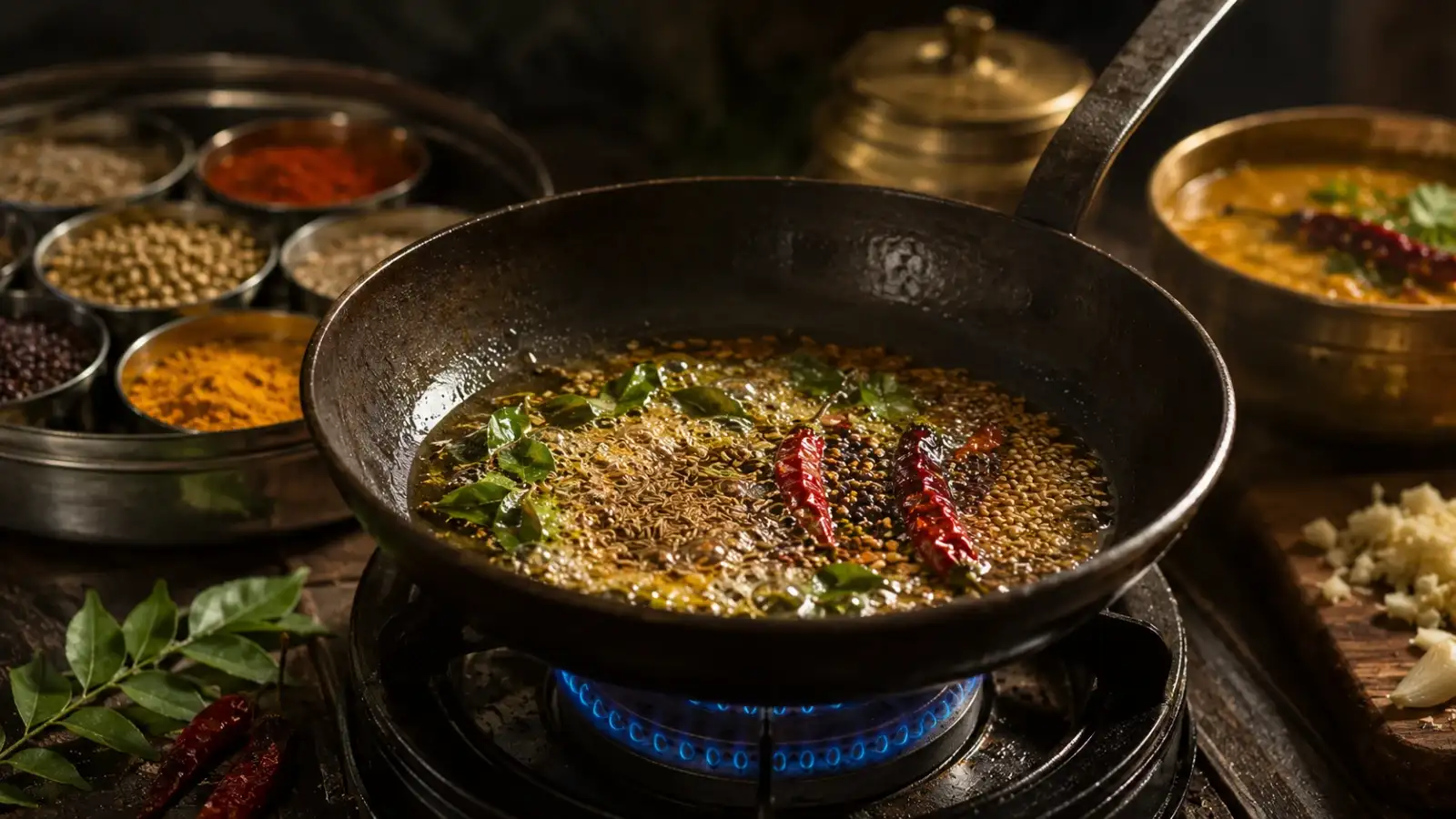
Cold pan, hot oil or ghee, followed immediately by whole or coarsely ground spices. Known across different regions as tadka, chhonk, vaghar, or thalippu, this foundational technique is far more than a charming cooking habit passed down through generations. It is a brilliant piece of practical culinary science. Exploring why Indian recipes often start with hot oil and spices reveals how fat-soluble flavour extraction, essential oil unlocking, Maillard reaction acceleration, and digestive spice processing work together to build incredible taste.

Fat-soluble aroma extraction and oil infusion

The primary scientific reason for blooming spices in hot oil comes down to chemical solubility. The complex flavours and distinct scents of whole spices like cumin seeds, mustard seeds, cardamom, cinnamon, and cloves are stored inside tiny pockets of natural essential oils.


Water and oil do not mix, and many of these essential flavour compounds are hydrophobic, meaning they are fat-soluble rather than water-soluble. If you toss whole spices directly into a boiling watery broth, the flavour compounds remain locked inside the plant tissue, resulting in a dull and flat dish. Hot fat acts as a powerful solvent. When whole spices hit hot oil, the high temperature ruptures the plant cell walls, releasing fat-soluble essential oils directly into the cooking medium. The oil absorbs these flavour molecules, distributing rich aromatic notes evenly throughout the entire dish.

High temperature roasting and Maillard flavour development

Cooking whole spices in hot oil allows them to reach temperatures far above the boiling point of water. Water boils at one hundred degrees Celsius, but cooking oil can easily reach temperatures between one hundred and fifty to one hundred and eighty degrees.


This intense, dry heat triggers the Maillard reaction and subtle caramelisation within the carbohydrates and proteins of the spices. Roasting mustard seeds until they pop transforms their raw, bitter sharpness into a nutty, warm crunch. Cumin seeds shift from earthy to deeply savory, while cloves and cinnamon develop a sweet, complex richness. This initial high-heat roasting creates a deep flavour base that water-based simmering simply cannot replicate.

Tempering oil as a top dressing and texture enhancement

While starting a recipe with hot oil and spices creates a rich flavour base, Indian cooking also uses this technique as a finishing touch. Adding a freshly sizzled spice oil over a finished dish just before serving preserves delicate volatile aromas that would evaporate during long cooking times.

Furthermore, the crackling texture of crisp mustard seeds, toasted curry leaves, and fried split lentils adds an exciting textural contrast to soft dishes like rice, dals, and vegetable masalas.

Digestive benefits and neutralizing raw spice harshness

Beyond creating irresistible taste, frying spices in oil plays an important role in nutrition and digestion. Spices like asafoetida, ginger, garlic, fenugreek, and bishop seeds contain strong, sulfurous compounds that can taste harsh and prove difficult for the stomach to process when raw.


Gentle frying in warm oil softens these aggressive sulfur compounds, rendering them smooth, palatable, and gentle on the digestive tract. Traditional culinary wisdom recognized that infusing these carminative spices into hot oil helped stimulate digestive enzymes, preventing bloating and enhancing nutrient absorption from heavy grains and legumes.

Mastering the art of spice blooming in your kitchen

Understanding why Indian recipes often start with hot oil and spices gives you a deeper appreciation for traditional cooking techniques. By giving your whole spices those crucial first seconds in hot fat, you unlock the true potential of every ingredient in your pantry.