
Why Do Premature Babies Need Incubators?


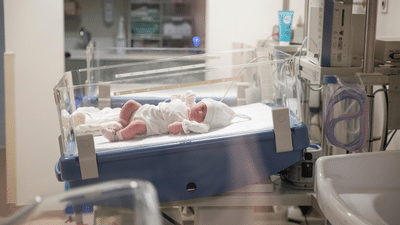
Premature babies need incubators mainly to maintain a stable body temperature and provide a protected environment while they receive medical care. Premature babies are born before 37 completed weeks of pregnancy and may not yet have enough body fat or mature temperature-control mechanisms to stay warm on their own. Depending on the baby's condition, an incubator may also help control humidity, allow continuous monitoring, and provide easier access for treatment.
We reached out to Dr Chetana V, Sr. Consultant – Obstetrics & Gynaecology, Aster CMI Hospital, Bangalore, for a clinical perspective on this.
How Does an Incubator Help a Premature Baby Stay Warm?An incubator is a closed, transparent cot that controls four things a premature baby cannot control alone: temperature, humidity, oxygen levels, and exposure to infection. The enclosed design keeps the baby's environment stable even as the room around it changes.
Newborns lose heat more quickly than older children and adults because they have a relatively large body surface compared with their weight. Premature and low-birth-weight babies have less insulating body fat and may produce less heat.
Built-in sensors track the baby's skin temperature and adjust the warmth automatically, so the baby does not have to burn its limited energy reserves staying warm.
Maintaining normal body temperature is important because hypothermia can increase energy and oxygen requirements and may interfere with feeding and other body functions.
Does an Incubator Help Premature Babies Breathe?An incubator itself does not treat breathing problems. However, it provides a stable environment while doctors manage respiratory problems that are common in premature babies.
Some babies may need additional support, such as oxygen, continuous positive airway pressure (CPAP), or mechanical ventilation. These treatments are provided through separate equipment and are used according to the baby's condition.
The incubator allows healthcare professionals to monitor the baby closely while these treatments are given.
“An incubator provides a warm, controlled environment that helps them use their energy for growth and recovery. The goal is not simply to keep the baby warm but to provide a safe environment while the baby's organs continue to mature.”
Dr Chetana V, Sr. Consultant, Obs & Gyn, Aster CMI Hospital
Why Can't Premature Babies Regulate Their Own Body Temperature?A full-term baby is born with a layer of brown fat that generates heat and a functioning shivering reflex. Premature babies have little to none of either. Their skin is thinner and closer to the surface blood vessels, so heat escapes quickly.
A drop in body temperature forces the baby's body to use extra energy and oxygen just to stay warm, energy it needs instead for growth, feeding, and breathing. Incubators remove this problem by keeping the surrounding air at the exact temperature the baby needs, adjusted continuously as the baby grows.
How Does an Incubator Protect Premature Babies From Infection?Premature babies have immature immune systems and may be more vulnerable to infections. An incubator provides a controlled environment and limits unnecessary exposure while the baby is receiving hospital care.
However, an incubator does not make a baby completely protected from infection. Hand hygiene, clean equipment, appropriate infection-control practices, and careful handling remain essential. The incubator itself must also be cleaned and maintained properly between babies and during use.
 How Long Do Premature Babies Stay in an Incubator?Thelength of stay depends on gestational age and weight rather than a fixed number of days. Babies born extremely early, before 28 weeks, often need incubator care for several weeks to months. Those born closer to 34–36 weeks may only need a few days.
Doctors generally move a baby out of the incubator once the baby can:
An incubator gives a premature baby the stable, protected environment its body cannot yet create on its own, buying time for its organs to mature outside the womb.
Whether you’re pregnant, a new mom, or navigating postpartum, you don’t have to do it alone. Join our support group to connect, share, and support one another.
FAQs on Why Do Premature Babies Need Incubators?Can parents touch or hold a baby in an incubator?
Yes, once the baby is stable. Doctors allow supervised skin-to-skin contact and Kangaroo Care through the incubator's access ports or once the baby is briefly moved out for short sessions.Do all premature babies need an incubator?
No. Babies born closer to term (after around 35 weeks) who can maintain their temperature and feed well may only need short-term monitoring rather than full incubator care. Can a premature baby breastfeed while in an incubator?
Some premature babies can breastfeed directly. Others may initially need expressed breast milk through a feeding tube until they develop adequate sucking, swallowing, and breathing coordination.
We reached out to Dr Chetana V, Sr. Consultant – Obstetrics & Gynaecology, Aster CMI Hospital, Bangalore, for a clinical perspective on this.
How Does an Incubator Help a Premature Baby Stay Warm?An incubator is a closed, transparent cot that controls four things a premature baby cannot control alone: temperature, humidity, oxygen levels, and exposure to infection. The enclosed design keeps the baby's environment stable even as the room around it changes.
Newborns lose heat more quickly than older children and adults because they have a relatively large body surface compared with their weight. Premature and low-birth-weight babies have less insulating body fat and may produce less heat.
Built-in sensors track the baby's skin temperature and adjust the warmth automatically, so the baby does not have to burn its limited energy reserves staying warm.
Maintaining normal body temperature is important because hypothermia can increase energy and oxygen requirements and may interfere with feeding and other body functions.
Does an Incubator Help Premature Babies Breathe?An incubator itself does not treat breathing problems. However, it provides a stable environment while doctors manage respiratory problems that are common in premature babies.
Some babies may need additional support, such as oxygen, continuous positive airway pressure (CPAP), or mechanical ventilation. These treatments are provided through separate equipment and are used according to the baby's condition.
The incubator allows healthcare professionals to monitor the baby closely while these treatments are given.
“An incubator provides a warm, controlled environment that helps them use their energy for growth and recovery. The goal is not simply to keep the baby warm but to provide a safe environment while the baby's organs continue to mature.”
Dr Chetana V, Sr. Consultant, Obs & Gyn, Aster CMI Hospital
Why Can't Premature Babies Regulate Their Own Body Temperature?A full-term baby is born with a layer of brown fat that generates heat and a functioning shivering reflex. Premature babies have little to none of either. Their skin is thinner and closer to the surface blood vessels, so heat escapes quickly.
A drop in body temperature forces the baby's body to use extra energy and oxygen just to stay warm, energy it needs instead for growth, feeding, and breathing. Incubators remove this problem by keeping the surrounding air at the exact temperature the baby needs, adjusted continuously as the baby grows.
How Does an Incubator Protect Premature Babies From Infection?Premature babies have immature immune systems and may be more vulnerable to infections. An incubator provides a controlled environment and limits unnecessary exposure while the baby is receiving hospital care.
However, an incubator does not make a baby completely protected from infection. Hand hygiene, clean equipment, appropriate infection-control practices, and careful handling remain essential. The incubator itself must also be cleaned and maintained properly between babies and during use.
Doctors generally move a baby out of the incubator once the baby can:
- Maintain a stable body temperature without intensive thermal support
- Breathe safely without significant episodes of breathing difficulty
- Take adequate milk by breast or another appropriate method
- Gain weight steadily
- Remain clinically stable
An incubator gives a premature baby the stable, protected environment its body cannot yet create on its own, buying time for its organs to mature outside the womb.
Whether you’re pregnant, a new mom, or navigating postpartum, you don’t have to do it alone. Join our support group to connect, share, and support one another.
FAQs on Why Do Premature Babies Need Incubators?
Yes, once the baby is stable. Doctors allow supervised skin-to-skin contact and Kangaroo Care through the incubator's access ports or once the baby is briefly moved out for short sessions.
No. Babies born closer to term (after around 35 weeks) who can maintain their temperature and feed well may only need short-term monitoring rather than full incubator care.
Some premature babies can breastfeed directly. Others may initially need expressed breast milk through a feeding tube until they develop adequate sucking, swallowing, and breathing coordination.
Next Story