
Why Do Soap Bubbles Have Rainbow Colours? The Science Behind the Shine

A soap bubble can look like a tiny floating planet, covered in shifting blues, greens, pinks and yellows. The colours appear, disappear and move across the surface as the bubble drifts through the air. Yet there is no coloured dye producing this spectacular effect. The secret lies in the extraordinary behaviour of light when it meets an incredibly thin film of soapy water. This phenomenon, called thin-film interference , is also responsible for colourful patterns seen in oil slicks and certain transparent materials.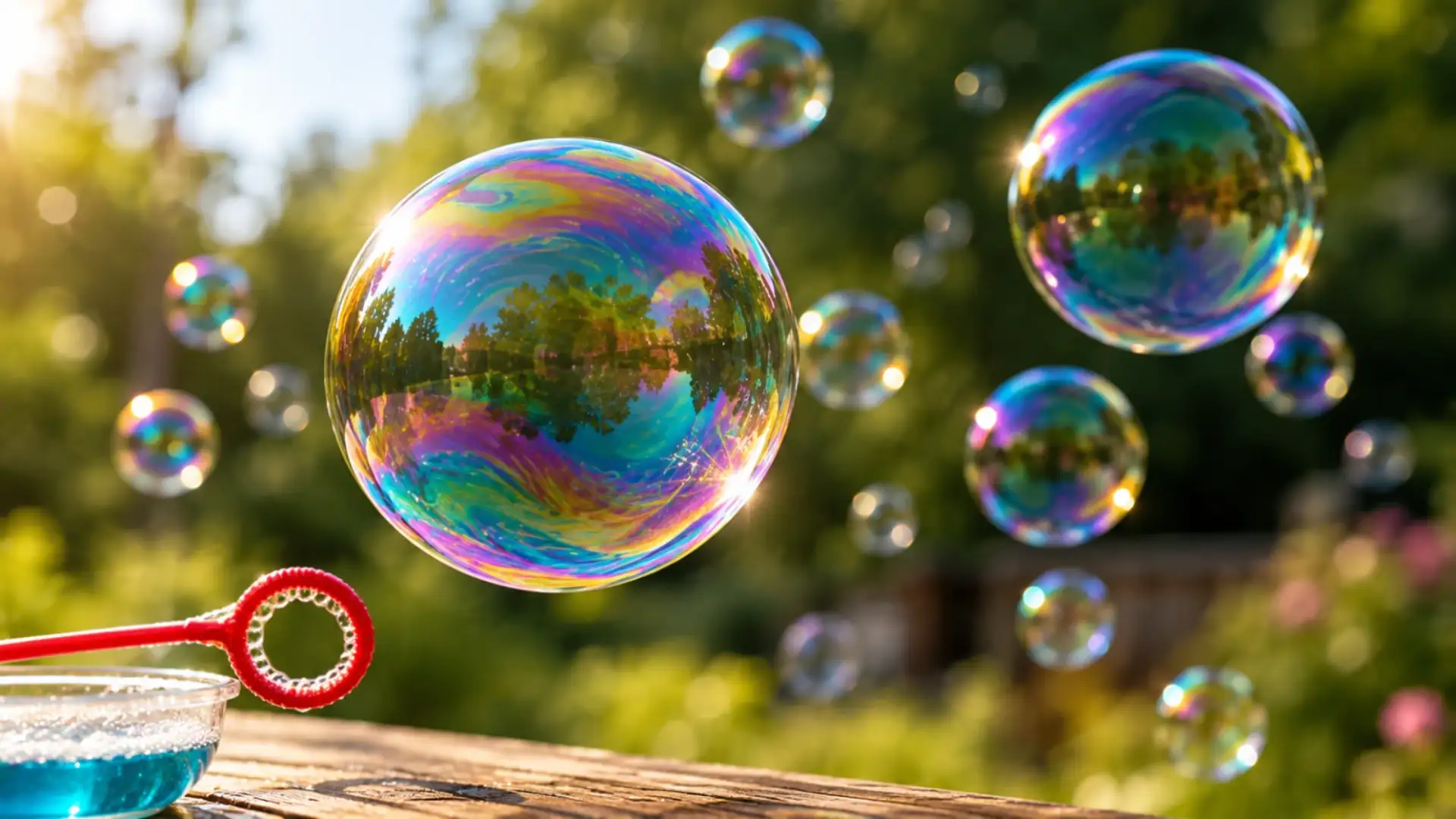
When sunlight or other white light hits the bubble, some light reflects from the outer surface of the film while some travels through the film and reflects from the inner surface.
These reflected waves then interact with each other.
Depending on the thickness of the soap film, certain wavelengths are strengthened while others are weakened. The result is a colour that appears to shimmer across the bubble.
As the thickness of the film changes, the colours change too.
This explains why a bubble rarely has one fixed colour. Water continuously drains down its surface, making different areas of the film slightly thicker or thinner.
The bubble may develop dark or nearly black patches. These areas indicate an exceptionally thin film and are often a sign that the bubble is about to disappear.
The colours are therefore not simply "inside" the bubble. They are produced by the interaction of light with an extraordinarily delicate surface.
That is what makes soap bubbles so fascinating. Something children create with a little water and soap is also a beautiful demonstration of wave physics, happening right in front of our eyes.
A Bubble Has an Extremely Thin Surface
A soap bubble consists of a thin layer of water trapped between molecules of soap. The film can become incredibly thin as water drains away under gravity.When sunlight or other white light hits the bubble, some light reflects from the outer surface of the film while some travels through the film and reflects from the inner surface.
These reflected waves then interact with each other.
How Light Creates the Colours
Light behaves as a wave, and different colours have different wavelengths. When reflected light waves meet, they can reinforce one another or cancel one another out.You may also like
- Union Minister Kiren Rijiju responds to Arunachal girl's cute request, “Humko Indian bolo”: “You have become famous; the whole of India loves you”
- High heels were originally made for men, here's surprising story
- 5 Cucumber Skincare Secrets for Fresh, Glowing Skin
- 7 Stunning Kajal Looks Every Indian Girl Should Try
- Baby Starts Crying as Soon as I Sit: The Hidden Reason
Depending on the thickness of the soap film, certain wavelengths are strengthened while others are weakened. The result is a colour that appears to shimmer across the bubble.
As the thickness of the film changes, the colours change too.
This explains why a bubble rarely has one fixed colour. Water continuously drains down its surface, making different areas of the film slightly thicker or thinner.
Why Bubbles Eventually Turn Dark
There is another fascinating stage just before a bubble bursts. As its film becomes extremely thin, many visible wavelengths can interfere destructively.The bubble may develop dark or nearly black patches. These areas indicate an exceptionally thin film and are often a sign that the bubble is about to disappear.
The Same Science Appears Elsewhere
Thin-film interference is not unique to bubbles. The rainbow sheen of an oil film on water and some colours seen on insect wings can involve related optical effects .The colours are therefore not simply "inside" the bubble. They are produced by the interaction of light with an extraordinarily delicate surface.
That is what makes soap bubbles so fascinating. Something children create with a little water and soap is also a beautiful demonstration of wave physics, happening right in front of our eyes.






Loving Newspoint? Download the app now
