
Why Do Some Plants Close Their Leaves When You Touch Them?

A plant folding its leaves when you touch it can feel almost magical. One moment the foliage is open and relaxed, and seconds later it appears to shrink away from your finger. The best-known example is Mimosa pudica , commonly called the sensitive plant or touch-me-not. Unlike animals, plants do not have muscles or a nervous system, yet this remarkable species can respond rapidly to physical stimulation. Scientists have discovered that the movement involves electrical signalling, specialised structures and changes in water pressure inside cells.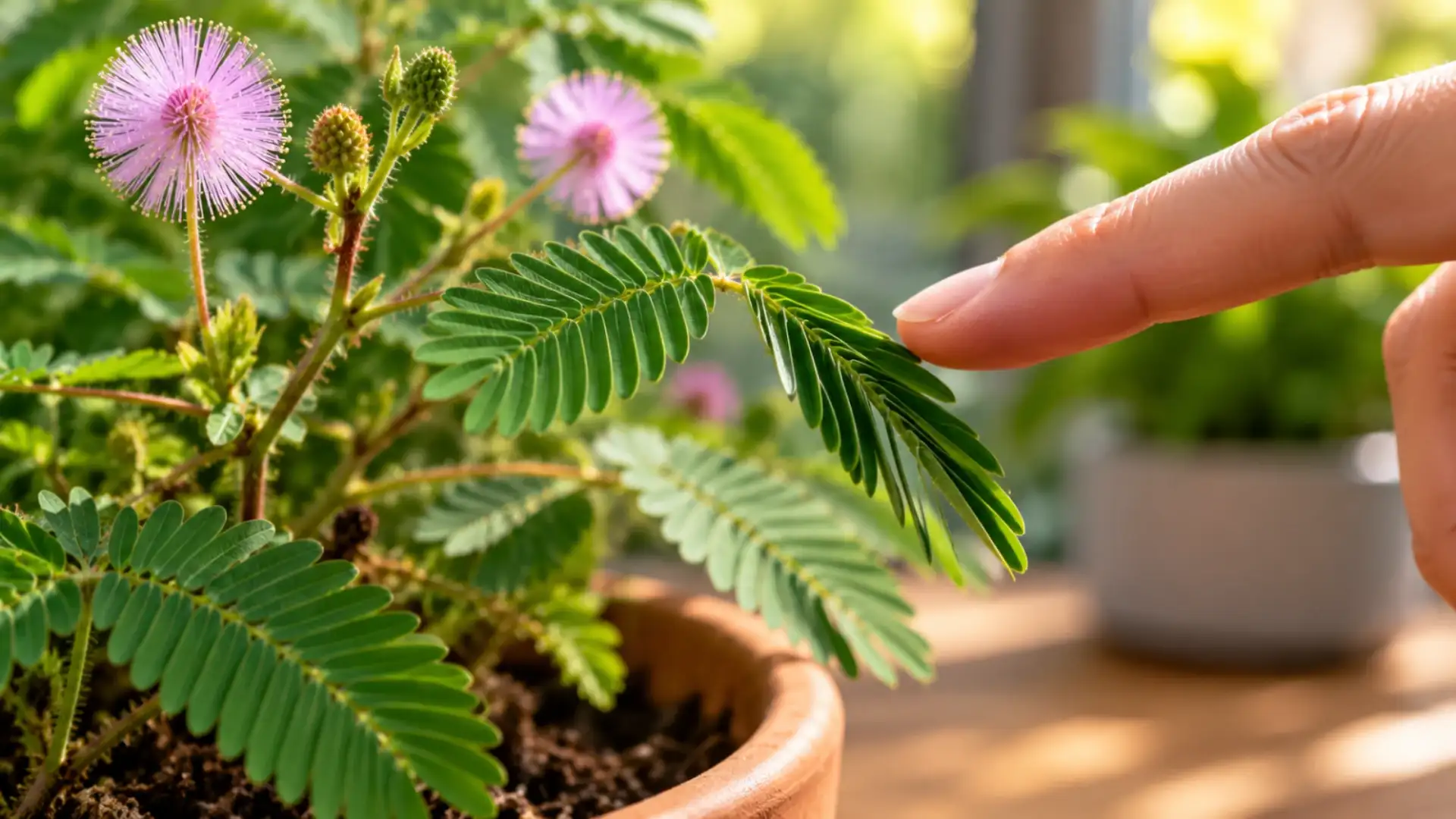
The result is the dramatic folding movement people notice almost immediately.
Interestingly, scientists have identified specialised mechanoreceptor cells associated with Mimosa's movement, showing that its response is considerably more sophisticated than a simple reflex.
Meet the Sensitive Plant
Mimosa pudica is famous for closing its leaflets after being touched. The response can also be triggered by other physical disturbances, including vibration and movement. Research has shown that the plant possesses specialised motor structures called pulvini near the bases of its leaves and leaflets.What Happens After Touch?
The process begins when mechanical stimulation is detected. An electrical signal travels through the plant and reaches the pulvinus. This signal influences the movement of ions and water within specialised cells. As water moves out of certain cells, they lose turgor pressure, causing the leaf structure to change shape rapidly.You may also like
- PPF vs SSY: Which scheme is best for your daughter's future, and where will you get massive returns? Full calculation..
- Angelina Jolie's unusual parenting choice: In 2016, she revealed her six children were learning Khmer, Vietnamese, German, Arabic and sign language
- Modern Parenting Tips: 5 Ways to Raise Confident Kids Without Making Marks and Rank Everything
- Living Room Makeover: 5 Vastu-Inspired Decor Ideas for a Fresh, Calm and Welcoming Home
- Ganesh Chaturthi Rangoli Ideas: 7 Beautiful Designs to Give Your Home a Festive Makeover
The result is the dramatic folding movement people notice almost immediately.
Is the Plant Actually Shy?
Despite its charming nickname, the plant is not experiencing fear or embarrassment. The behaviour is a biological response rather than an emotion. Scientists believe the sudden movement may have defensive value. Folding can make the plant appear smaller and may help discourage insects or other potential threats. Research has also linked the response to rapid changes involving calcium signalling and electrical activity.Why Does It Reopen?
The leaves do not remain folded permanently. Once the stimulus has passed, the plant gradually restores the water balance and turgor pressure within its motor cells. The leaflets then return towards their original position. The exact timing depends on the conditions and the intensity of stimulation.Plants Are More Responsive Than They Look
The sensitive plant offers a useful reminder that plants are not passive decorations. They detect changes in their surroundings, respond to light, water availability, gravity, temperature and physical contact, all without a brain or conventional nervous system.Interestingly, scientists have identified specialised mechanoreceptor cells associated with Mimosa's movement, showing that its response is considerably more sophisticated than a simple reflex.
A Tiny Lesson in Plant Biology
The next time a sensitive plant folds its leaves beneath your fingertip, there is no mystery or magic involved. Instead, you are watching a remarkably fast biological system at work. It is a fascinating example of how plants have evolved their own ways of sensing and responding to the world around them.





Loving Newspoint? Download the app now
