
Why do we celebrate birthdays with candles, and why are the candles blown out?


Historians have hardly ever asked when people started celebrating birthdays, perhaps because the question seemed too trivial. Every year, family and friends gather around a cake and sing the same tune while the birthday person shuts their eyes to make a wish and then tries to put out every candle with a single breath. The routine feels so ordinary that hardly anyone asks where the candles came from, why the song is sung, why the cake is cut, or why blowing the flames out is supposed to bring good fortune.
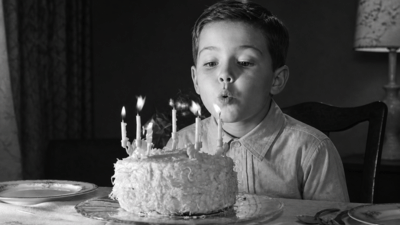
Many popular retellings send the story back to ancient Greece, but the surviving evidence for the modern custom points more firmly to Germany in the eighteenth century, with religion, family habits and folklore all feeding into it along the way. Following that trail shows how a plain flame came to stand for life, hope and the promise of another year ahead, and how a kindergarten greeting and a shared slice of cake ended up in the same few minutes.
Did the Greeks light the first birthday candle?
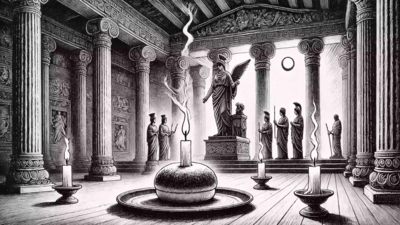
One well-known theory ties birthday candles to the worship of Artemis, the Greek goddess linked with the moon and the hunt, whose sanctuaries received offerings that are said to have included round cakes. Some writers suggest that candles set on a round cake may have been meant to echo the glow of the moon.
That sounds neat, but an ancient temple offering and a modern birthday party are very different things. As National Geographic explains in its history of birthday candles, no surviving record shows that the ancient Greeks actually placed candles on birthday cakes the way people do now. The Artemis link is better treated as a possible symbolic forerunner than as a proven starting point. Ancient societies certainly used fire in their ceremonies, but that fact alone cannot show an unbroken chain stretching from those rituals to today’s birthday celebrations.
Why do we blow the candles out and make a wish?

The wish comes from the same German parties. According to Panati, a Kinderfest child’s wish would come true if every candle went out in one breath and the wish stayed secret. A traditional view says the smoke carried the wish up to the heavens, but nobody has shown that today’s habit descends from any ancient ceremony. What can be documented is the practice itself. A nineteenth-century discussion of Swiss customs in The Folk-Lore Journal describes candles lit according to the celebrant’s age and put out before the cake was eaten. The belief has no power to predict anything, yet it lasts because families keep repeating it. The University of Southern California’s Digital Folklore Archives records one celebrant who makes a silent wish, tries to put out every candle at once and says that telling the wish aloud could spoil it. Here is an article, published in 2017 by the Cambridge University Press, that talks about “The invention of the birthday", which traces how the modern birthday took shape over time.
What do the flames actually stand for?
Candles turned the birthday cake from a simple treat into the centre of a shared ritual, since each flame could stand for one year of life and make the passing of time easy to see. Light has carried meanings of life, hope, celebration and spiritual significance in many cultures, and the extra “light of life” candle in the German tradition reflects this, although the exact meanings and practices differed from one account to another. As time went on, the custom drifted away from religious readings and became tied more closely to family gatherings. A cake covered in small flames gave the family something to sing around and a way to mark a milestone. The meaning shifted again as the habit spread, so that what once suggested protection and blessings gradually turned into an everyday way of showing affection and wishing someone many more birthdays.
Why blow the candles out instead of letting them burn?
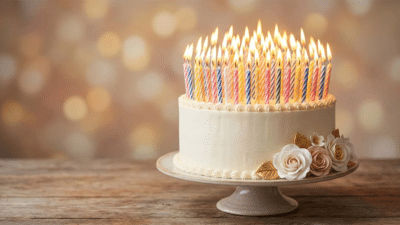
Putting out the candles is now the high point of the ritual, yet its origin is murkier than many popular explanations admit. A traditional view links the smoke rising from a flame with a wish drifting up towards the heavens, which would make blowing out the candles a symbolic way of sending a hope or prayer on its way.
It would be wrong, though, to present this as the proven source of the modern habit. Customs involving flame, smoke and religious offerings give helpful background, but nobody has shown that today’s birthday ritual descends directly from any one ancient ceremony.
Many popular retellings send the story back to ancient Greece, but the surviving evidence for the modern custom points more firmly to Germany in the eighteenth century, with religion, family habits and folklore all feeding into it along the way. Following that trail shows how a plain flame came to stand for life, hope and the promise of another year ahead, and how a kindergarten greeting and a shared slice of cake ended up in the same few minutes.
Did the Greeks light the first birthday candle?
One well-known theory ties birthday candles to the worship of Artemis, the Greek goddess linked with the moon and the hunt, whose sanctuaries received offerings that are said to have included round cakes. Some writers suggest that candles set on a round cake may have been meant to echo the glow of the moon.
That sounds neat, but an ancient temple offering and a modern birthday party are very different things. As National Geographic explains in its history of birthday candles, no surviving record shows that the ancient Greeks actually placed candles on birthday cakes the way people do now. The Artemis link is better treated as a possible symbolic forerunner than as a proven starting point. Ancient societies certainly used fire in their ceremonies, but that fact alone cannot show an unbroken chain stretching from those rituals to today’s birthday celebrations.
Why do we blow the candles out and make a wish?
The wish comes from the same German parties. According to Panati, a Kinderfest child’s wish would come true if every candle went out in one breath and the wish stayed secret. A traditional view says the smoke carried the wish up to the heavens, but nobody has shown that today’s habit descends from any ancient ceremony. What can be documented is the practice itself. A nineteenth-century discussion of Swiss customs in The Folk-Lore Journal describes candles lit according to the celebrant’s age and put out before the cake was eaten. The belief has no power to predict anything, yet it lasts because families keep repeating it. The University of Southern California’s Digital Folklore Archives records one celebrant who makes a silent wish, tries to put out every candle at once and says that telling the wish aloud could spoil it. Here is an article, published in 2017 by the Cambridge University Press, that talks about “The invention of the birthday", which traces how the modern birthday took shape over time.
What do the flames actually stand for?
Candles turned the birthday cake from a simple treat into the centre of a shared ritual, since each flame could stand for one year of life and make the passing of time easy to see. Light has carried meanings of life, hope, celebration and spiritual significance in many cultures, and the extra “light of life” candle in the German tradition reflects this, although the exact meanings and practices differed from one account to another. As time went on, the custom drifted away from religious readings and became tied more closely to family gatherings. A cake covered in small flames gave the family something to sing around and a way to mark a milestone. The meaning shifted again as the habit spread, so that what once suggested protection and blessings gradually turned into an everyday way of showing affection and wishing someone many more birthdays.
Why blow the candles out instead of letting them burn?
Putting out the candles is now the high point of the ritual, yet its origin is murkier than many popular explanations admit. A traditional view links the smoke rising from a flame with a wish drifting up towards the heavens, which would make blowing out the candles a symbolic way of sending a hope or prayer on its way.
It would be wrong, though, to present this as the proven source of the modern habit. Customs involving flame, smoke and religious offerings give helpful background, but nobody has shown that today’s birthday ritual descends directly from any one ancient ceremony.
Next Story