
Why Do We Fear the Faces Time Gives Us? A Conversation on Ageing, Individuality and Stillness


Sadhguru ’s photo book “Disappearing Faces” prompted Tamannaah Bhatia and Vishal Bhardwaj to ask what we lose when we stop looking at the human face as it truly is.
In a conversation at the Fairmont Hotel in Mumbai on November 22, actor Tamannaah Bhatia and filmmaker Vishal Bhardwaj sat down with Sadhguru to explore his latest photo essay book, Disappearing Faces . The book gathers portraits of people from remote Himalayan regions , photographed over five decades of Sadhguru’s journeys to the mountains.
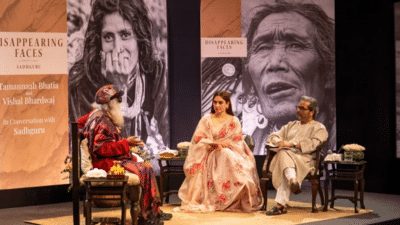
Growing old, gracefullyTamannaah said the faces in the photographs, etched by years and weather, seemed beautiful and deeply human. This struck her all the more because urban society finds it so hard to accept the visible signs of ageing . “Why are we not accepting of something that’s the most inevitable, which is the passage of time?” she asked. The people in the photographs, she observed, seemed far more at peace with growing older than those in cities.
Sadhguru said this discomfort is a recent development. “This is, I think, a recent happening in India. Otherwise, women and men grew old gracefully in this country. But we have taken Western ideas where the whole civilisations are ruled by hormones.”
According to him, people have begun to idealise their hormonal peak, turning youth into an expectation rather than one stage of life. “But if you make one aspect of life everything, then you will have a skewed life,” he said.
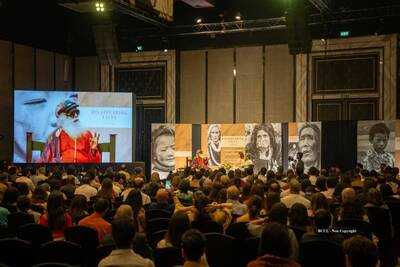
The courage to be oneselfThe conversation then turned to individuality . Tamannaah noticed that each person in the book seemed to have a distinct personality, style and way of being, even though they have far fewer resources, less formal education and less exposure than people in cities. They seemed at ease with who they are, she said, while urban life often brings the pressure to fit in.
Sadhguru connected this to how we educate ourselves. Education today, he said, mostly prepares people to earn a livelihood rather than to look beyond it. “Education should be about expanding our horizons,” he said. Most people stay absorbed in the pursuit of jobs, and very few explore what they are truly capable of or inclined towards.
Stillness and intensityVishal Bhardwaj spoke of the stillness he felt in these faces, recalling Sadhguru’s words that stillness is the highest level of intensity. He then asked about the active saints, such as Meera and Kabir. How does stillness apply to those who lived with such passion and movement?
Sadhguru explained that Meera’s devotion to Krishna made her emotions consistently sweet, so she experienced everything through that sweetness. Kabir, by contrast, sought to balance his inner experience with the practical demands of life. Sadhguru pointed to Krishna as the example of someone fully involved in the world without his inner experience being disturbed by it.
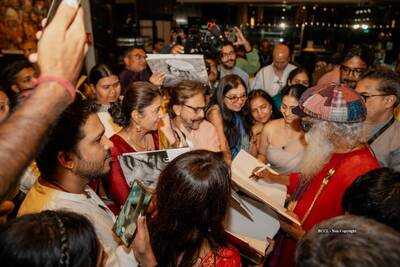
A vanishing way of lifeDisappearing Faces was launched in August this year. Its photographs, taken mainly in Nepal and Tibet, offer a glimpse into the lives of people shaped by a direct relationship with the natural world. As modern development and the information age spread, these communities and their ways of life are slowly changing. Through these portraits, Sadhguru documents a fading human experience.
In a conversation at the Fairmont Hotel in Mumbai on November 22, actor Tamannaah Bhatia and filmmaker Vishal Bhardwaj sat down with Sadhguru to explore his latest photo essay book, Disappearing Faces . The book gathers portraits of people from remote Himalayan regions , photographed over five decades of Sadhguru’s journeys to the mountains.
Growing old, gracefullyTamannaah said the faces in the photographs, etched by years and weather, seemed beautiful and deeply human. This struck her all the more because urban society finds it so hard to accept the visible signs of ageing . “Why are we not accepting of something that’s the most inevitable, which is the passage of time?” she asked. The people in the photographs, she observed, seemed far more at peace with growing older than those in cities.
Sadhguru said this discomfort is a recent development. “This is, I think, a recent happening in India. Otherwise, women and men grew old gracefully in this country. But we have taken Western ideas where the whole civilisations are ruled by hormones.”
According to him, people have begun to idealise their hormonal peak, turning youth into an expectation rather than one stage of life. “But if you make one aspect of life everything, then you will have a skewed life,” he said.
The courage to be oneselfThe conversation then turned to individuality . Tamannaah noticed that each person in the book seemed to have a distinct personality, style and way of being, even though they have far fewer resources, less formal education and less exposure than people in cities. They seemed at ease with who they are, she said, while urban life often brings the pressure to fit in.
Sadhguru connected this to how we educate ourselves. Education today, he said, mostly prepares people to earn a livelihood rather than to look beyond it. “Education should be about expanding our horizons,” he said. Most people stay absorbed in the pursuit of jobs, and very few explore what they are truly capable of or inclined towards.
Stillness and intensityVishal Bhardwaj spoke of the stillness he felt in these faces, recalling Sadhguru’s words that stillness is the highest level of intensity. He then asked about the active saints, such as Meera and Kabir. How does stillness apply to those who lived with such passion and movement?
Sadhguru explained that Meera’s devotion to Krishna made her emotions consistently sweet, so she experienced everything through that sweetness. Kabir, by contrast, sought to balance his inner experience with the practical demands of life. Sadhguru pointed to Krishna as the example of someone fully involved in the world without his inner experience being disturbed by it.
A vanishing way of lifeDisappearing Faces was launched in August this year. Its photographs, taken mainly in Nepal and Tibet, offer a glimpse into the lives of people shaped by a direct relationship with the natural world. As modern development and the information age spread, these communities and their ways of life are slowly changing. Through these portraits, Sadhguru documents a fading human experience.
Next Story