
Why do we shake hands when we meet someone? The ancient ritual began thousands of years ago, and its original purpose may surprise you


A handshake is a greeting or sign of agreement in which two people clasp their right hands and move them up and down, and the title points to how old the habit is and how little anyone can prove about its start. We read about it in "The History of the Handshake," an article by Evan Andrews published by History (dot) com on August 9, 2016, which says the gesture has existed in some form for thousands of years but has murky origins.
Why did people start doing the handshake?
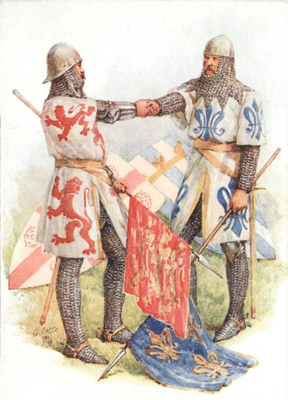
The weapon story is the one most people have heard, and it goes like this: you offer your empty right hand, the hand that would have held a sword or spear, and the other person can see you mean no harm. Some versions add that the up-and-down motion developed to shake a dagger loose from a sleeve, though some historians caution that there is little direct evidence for any of this. The second explanation is about promises, since clasping hands in front of others showed that a person's word was a sacred bond. Historian Walter Burkert described the ritual as "open, weaponless hands stretched out toward one another," and he argued that a spoken agreement only becomes effective once a physical gesture backs it up. The handshake most likely picked up several meanings over the centuries, from trust to confirming an oath to marking a deal between two people.
What is the earliest evidence?
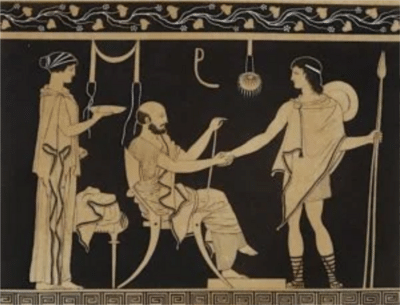
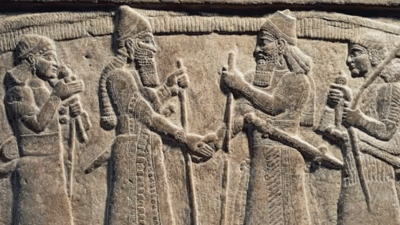
One of the earliest images is a ninth-century B.C. relief of the Assyrian king Shalmaneser III shaking hands with a Babylonian ruler to seal an alliance. Homer describes handshakes several times in the Iliad and the Odyssey, usually around pledges and displays of trust between characters. Greek gravestones from the fourth and fifth centuries B.C. often show the dead person clasping hands with a family member, which could mean a final farewell or a bond that outlasts death. The Romans treated the gesture as a sign of friendship and loyalty, and they put pairs of clasped hands on their coins. Across all these cultures, the handshake showed up when two sides needed to trust each other, whether at a treaty, a funeral, or a trade.
When did it become an everyday greeting?

In the ancient world, a handshake meant something serious, such as an alliance or a vow, and using it simply to say hello is a much newer habit. Some historians credit the 17th-century Quakers, who saw a handclasp as a far more equal choice than bowing or tipping a hat to someone of higher rank in their own time. By the 1800s etiquette manuals were teaching the correct technique, and the Victorian shake was meant to be firm but not too strong. One 1877 guide said that a gentleman who shook a hand too violently should never get the chance to do it again.
What is its significance?
The handshake matters because it turns trust into something you can see, and every explanation we have, from the empty weapon hand to the sealed oath, comes down to two people showing each other that they can be believed. That is why the gesture turns up at alliances, funerals, trades and treaties, all moments when a promise has to be made in front of someone. Burkert's point was that words alone are easy to say and the physical gesture is what makes an agreement effective. The Quakers added another layer by choosing the handshake over bowing or tipping a hat, because it let a person of any rank offer the same thing to anyone. It also needs no shared language and takes about two seconds, so it works between people who have never actually met.
According to an article by folklorists James Deutsch and Yuliya Gluhova in Smithsonian Folklife Magazine, historians believe the modern handshake is at least 3,000 years old, based on the same ninth-century relief. The authors also showed that the handshake has never been constant, pointing out that Russia largely banned it after the 1917 revolution and that the Victorians regulated it strictly. The preference for the right hand likely has plain causes too, since most people are right-handed and offering that hand put each person's dominant hand in full view, and in Christianity and Islam the right hand has carried positive associations. Next time someone offers you a hand, take it with your right, and keep the grip firm but not crushing, as the Victorians advised.
Why did people start doing the handshake?
The weapon story is the one most people have heard, and it goes like this: you offer your empty right hand, the hand that would have held a sword or spear, and the other person can see you mean no harm. Some versions add that the up-and-down motion developed to shake a dagger loose from a sleeve, though some historians caution that there is little direct evidence for any of this. The second explanation is about promises, since clasping hands in front of others showed that a person's word was a sacred bond. Historian Walter Burkert described the ritual as "open, weaponless hands stretched out toward one another," and he argued that a spoken agreement only becomes effective once a physical gesture backs it up. The handshake most likely picked up several meanings over the centuries, from trust to confirming an oath to marking a deal between two people.
What is the earliest evidence?
One of the earliest images is a ninth-century B.C. relief of the Assyrian king Shalmaneser III shaking hands with a Babylonian ruler to seal an alliance. Homer describes handshakes several times in the Iliad and the Odyssey, usually around pledges and displays of trust between characters. Greek gravestones from the fourth and fifth centuries B.C. often show the dead person clasping hands with a family member, which could mean a final farewell or a bond that outlasts death. The Romans treated the gesture as a sign of friendship and loyalty, and they put pairs of clasped hands on their coins. Across all these cultures, the handshake showed up when two sides needed to trust each other, whether at a treaty, a funeral, or a trade.
When did it become an everyday greeting?
In the ancient world, a handshake meant something serious, such as an alliance or a vow, and using it simply to say hello is a much newer habit. Some historians credit the 17th-century Quakers, who saw a handclasp as a far more equal choice than bowing or tipping a hat to someone of higher rank in their own time. By the 1800s etiquette manuals were teaching the correct technique, and the Victorian shake was meant to be firm but not too strong. One 1877 guide said that a gentleman who shook a hand too violently should never get the chance to do it again.
What is its significance?
The handshake matters because it turns trust into something you can see, and every explanation we have, from the empty weapon hand to the sealed oath, comes down to two people showing each other that they can be believed. That is why the gesture turns up at alliances, funerals, trades and treaties, all moments when a promise has to be made in front of someone. Burkert's point was that words alone are easy to say and the physical gesture is what makes an agreement effective. The Quakers added another layer by choosing the handshake over bowing or tipping a hat, because it let a person of any rank offer the same thing to anyone. It also needs no shared language and takes about two seconds, so it works between people who have never actually met.
According to an article by folklorists James Deutsch and Yuliya Gluhova in Smithsonian Folklife Magazine, historians believe the modern handshake is at least 3,000 years old, based on the same ninth-century relief. The authors also showed that the handshake has never been constant, pointing out that Russia largely banned it after the 1917 revolution and that the Victorians regulated it strictly. The preference for the right hand likely has plain causes too, since most people are right-handed and offering that hand put each person's dominant hand in full view, and in Christianity and Islam the right hand has carried positive associations. Next time someone offers you a hand, take it with your right, and keep the grip firm but not crushing, as the Victorians advised.
Next Story