
Why Does Ice Cream Give You a Headache? The Weird Truth Behind Brain Freeze

We've all done it. You get a bowl of ice cream, a freezing-cold coffee or a giant slushie, and you're hungry enough that you don't want to waste time. So you take a huge bite. For approximately three seconds, everything is perfect.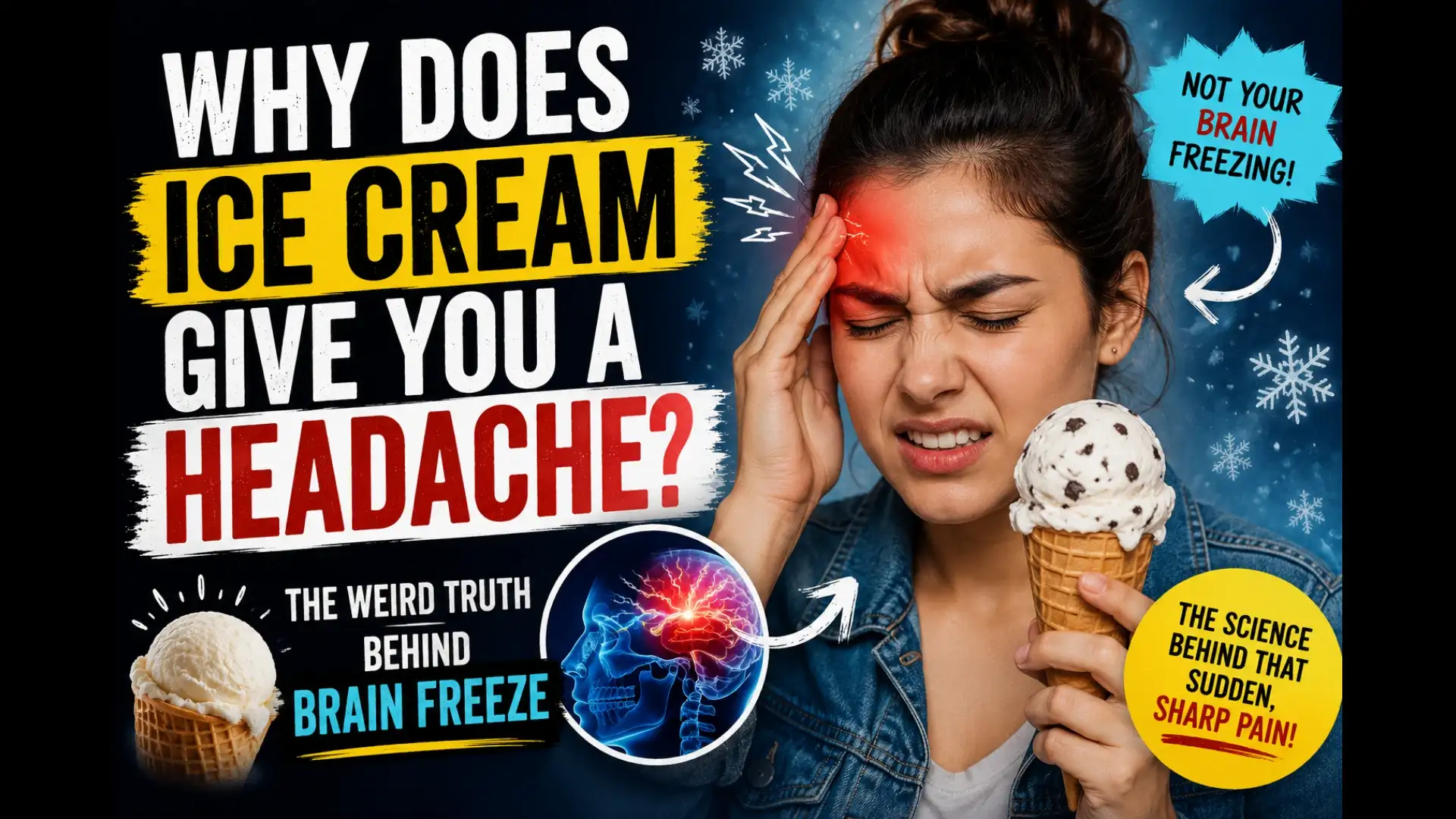
Then suddenly, OUCH. A sharp, stabbing headache appears out of nowhere. You stop eating. You press your fingers against your forehead. You wait for the pain to disappear and wonder why your own dessert has just attacked you.
The funny thing is, your brain isn't actually freezing. There isn't a tiny block of ice forming inside your skull. The sensation has much more to do with what happens inside your mouth than inside your brain.
So the blood vessels in the area react. Some constrict because of the cold and then quickly change again as your body tries to warm the area back up. That rapid reaction sends signals through nerves in the region. And that's where things get weird.
One important nerve involved is the trigeminal nerve , which carries sensation from much of the face and head. When the cold sensation triggers this network, the brain can interpret the resulting pain as coming from another nearby area. So your ice cream is attacking your mouth. Your forehead simply gets the complaint.
It's one reason eating cold food slowly can make a difference. If you give your mouth time to adjust, the temperature doesn't change quite so dramatically. Basically, your body is saying: ,“Could you please stop doing that?”
A few tiny spoonfuls eaten slowly may be completely fine. A giant mouthful of ice cream followed by another one five seconds later? That's when your forehead may decide to file a complaint. This is also why frozen drinks can be particularly good at triggering it. You're often drinking them quickly, giving your mouth very little time to adjust.
You don't need to panic; you don't need to call anyone. You mostly just need to stop eating the thing that caused the problem. Which is surprisingly difficult when there's still half a bowl of ice cream sitting in front of you.
And if you do get brain freeze, stopping the cold food and warming your mouth can help the sensation disappear sooner. In other words, don't fight the ice cream. Give your mouth a chance to catch up.
It's simply your nerves and blood vessels reacting to a sudden blast of cold, and your brain doing a slightly confusing job of telling you where that discomfort came from. So the next time you're halfway through an ice cream and suddenly grab your forehead, you'll know what's happening. Your brain isn't freezing. Your mouth just sent your head a very dramatic warning.
Then suddenly, OUCH. A sharp, stabbing headache appears out of nowhere. You stop eating. You press your fingers against your forehead. You wait for the pain to disappear and wonder why your own dessert has just attacked you.
The funny thing is, your brain isn't actually freezing. There isn't a tiny block of ice forming inside your skull. The sensation has much more to do with what happens inside your mouth than inside your brain.
The Roof of Your Mouth Is the Trouble Spot
The roof of your mouth, also called the palate, contains plenty of blood vessels and nerves. When something extremely cold touches it, especially if you eat or drink it quickly, the temperature in that area drops suddenly. Your body doesn't particularly like sudden changes in temperature.So the blood vessels in the area react. Some constrict because of the cold and then quickly change again as your body tries to warm the area back up. That rapid reaction sends signals through nerves in the region. And that's where things get weird.
Why Does the Pain Feel Like It's in Your Forehead?
This is probably the strangest part of brain freeze. The cold food touches your mouth. But the pain can appear around your forehead, temples or eyes. Why? Because the nerves carrying those signals are connected in ways that can confuse your brain about where the pain is actually coming from.One important nerve involved is the trigeminal nerve , which carries sensation from much of the face and head. When the cold sensation triggers this network, the brain can interpret the resulting pain as coming from another nearby area. So your ice cream is attacking your mouth. Your forehead simply gets the complaint.
Your Body Is Basically Trying to Protect You
Brain freeze is uncomfortable, but it isn't usually dangerous. Think of it as your body's exaggerated response to sudden cold. The blood vessels and nerves around your palate react to the temperature change, and the resulting sensation becomes a short-lived headache.It's one reason eating cold food slowly can make a difference. If you give your mouth time to adjust, the temperature doesn't change quite so dramatically. Basically, your body is saying: ,“Could you please stop doing that?”
You may also like
- Amitabh Bachchan was so popular in Egypt that Bollywood films were restricted in 1987; when Big B arrived in Cairo in 1991, it triggered a 'national crisis' in the country
- Unlock Radiant Skin with Quality Sleep: The Beauty Sleep Connection
- Jewellery Styling Tips for Teej 2026: Elevate Your Saree Look
- Neem Karoli Baba Ashram: Where to visit after seeing Neem Karoli Baba? These 7 places within a 50 km radius are the most special..
- “Men would never have to face...”: Keyaa Banerji lifted 140 kg at 45.7 kg, won world silver and still had to defend herself from online sexism
Why Eating Faster Makes It Worse
There's a reason brain freeze often happens when you're trying to finish an ice cream before it melts. The faster the cold food hits the roof of your mouth, the more sudden the temperature change can be.A few tiny spoonfuls eaten slowly may be completely fine. A giant mouthful of ice cream followed by another one five seconds later? That's when your forehead may decide to file a complaint. This is also why frozen drinks can be particularly good at triggering it. You're often drinking them quickly, giving your mouth very little time to adjust.
So Why Does It Go Away So Quickly?
Fortunately, brain freeze usually doesn't stick around. Once you stop eating or drinking the cold thing, the temperature in your mouth starts returning to normal. The blood vessels and nerves settle down, and the pain fades.You don't need to panic; you don't need to call anyone. You mostly just need to stop eating the thing that caused the problem. Which is surprisingly difficult when there's still half a bowl of ice cream sitting in front of you.
Can You Stop Brain Freeze From Happening?
The easiest trick is also the least exciting one: slow down. Eat smaller bites. Let ice cream warm slightly in your mouth before swallowing. Try not to press extremely cold food directly against the roof of your mouth.And if you do get brain freeze, stopping the cold food and warming your mouth can help the sensation disappear sooner. In other words, don't fight the ice cream. Give your mouth a chance to catch up.
Maybe ‘Brain Freeze’ Is a Terrible Name
The name makes it sound much more dramatic than it actually is. Your brain isn't freezing; your skull isn't suddenly full of ice, and your dessert hasn't caused some mysterious medical emergency.It's simply your nerves and blood vessels reacting to a sudden blast of cold, and your brain doing a slightly confusing job of telling you where that discomfort came from. So the next time you're halfway through an ice cream and suddenly grab your forehead, you'll know what's happening. Your brain isn't freezing. Your mouth just sent your head a very dramatic warning.






Loving Newspoint? Download the app now
