
Why Resting All Day Doesn’t Always Make You Feel Rested

There are days when your biggest achievement is moving from your bed to the sofa. You scroll, watch something, order food, scroll some more and barely leave the house. By evening, you expect to feel wonderfully rested. Instead, you feel weirdly drained.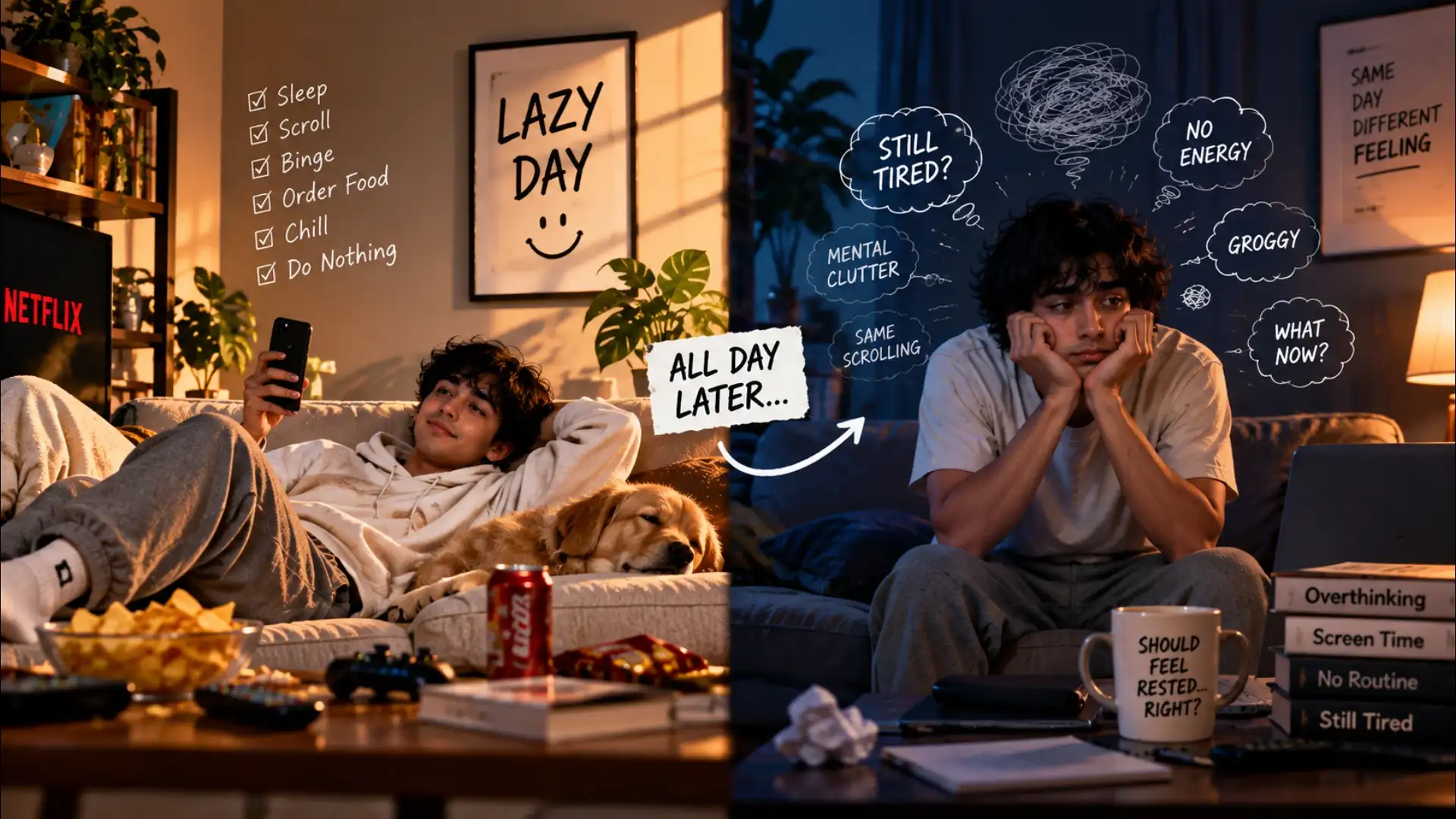
That is why a short walk can sometimes make you feel more awake than another hour on the sofa. You do not need an intense workout. Simply getting up, moving around and changing your surroundings can break up long periods of inactivity.
That can leave you feeling groggy rather than refreshed. Sleeping longer is not automatically the same as getting better-quality rest, particularly when it pushes your normal sleep schedule out of rhythm.
Then there is the mental clutter that often appears when you have nothing planned. You may start worrying, replaying conversations or thinking about everything you have been putting off. So physically inactive does not always mean mentally relaxed.
This does not mean every lazy day needs to become productive. Sometimes doing very little is exactly what you need. But if you regularly finish supposedly restful days feeling exhausted, adding a little movement, daylight, structure and genuine screen-free downtime may help.
Rest and Inactivity Are Not The Same
Your body does need downtime, but spending hours without moving does not necessarily provide the kind of recovery it needs. Light physical activity helps keep your body engaged, while prolonged sitting or lying down can leave you feeling sluggish.That is why a short walk can sometimes make you feel more awake than another hour on the sofa. You do not need an intense workout. Simply getting up, moving around and changing your surroundings can break up long periods of inactivity.
Your Routine Matters Too
Busy days usually come with built-in signals that tell your body when to wake up, eat, move and wind down. On a completely unstructured day, those cues can disappear. You might sleep late, nap during the afternoon and stay awake much later than usual.That can leave you feeling groggy rather than refreshed. Sleeping longer is not automatically the same as getting better-quality rest, particularly when it pushes your normal sleep schedule out of rhythm.
Your Brain May Still Be Working Overtime
There is another catch. Sitting on the sofa does not necessarily mean your brain is resting. If you spend hours jumping between social media posts, videos, messages and notifications, your mind is still processing a constant stream of information.Then there is the mental clutter that often appears when you have nothing planned. You may start worrying, replaying conversations or thinking about everything you have been putting off. So physically inactive does not always mean mentally relaxed.
This does not mean every lazy day needs to become productive. Sometimes doing very little is exactly what you need. But if you regularly finish supposedly restful days feeling exhausted, adding a little movement, daylight, structure and genuine screen-free downtime may help.
Next Story