
Why Do Emergency Exit Doors Open Outwards?

A door that opens the “wrong” way can become a surprisingly important safety feature when things go wrong. Emergency exit doors are generally designed to open in the direction people are trying to escape, and there is a very practical reason for it. It is one of those design choices that looks completely ordinary until you imagine having to use the door during a real emergency.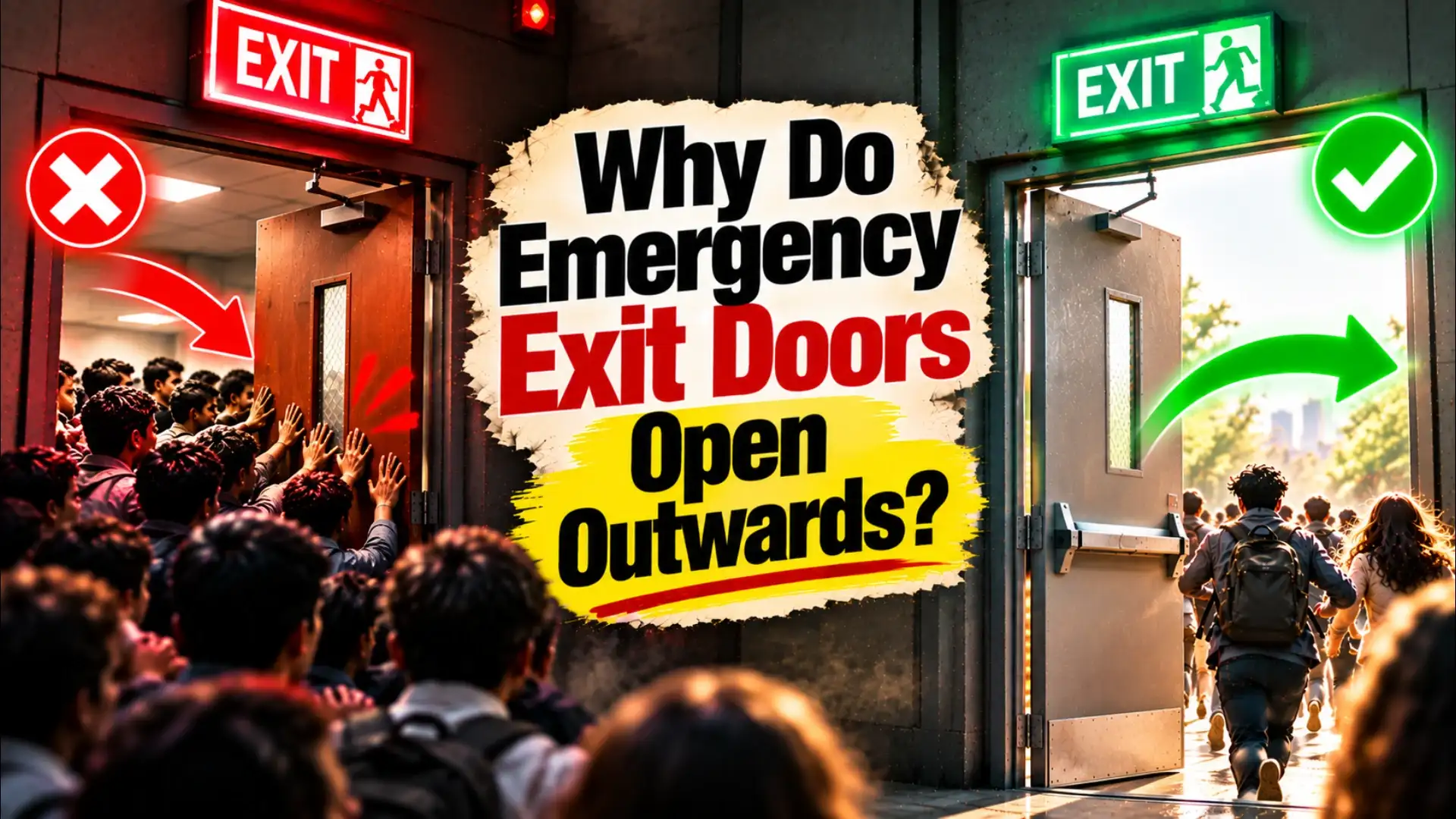
Now imagine that the door opens into the room. The people standing immediately behind it could end up blocking the space needed for the door to swing open. Even if someone reaches the handle, there may simply not be enough room to pull or push the door into the crowded space.
An outward-opening door changes that situation. The door swings towards the escape route, meaning the space inside the building does not need to remain clear for the door itself. People can move towards the exit and push the door open in broadly the same direction as their movement. It is a small design decision that becomes much more important when dozens or hundreds of people are trying to leave at once.
The mechanism can also be designed to keep the door secure during normal use while allowing people inside the building to exit quickly when required. This is especially useful because emergency design assumes that people may not behave perfectly when they are under pressure.
The width of the doorway, the number of people expected to use it, the direction of opening and the route beyond the door can all matter. A door that works perfectly well for one person could become a serious bottleneck if hundreds of people suddenly need to use it. That is why emergency exits are generally designed to remove as many unnecessary obstacles as possible.
An interior door may need to preserve space in a corridor, avoid blocking another doorway or simply work better with the layout of a room. An exterior door may also need to deal with weather, security and accessibility considerations.
Emergency exits have a different priority: rapid evacuation. Building and fire-safety requirements vary depending on the country, building type and number of occupants, so the exact rules are not identical everywhere.
But the principle behind the design is simple. When everything is normal, a door is just a door. During an emergency, it becomes part of an escape route. And that outward swing helps make sure the door itself does not become the thing standing between people and safety.
Imagine Everyone Trying To Get Out
Picture a crowded hall where everyone suddenly has to leave. People start moving towards the same exit, and those closest to the doorway may be pressed forward by the people behind them.Now imagine that the door opens into the room. The people standing immediately behind it could end up blocking the space needed for the door to swing open. Even if someone reaches the handle, there may simply not be enough room to pull or push the door into the crowded space.
An outward-opening door changes that situation. The door swings towards the escape route, meaning the space inside the building does not need to remain clear for the door itself. People can move towards the exit and push the door open in broadly the same direction as their movement. It is a small design decision that becomes much more important when dozens or hundreds of people are trying to leave at once.
That Is Why Push Bars Matter
You may also have noticed that emergency exits often use a horizontal push bar instead of a conventional round handle. Again, the idea is to make the action simple. In an emergency, people may be moving quickly, visibility may be poor and nobody wants to stop and figure out which way a handle needs to turn. A push bar can be operated with a hand, arm or even body pressure, allowing the latch to release as the person moves towards the exit.You may also like
- The Truth About Daily Soap Use: Do You Really Need It?
- Tajinderpal Singh Toor misses third straight Asian Games gold, dedicates silver to 10-month-old daughter
- Chewing a green cardamom every morning will improve digestion and provide many health benefits
- From Kolkata to Nagaland: 6 Indian celebrations worth travelling for
- Health Tips: If there is pain in this part of the stomach, then there may be appendix, contact the doctor
The mechanism can also be designed to keep the door secure during normal use while allowing people inside the building to exit quickly when required. This is especially useful because emergency design assumes that people may not behave perfectly when they are under pressure.
The Door Is Designed Around The Crowd
The bigger idea is that emergency exits are not designed just around the door itself. They are designed around how people move. During an evacuation, people tend to follow the available routes out of a building. That means designers have to consider more than simply whether a door can open.The width of the doorway, the number of people expected to use it, the direction of opening and the route beyond the door can all matter. A door that works perfectly well for one person could become a serious bottleneck if hundreds of people suddenly need to use it. That is why emergency exits are generally designed to remove as many unnecessary obstacles as possible.
Why Don't All Doors Open Outwards?
If outward-opening doors can make exits easier to use, why don't we use them everywhere? Because ordinary doors have different requirements.An interior door may need to preserve space in a corridor, avoid blocking another doorway or simply work better with the layout of a room. An exterior door may also need to deal with weather, security and accessibility considerations.
Emergency exits have a different priority: rapid evacuation. Building and fire-safety requirements vary depending on the country, building type and number of occupants, so the exact rules are not identical everywhere.
But the principle behind the design is simple. When everything is normal, a door is just a door. During an emergency, it becomes part of an escape route. And that outward swing helps make sure the door itself does not become the thing standing between people and safety.






Loving Newspoint? Download the app now
