Why Do Fireflies Glow at Night? The Science Behind Their Magical Light

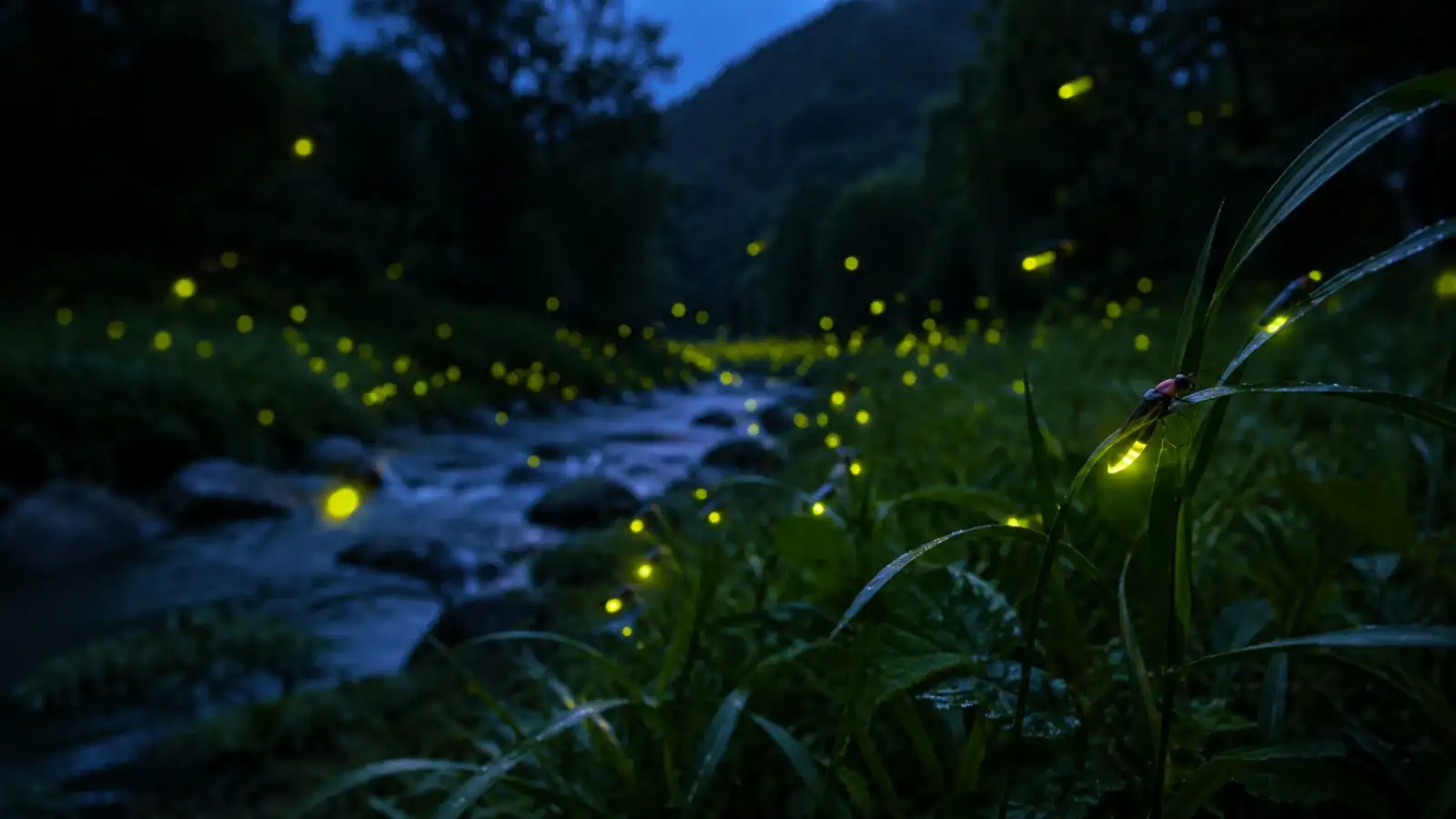
On a warm evening, a few tiny lights appearing in the darkness can make a garden look almost magical. Fireflies, also called lightning bugs in some parts of the world, are famous for producing their own light. Their soft flashes can seem mysterious, especially when dozens or even hundreds appear together.
Hero Image


But there is no magic involved. The glow comes from a fascinating chemical reaction inside the insect's body. Fireflies have developed this ability over millions of years, and they use their light for important reasons, particularly communication and finding mates.

So, why do fireflies glow, and how can such a tiny insect create light without becoming hot?


The Glow Comes From a Chemical Reaction

Fireflies produce light through a process called bioluminescence . This means a living organism creates and emits light through a chemical reaction.

Inside a firefly's specialised light-producing organ, a substance called luciferin reacts with oxygen. An enzyme called luciferase helps the reaction happen. Another molecule called ATP provides energy for the process.


When these substances interact under the right conditions, energy is released as light.

What makes this even more interesting is that the reaction is extremely efficient. Very little energy is lost as heat, which is why firefly light is sometimes described as "cold light".

Their Light Is Usually Produced in the Abdomen

The glowing part of a firefly is usually located towards the end of its abdomen. Special cells in this area contain the chemicals and structures needed to produce light.

The insect can control the reaction by regulating the amount of oxygen reaching the light-producing cells. By changing the oxygen supply, it can effectively switch the light on and off.


This ability allows fireflies to produce flashes rather than simply glowing continuously.

Why Do Fireflies Flash?

One of the main reasons behind firefly bioluminescence is communication. Fireflies use specific flashing patterns to help members of the same species recognise one another.

In many species, males fly around and produce flashes while females respond from vegetation or another nearby location. The timing, colour and pattern of the flashes can vary between species.

This means a firefly's glow is not simply a random display. It can act almost like a visual language.

A particular flash pattern can help a firefly identify a potential mate of the same species. In places where several firefly species live together, these differences can be especially important.


Their Light Can Help Them Find a Mate

For many fireflies, attracting a mate is one of the most important uses of their light. Males and females may communicate using carefully timed flashes.

A female can sometimes identify a suitable male by watching his flashing pattern and responding at the appropriate moment. The male then uses the response to locate her.

The details differ between species, but the basic idea is fascinating. What looks like a beautiful natural light show to humans can actually be part of an insect's courtship behaviour.

Firefly Light Can Also Warn Predators

The glow may have another useful purpose. Fireflies contain defensive chemicals that can make them unpleasant or potentially harmful for some predators.

Their bright light may therefore act as a warning signal, effectively telling predators that they are not a good meal.


Young fireflies and even firefly larvae can also produce light in some species. This suggests that bioluminescence is not solely connected with finding a mate.

Not All Fireflies Flash in the Same Way

When people imagine fireflies, they often picture insects blinking at regular intervals. In reality, their behaviour can be much more varied.

Different species can produce different colours and flashing patterns. Some produce yellow or greenish light, while others may appear more orange.

Some species flash individually, while others can synchronise their flashes. In certain locations, large groups may produce impressive displays where many insects appear to light up together.

These differences make firefly behaviour particularly interesting to scientists.


Fireflies Are Not the Only Animals That Glow

Bioluminescence is not unique to fireflies. Various marine organisms, fungi and other insects can produce their own light.

The chemical systems can differ between organisms, but the basic idea is similar. A biological process converts chemical energy into visible light.

Fireflies are simply one of the best-known examples because their flashes are easy for people to see on warm summer evenings.

Why Are Fireflies Becoming Harder to Find?

Although fireflies can be common in suitable environments, some populations face growing pressure. Loss of natural habitat, artificial light at night, pesticides and changes to wetlands can all affect them.

Artificial lighting is particularly interesting because fireflies rely on light signals to communicate. Bright lights can make their flashes harder to see, potentially interfering with their behaviour.


Protecting grassy areas, wetlands and other suitable habitats can help provide places where fireflies can feed, reproduce and complete their life cycles.

Reducing unnecessary outdoor lighting can also make a garden more welcoming to these fascinating insects.

A Tiny Light With a Remarkable Purpose

The next time you see a firefly glowing in the darkness, remember that its light is the result of an incredibly precise biological process. Luciferin, luciferase, oxygen and energy work together inside a tiny insect to create one of nature's most beautiful displays.

For the firefly, however, the glow is more than something beautiful. It can be a message to another firefly, a way to find a mate and potentially a warning to predators.

That is what makes firefly light so fascinating. A tiny flash that looks magical to us is actually a sophisticated survival tool shaped by evolution.