
Why Food Served on a Train Feels Different From Restaurant Food

A meal served on a train can be surprisingly memorable. Sometimes it is the food itself, such as a hot cup of chai, a vegetable cutlet or a simple biryani. At other times, the meal seems to acquire a flavour that would be difficult to recreate in a restaurant. The difference is not necessarily about recipes. Food eaten on a train arrives with movement, changing scenery, unfamiliar sounds, limited space and the anticipation of travel. Research into food perception shows that these surroundings can influence how we experience flavour, while the history of Indian railway catering has made train meals part of the emotional landscape of travel.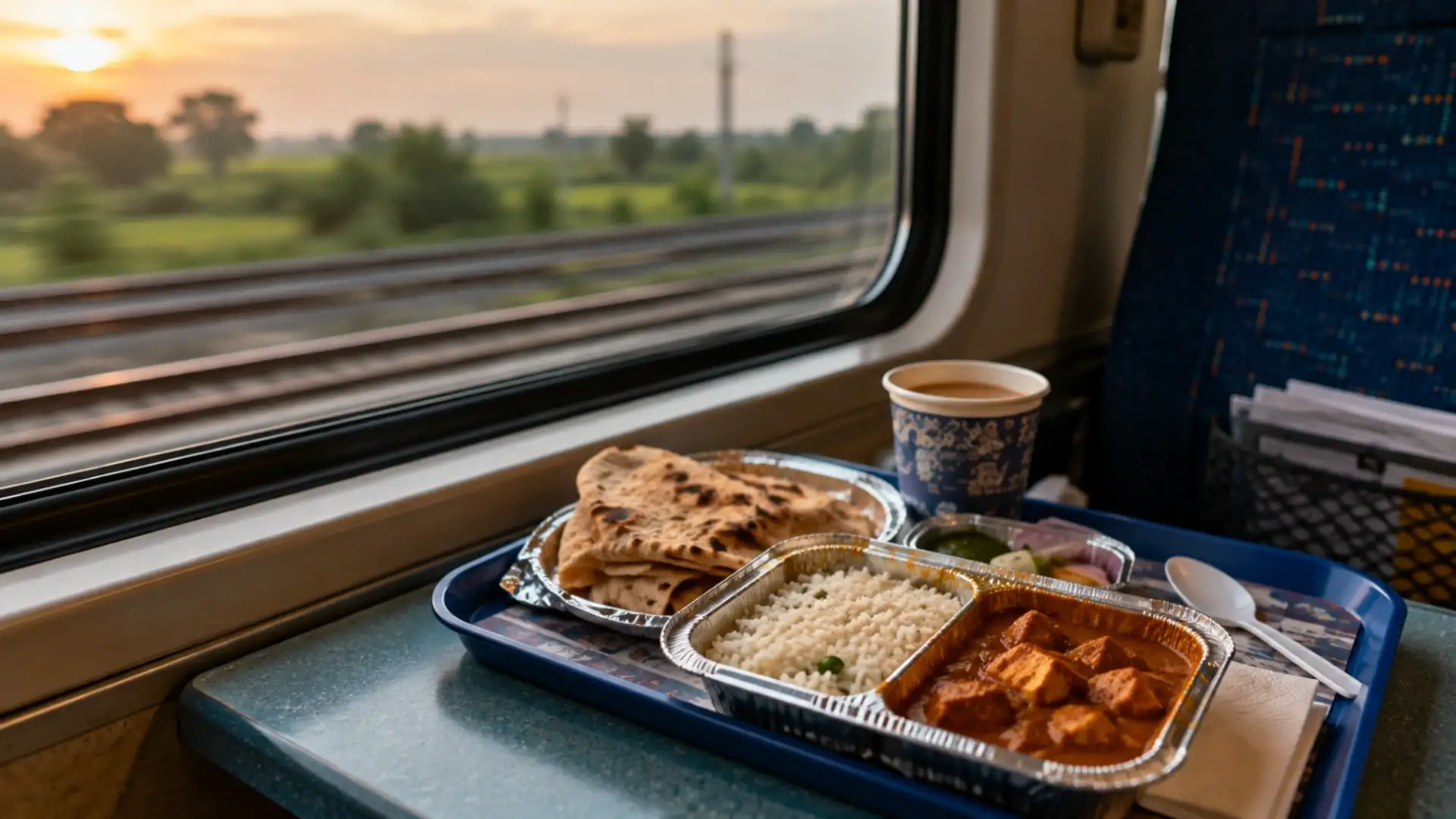
Research has shown that background sounds can alter perceptions of sweetness, bitterness and other flavour characteristics. In one experiment, different environmental soundscapes changed how people experienced chocolate gelato.
Train carriages provide an unusually distinctive soundscape. There is the rhythmic clatter of wheels, announcements, conversations, doors opening and closing, and the occasional whistle. These sounds become part of the meal.
Research also shows that the appropriateness and pleasantness of an eating environment's sound can influence how enjoyable the overall meal feels.
A restaurant can plate food immediately after cooking and serve it within seconds. Train catering has to account for preparation, holding, transport and service inside a moving vehicle.
Research into Indian railway food services has found that freshness, taste, presentation and temperature all influence passenger satisfaction.
Modern services have also changed the experience. IRCTC's eCatering system allows passengers to order meals from restaurants and food brands at stations along their journey, giving travellers far more choice than traditional railway menus.
A meal eaten while watching fields, towns and stations pass outside the window is part of an unfolding journey. Hunger can build between stations, and the arrival of a food trolley can become an event.
Indian railway food has a particularly strong cultural history. Older journeys were closely associated with regional snacks and meals bought at different stations, creating a moving culinary map of the country.
A restaurant meal is usually judged as a meal. A train meal can become part of a story.
The chai is connected to the landscape outside the window. The samosa recalls a family journey. The simple breakfast becomes part of a morning that began before sunrise.
Food does not exist in isolation. Sometimes what we remember as the taste of a journey is actually the combined flavour of food, movement, place and memory.
Your Surroundings Change Flavour Perception
Eating is a multisensory experience. What we see, hear and feel can influence what we think we taste.Research has shown that background sounds can alter perceptions of sweetness, bitterness and other flavour characteristics. In one experiment, different environmental soundscapes changed how people experienced chocolate gelato.
Train carriages provide an unusually distinctive soundscape. There is the rhythmic clatter of wheels, announcements, conversations, doors opening and closing, and the occasional whistle. These sounds become part of the meal.
Research also shows that the appropriateness and pleasantness of an eating environment's sound can influence how enjoyable the overall meal feels.
The Food Is Often Designed for Travel
There is also a practical difference between restaurant food and railway catering.A restaurant can plate food immediately after cooking and serve it within seconds. Train catering has to account for preparation, holding, transport and service inside a moving vehicle.
Research into Indian railway food services has found that freshness, taste, presentation and temperature all influence passenger satisfaction.
Modern services have also changed the experience. IRCTC's eCatering system allows passengers to order meals from restaurants and food brands at stations along their journey, giving travellers far more choice than traditional railway menus.
You may also like
- The city as one big dance floor: City witnesses a convergence of global dance traditions
- What is the PM-AASHA scheme? Find out how farmers receive the benefits of MSP under various circumstances..
- Matthew McConaughey's mom swore by this one parenting rule: How consistency helped raise 'loving and productive' men
- PPF vs NPS: Which investment will build a larger retirement fund? Understand the full calculation..
- For 300 years, this Maharashtra village has lived without doors or locks, the tradition began with a mysterious black slab that was said to bleed
Travel Makes Ordinary Food Feel Significant
There is another ingredient that cannot be measured easily: anticipation.A meal eaten while watching fields, towns and stations pass outside the window is part of an unfolding journey. Hunger can build between stations, and the arrival of a food trolley can become an event.
Indian railway food has a particularly strong cultural history. Older journeys were closely associated with regional snacks and meals bought at different stations, creating a moving culinary map of the country.
Nostalgia Can Change the Flavour
This is why train food can feel different even when the recipe is ordinary.A restaurant meal is usually judged as a meal. A train meal can become part of a story.
The chai is connected to the landscape outside the window. The samosa recalls a family journey. The simple breakfast becomes part of a morning that began before sunrise.
Food does not exist in isolation. Sometimes what we remember as the taste of a journey is actually the combined flavour of food, movement, place and memory.






Loving Newspoint? Download the app now
