
Why Does Food Taste Different on a Train? The Science Behind Your Railway Meal

There is something undeniably special about unspooling a foil-wrapped meal or sipping hot tea while watching the landscape glide past a train window. Simple dishes that might seem ordinary at a kitchen table often taste surprisingly delicious, comforting, or uniquely memorable when consumed inside a moving carriage. Conversely, certain subtle flavours can feel muted or flat during long journeys across country tracks.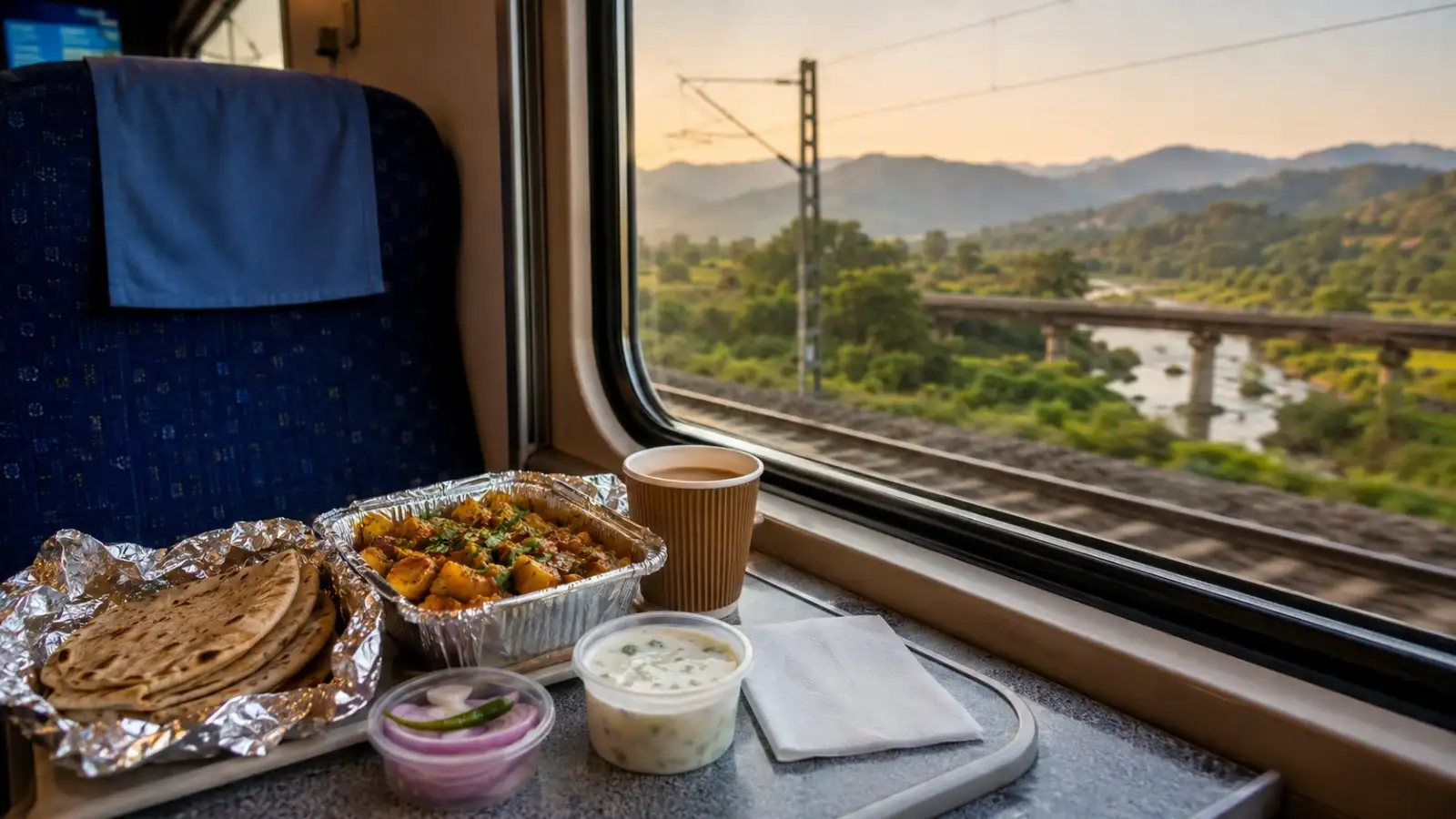
While many travellers dismiss this shift as mere travel nostalgia or hunger from long hours of movement, cognitive scientists and food experts confirm that railway travel fundamentally alters human sensory perception. Exploring why food tastes different on a train reveals how low-frequency vibrations, ambient atmospheric conditions, heightened visual stimulation, and psychology combine to transform every meal into a distinct sensory experience.
Psychological research into dining environments shows that white noise and steady rhythmic vibrations alter how our taste buds register basic flavour profiles. Background humming noise suppresses our perception of sweetness and saltiness while simultaneously enhancing savory umbrella flavours, often referred to as umami. This unique sensory shift explains why rich tomato sauces, spiced curries, salted nuts, and savory broths taste deeply satisfying on a train, while delicate desserts might taste surprisingly bland.
Recirculated air inside high-speed trains reduces internal humidity levels, drying out the mucous membranes inside your nose. When your nasal passages become dry, your ability to catch volatile aroma compounds drops noticeably. Because your olfactory receptors are less sensitive in dry air, food requires bolder spices, stronger herbs, and richer seasoning to deliver the same impact it would in a humid kitchen.
The visual novelty of a changing landscape stimulates the release of dopamine in the brain. This gentle surge of pleasure creates an optimistic psychological mindset that enhances your overall enjoyment of the meal. When your brain is relaxed, happy, and visually engaged, you naturally pay closer attention to the textures and warmth of your food, making a simple platform snack or dining car meal feel like a special treat.
This emotional anticipation primes your brain to enjoy the dining moment. When you open a packed lunch after hours of travel, hunger combined with nostalgic comfort makes every bite taste far more rewarding than an everyday meal eaten at home.
While many travellers dismiss this shift as mere travel nostalgia or hunger from long hours of movement, cognitive scientists and food experts confirm that railway travel fundamentally alters human sensory perception. Exploring why food tastes different on a train reveals how low-frequency vibrations, ambient atmospheric conditions, heightened visual stimulation, and psychology combine to transform every meal into a distinct sensory experience.
Gentle carriage motion and sensory brain stimulation
The subtle, continuous movement of a train carriage plays a major role in how your brain processes taste. As the train sways gently along the steel tracks, your body experiences constant low-frequency mechanical vibration. This rhythmic movement stimulates the inner ear vestibular system, keeping your brain in a state of quiet, heightened alertness.Psychological research into dining environments shows that white noise and steady rhythmic vibrations alter how our taste buds register basic flavour profiles. Background humming noise suppresses our perception of sweetness and saltiness while simultaneously enhancing savory umbrella flavours, often referred to as umami. This unique sensory shift explains why rich tomato sauces, spiced curries, salted nuts, and savory broths taste deeply satisfying on a train, while delicate desserts might taste surprisingly bland.
Air conditioning humidity levels and olfactory taste connections
A massive portion of what we perceive as taste is actually driven by our sense of smell. Microscopic aroma molecules float up through the back of the mouth to reach nasal receptors when we chew. However, modern enclosed train carriages equipped with continuous air conditioning alter this delicate process.You may also like
- Kylie Jenner Spotlights the Chic Lilian Bag at Malibu Wedding
- 6 Signs Someone Lies About Everything - Chanakya Niti
- An Evening at Swar Milan with Ghazal and Minu Bakshi's First Pune Performance
- You probably know your credit score, but do you know your physical fitness index?
- Why Yudhishthira Cursed All Women After Karna's Death
Recirculated air inside high-speed trains reduces internal humidity levels, drying out the mucous membranes inside your nose. When your nasal passages become dry, your ability to catch volatile aroma compounds drops noticeably. Because your olfactory receptors are less sensitive in dry air, food requires bolder spices, stronger herbs, and richer seasoning to deliver the same impact it would in a humid kitchen.
Visual engagement and the psychology of scenic dining
Human taste perception does not operate in isolation; it is deeply influenced by visual environment and emotional state. Eating at a static desk while staring at a blank wall produces a completely different psychological expectation than dining beside a panoramic window framing rolling green hills, river crossings, and rustic mountain villages.The visual novelty of a changing landscape stimulates the release of dopamine in the brain. This gentle surge of pleasure creates an optimistic psychological mindset that enhances your overall enjoyment of the meal. When your brain is relaxed, happy, and visually engaged, you naturally pay closer attention to the textures and warmth of your food, making a simple platform snack or dining car meal feel like a special treat.
Anticipation, communal dining, and traditional travel comfort
Food on a train carries deep cultural memory and social warmth. For generations, packing home-cooked meals in metal tiffin boxes or waiting eagerly for platform vendors has been a cherished ritual of long-distance journeys. Sharing snacks with family members or fellow passengers creates an atmosphere of warmth and community.This emotional anticipation primes your brain to enjoy the dining moment. When you open a packed lunch after hours of travel, hunger combined with nostalgic comfort makes every bite taste far more rewarding than an everyday meal eaten at home.
Celebrating the unique sensory joy of rail dining
Understanding why food tastes different on a train highlights the deep connection between our surroundings and our senses. The next time you step aboard for a long journey, embrace the swaying motion, enjoy the view, and savour the unique flavours that only the rails can create.





Loving Newspoint? Download the app now
