
Flavour at Thirty Thousand Feet: Why Food Tastes Different on Airplanes

Have you ever settled into your seat on a long flight, opened your plastic meal tray, and wondered why your dinner tasted so remarkably bland? You might be eating a dish prepared by a world-class catering team using fresh ingredients, yet the pasta tastes flat, the meat feels unseasoned, and the wine seems unexpectedly harsh. It is easy to blame airline catering budgets or mass food preparation techniques for disappointing in-flight meals.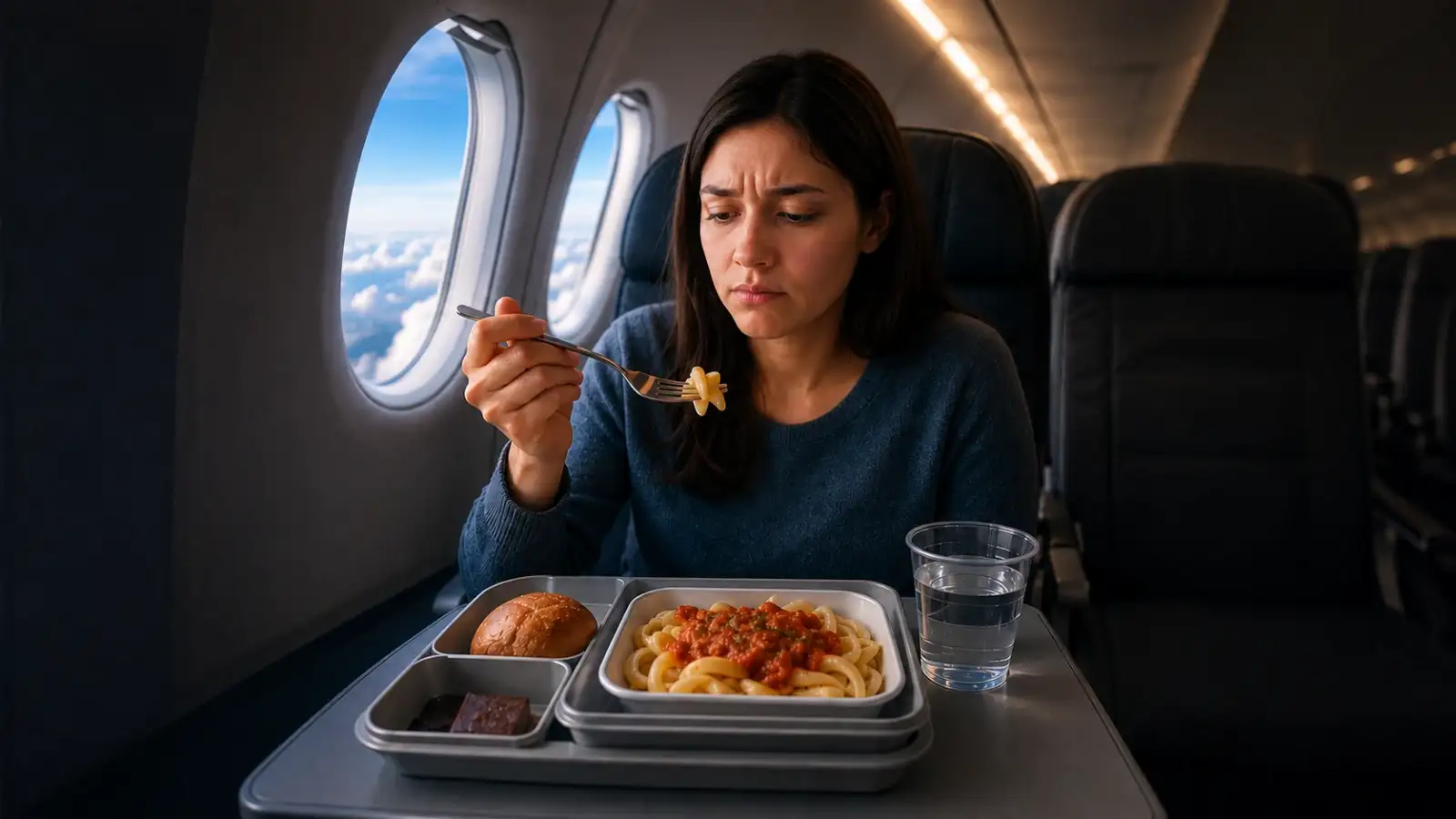
However, food scientists and aviation experts have proven that the primary culprit is not the recipe or the chef. The environment inside a jetliner actively alters your human physiology. Exploring why food tastes different on airplanes reveals how low cabin humidity, pressurized air, white background engine noise, and altered olfactory senses transform our perception of taste at thirty thousand feet.
Air drawn into the cabin is continuously recycled and filtered, dropping humidity levels inside the plane down to less than twelve percent. This environment is drier than most desert regions on Earth . Rapidly circulating dry air dries out your nasal passages within minutes of takeoff.
Because up to eighty percent of what human brains perceive as flavour actually comes from our sense of smell rather than our tongue, dried-out olfactory receptors cannot detect delicate food aromas. Without a fully functioning sense of smell, complex spices and herbs taste muted, making your meal feel flat and uninspiring.
Reduced cabin pressure lowers blood oxygen levels slightly, which in turn reduces the sensitivity of your tastebuds. Comprehensive acoustic and physiological research shows that the combination of low atmospheric pressure and dry cabin air reduces your tongue sensitivity to sweet and salty flavours by up to thirty percent. Intriguingly, sour, bitter, and spicy sensations remain largely unaffected by altitude changes. Because saltiness and sweetness are the primary drivers of savory satisfaction in cooking, dishes that taste perfectly seasoned on the ground suddenly taste under-seasoned once you reach cruising altitude.
Neuroscientists studying cross-modal sensory perception have discovered that loud background white noise suppresses your brain's ability to process sweet and salty taste signals. High noise levels distract the central nervous system, making food taste noticeably less intense. Interestingly, loud white noise actually enhances your perception of umami, the savory fifth taste found in ingredients like tomatoes, mushrooms, soy sauce, and aged cheeses. This sensory phenomenon explains why tomato juice and bloody mary cocktails are immensely popular drinks on airplanes, even among passengers who rarely order them on the ground.
However, food scientists and aviation experts have proven that the primary culprit is not the recipe or the chef. The environment inside a jetliner actively alters your human physiology. Exploring why food tastes different on airplanes reveals how low cabin humidity, pressurized air, white background engine noise, and altered olfactory senses transform our perception of taste at thirty thousand feet.
Low humidity, dry air, and frozen olfactory receptors
The most powerful reason behind dull airplane meals is the ultra-dry air circulating inside commercial passenger cabins. Modern passenger jets fly high above the clouds where external atmospheric moisture is almost non-existent.Air drawn into the cabin is continuously recycled and filtered, dropping humidity levels inside the plane down to less than twelve percent. This environment is drier than most desert regions on Earth . Rapidly circulating dry air dries out your nasal passages within minutes of takeoff.
Because up to eighty percent of what human brains perceive as flavour actually comes from our sense of smell rather than our tongue, dried-out olfactory receptors cannot detect delicate food aromas. Without a fully functioning sense of smell, complex spices and herbs taste muted, making your meal feel flat and uninspiring.
You may also like
- Why do Kodagu brides wear their saree backwards? The fascinating story behind their iconic drape
- Your child seems distracted while studying? These overlooked vision problems could be making reading and learning harder
- Why Zurich deserves more than a layover
- Bank Holiday: Will banks be open or closed on August 28? Check the list before visiting a branch on Raksha Bandhan.
- PM Surya Ghar Muft Bijli Yojana: Get a subsidy of up to ₹78,000 along with free electricity; here's how to apply online
Pressurised cabin atmosphere and tongue sensitivity loss
Commercial aircraft cabins are artificially pressurized to simulate an altitude of roughly two thousand metres above sea level. This drop in air pressure impacts human body chemistry in surprising ways.Reduced cabin pressure lowers blood oxygen levels slightly, which in turn reduces the sensitivity of your tastebuds. Comprehensive acoustic and physiological research shows that the combination of low atmospheric pressure and dry cabin air reduces your tongue sensitivity to sweet and salty flavours by up to thirty percent. Intriguingly, sour, bitter, and spicy sensations remain largely unaffected by altitude changes. Because saltiness and sweetness are the primary drivers of savory satisfaction in cooking, dishes that taste perfectly seasoned on the ground suddenly taste under-seasoned once you reach cruising altitude.
Loud white noise and sensory distraction
Taste is not merely a combination of tongue contact and nasal aroma; it is a holistic sensory experience that involves auditory feedback from your surroundings. Commercial aircraft interiors are filled with a continuous background drone of jet engines, air conditioning fans, and structural vibration, often reaching levels around eighty decibels.Neuroscientists studying cross-modal sensory perception have discovered that loud background white noise suppresses your brain's ability to process sweet and salty taste signals. High noise levels distract the central nervous system, making food taste noticeably less intense. Interestingly, loud white noise actually enhances your perception of umami, the savory fifth taste found in ingredients like tomatoes, mushrooms, soy sauce, and aged cheeses. This sensory phenomenon explains why tomato juice and bloody mary cocktails are immensely popular drinks on airplanes, even among passengers who rarely order them on the ground.
Airline catering adaptations and umami rich menus
Airlines spend millions of pounds researching culinary science to overcome these high altitude physiological hurdles. Catering teams intentionally over-season in-flight meals with extra salt, bold spices, and umami rich ingredients like parmesan, tomatoes, and garlic to punch through dull senses.Appreciating the complex science of high altitude dining
Understanding why food tastes different on airplanes turns a dull flight meal into a fascinating scientific lesson. Knowing how altitude shapes your palate helps you select umami-rich foods and stay hydrated for a far more satisfying dining experience above the clouds.





Loving Newspoint? Download the app now
