
Why Ganesha Rides a Lion in This Powerful Form


Lord Ganesha is normally distinguished from other gods through his elephant face, his gentle nature, and also the things he uses like modak and broken tusks. However, there is an even more rare version of Ganesha known as Heramba Ganapati. This form normally has five faces, ten arms and the lion as his vehicle. At the initial sight of this version, you might feel scared of what you see. The interesting thing is that everything about this form has some symbolism behind it. Heramba Ganapati symbolizes protection, boldness and strength to overcome any fears.

The Meaning of the Five Heads Is Deeper
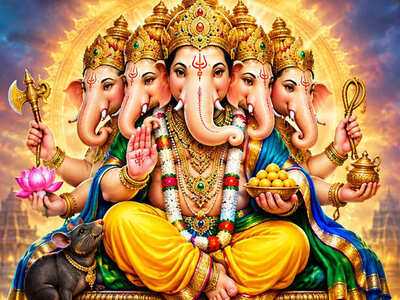 Heramba Ganapati is traditionally portrayed with five elephant heads representing his expansive divine presence.
One of the unique things about Heramba Ganapati is the presence of the five elephant heads that he has. Of the five elephant heads that he has, four face the cardinal directions, while the fifth one looks upwards. This particular configuration makes Heramba Ganapati seem to offer protection from all directions. Traditionally, there has been a symbolic link between the five heads that Heramba Ganapati has and various characteristics related to Lord Shiva. However, instead of just looking at the five heads as visual representation, they can be seen as protection from the divine.
Ten Arms Display His Capability
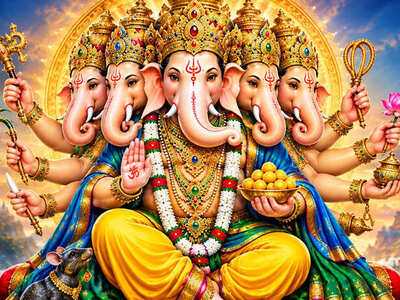
Heramba Ganapati has ten arms, which makes him much more complex in appearance compared to the common four-armed form of Ganesha. The hands have different items that indicate strength, spirituality, and protection. These traditional depictions have items like noose, broken tusk, rosary, axe, mace, garland, fruit, and modak. Abhaya mudra and varada mudra may be seen in the two frontal hands of the deity. Abhaya mudra represents protection, while varada mudra represents granting blessings. Each item adds one more layer to the appearance.
Everything Is Changed by the LionSince most individuals relate Ganesha to his rat vehicle, the addition of the lion under Heramba Ganapati becomes noticeable right from the start. Simha refers to the lion, which is associated with courage and strength. With the addition of the lion, the whole composition acquires a different feel altogether. Instead of portraying Heramba Ganapati as the remover of mundane obstacles, he is seen as a fierce guardian ready to confront any adverse forces. For those worshipping him, the presence of the lion can be a lesson in overcoming fear.
His purpose is revealed by his nameHeramba means protection and specifically the protection of the powerless or defenseless. The implication of the interpretation changes everything about the form. There is nothing to do with any notion of cruelty about the intimidating appearance of the form; the strength lies in the power of protection. It makes the form Heramba Ganapati relevant to the devotee who feels fearful, defenseless, and powerless. Many heads, arms and a lion vehicle of the god can be considered as symbols that convey a very simple message spiritually speaking.
The Weapons Play Symbolic RolesThe items held by Heramba Ganapati are yet another significant element in the iconography of Heramba Ganapati. The noose is a symbol of restriction and control whereas the broken tusk is directly connected with the symbolism of Ganesha in the context of sacrifice and wisdom. The rosary symbolizes spirituality, and the weapon (battle-ax and mallet) symbolizes the capability of overcoming obstacles. Finally, the fruit and modak symbolize nourishment and fulfillment. Thus, the elements in Ganesh's hands symbolize opposing things - discipline and compassion, strength and wisdom, protection and blessing.
A Strong Version of GaneshaHeramba Ganapati has been counted as one of the 32 forms of Ganesha, usually referred to as the 11th form in such listings. Iconographically, Heramba Ganapati has some distinct characteristics as nearly everything about him is considered protective in nature. This includes his five heads that increase his power, ten arms indicating his capacity for action, and lion symbolizing his courage. In effect, Heramba Ganapati turns out to be a powerful form of Ganesha rather than the conventional family deity. However, the underlying theme still stays consistent with Ganesha.
Unlock insightful tips and inspiration on personal growth, productivity, and well-being. Stay motivated and updated with the latest at My Life XP
Frequently Asked Questions (FAQs)What does the name Heramba mean?
Traditional interpretations connect the name Heramba with the idea of protecting the weak, helpless and those seeking refuge.
What do the ten arms of Heramba Ganapati symbolize?
His ten arms, carrying different sacred objects and weapons, symbolize his readiness to protect devotees and confront obstacles and fear.
Why do devotees worship Heramba Ganapati?
Devotees traditionally turn to this form of Ganesha for courage, protection, inner strength and help in overcoming deep fears.
Is Heramba Ganapati one of the traditional 32 forms of Ganesha?
Yes. Heramba Ganapati is traditionally counted among the 32 forms of Lord Ganesha described in Hindu iconographic traditions.
The Meaning of the Five Heads Is Deeper
One of the unique things about Heramba Ganapati is the presence of the five elephant heads that he has. Of the five elephant heads that he has, four face the cardinal directions, while the fifth one looks upwards. This particular configuration makes Heramba Ganapati seem to offer protection from all directions. Traditionally, there has been a symbolic link between the five heads that Heramba Ganapati has and various characteristics related to Lord Shiva. However, instead of just looking at the five heads as visual representation, they can be seen as protection from the divine.
Ten Arms Display His Capability
Heramba Ganapati has ten arms, which makes him much more complex in appearance compared to the common four-armed form of Ganesha. The hands have different items that indicate strength, spirituality, and protection. These traditional depictions have items like noose, broken tusk, rosary, axe, mace, garland, fruit, and modak. Abhaya mudra and varada mudra may be seen in the two frontal hands of the deity. Abhaya mudra represents protection, while varada mudra represents granting blessings. Each item adds one more layer to the appearance.
Everything Is Changed by the LionSince most individuals relate Ganesha to his rat vehicle, the addition of the lion under Heramba Ganapati becomes noticeable right from the start. Simha refers to the lion, which is associated with courage and strength. With the addition of the lion, the whole composition acquires a different feel altogether. Instead of portraying Heramba Ganapati as the remover of mundane obstacles, he is seen as a fierce guardian ready to confront any adverse forces. For those worshipping him, the presence of the lion can be a lesson in overcoming fear.
His purpose is revealed by his nameHeramba means protection and specifically the protection of the powerless or defenseless. The implication of the interpretation changes everything about the form. There is nothing to do with any notion of cruelty about the intimidating appearance of the form; the strength lies in the power of protection. It makes the form Heramba Ganapati relevant to the devotee who feels fearful, defenseless, and powerless. Many heads, arms and a lion vehicle of the god can be considered as symbols that convey a very simple message spiritually speaking.
The Weapons Play Symbolic RolesThe items held by Heramba Ganapati are yet another significant element in the iconography of Heramba Ganapati. The noose is a symbol of restriction and control whereas the broken tusk is directly connected with the symbolism of Ganesha in the context of sacrifice and wisdom. The rosary symbolizes spirituality, and the weapon (battle-ax and mallet) symbolizes the capability of overcoming obstacles. Finally, the fruit and modak symbolize nourishment and fulfillment. Thus, the elements in Ganesh's hands symbolize opposing things - discipline and compassion, strength and wisdom, protection and blessing.
A Strong Version of GaneshaHeramba Ganapati has been counted as one of the 32 forms of Ganesha, usually referred to as the 11th form in such listings. Iconographically, Heramba Ganapati has some distinct characteristics as nearly everything about him is considered protective in nature. This includes his five heads that increase his power, ten arms indicating his capacity for action, and lion symbolizing his courage. In effect, Heramba Ganapati turns out to be a powerful form of Ganesha rather than the conventional family deity. However, the underlying theme still stays consistent with Ganesha.
Unlock insightful tips and inspiration on personal growth, productivity, and well-being. Stay motivated and updated with the latest at My Life XP
Frequently Asked Questions (FAQs)What does the name Heramba mean?
Traditional interpretations connect the name Heramba with the idea of protecting the weak, helpless and those seeking refuge.
What do the ten arms of Heramba Ganapati symbolize?
His ten arms, carrying different sacred objects and weapons, symbolize his readiness to protect devotees and confront obstacles and fear.
Why do devotees worship Heramba Ganapati?
Devotees traditionally turn to this form of Ganesha for courage, protection, inner strength and help in overcoming deep fears.
Is Heramba Ganapati one of the traditional 32 forms of Ganesha?
Yes. Heramba Ganapati is traditionally counted among the 32 forms of Lord Ganesha described in Hindu iconographic traditions.
Next Story