
Why Indian Grandmothers Stored Spices in Earthen Pots

In many Indian homes, kitchens were once filled with the earthy fragrance of clay pots, brass containers and wooden spice boxes. Before airtight plastic jars and modern kitchen organisers became common, grandmothers often stored spices in earthen pots.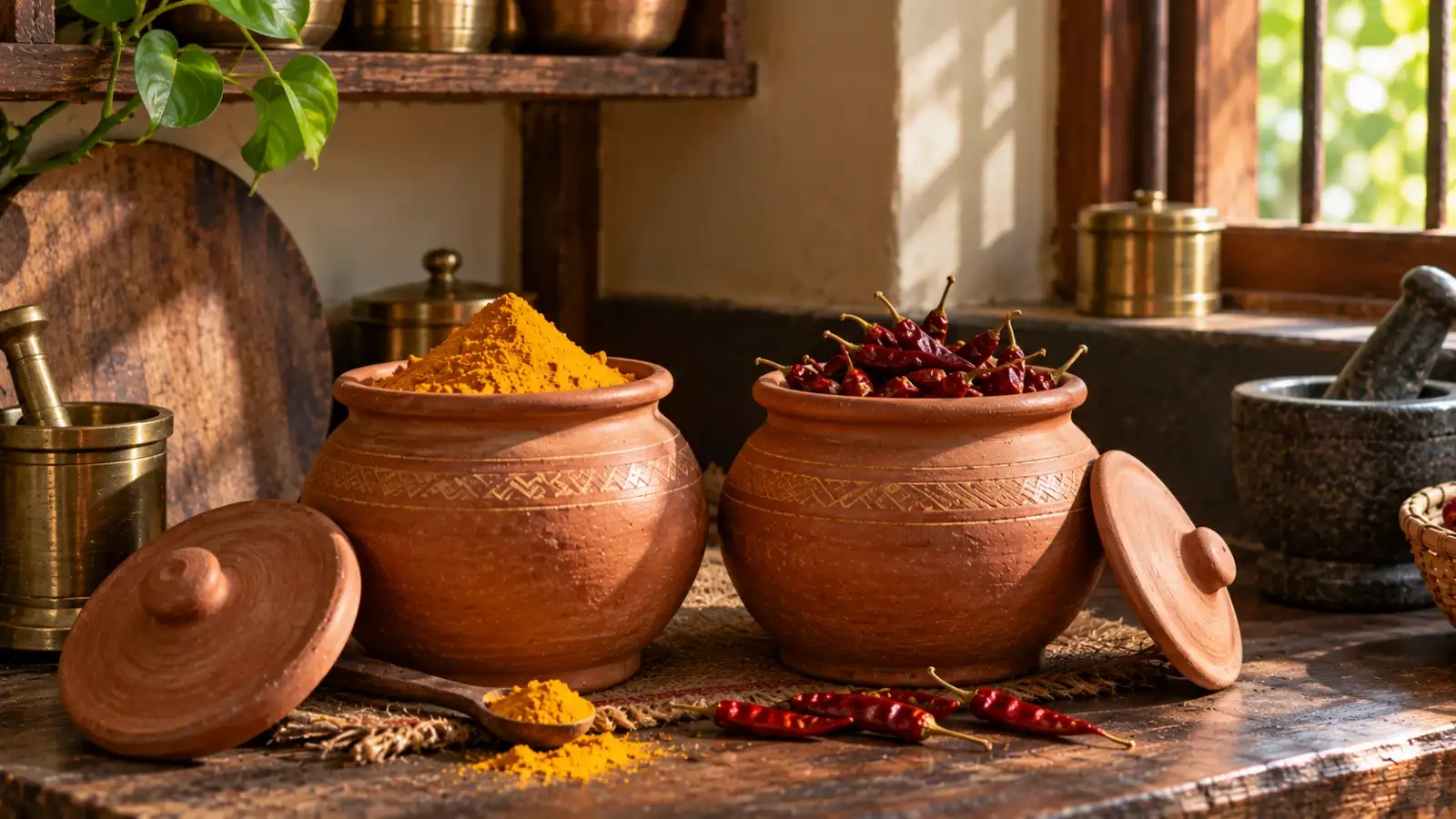
This was not simply a matter of tradition or appearance. Earthen pots were affordable, locally available and useful for storing certain kitchen ingredients. Their use also reflected an older way of managing food, in which people relied on natural materials and practical household knowledge.
From turmeric and coriander to dried chillies and whole spices, traditional storage methods varied from one family to another. While not every spice was suitable for clay containers, the practice remains an interesting part of India's culinary heritage.
Unlike modern storage containers, earthen pots did not require industrial production or complicated manufacturing processes. Families could buy different sizes depending on their needs and use them for storing grains, pulses, spices and other dry ingredients.
Their simple design made them practical for everyday kitchens. Many households also reused these pots for years, provided they were kept clean and handled carefully.
Earthen pots are opaque, which means they do not allow sunlight to reach the ingredients inside. This made them useful for storing spices in kitchens where containers were often placed on open shelves.
Grandmothers generally kept these pots in cool and shaded corners of the kitchen. This simple habit helped reduce exposure to heat and light, both of which can affect the quality of stored spices.
However, the pot alone could not guarantee freshness. Proper drying and suitable storage conditions were equally important.
For dry ingredients stored in a suitably dry environment, clay containers could offer a natural alternative to metal or plastic storage boxes. Their thick walls also provided some insulation from sudden changes in temperature.
However, porosity can become a disadvantage when moisture enters the container. Dampness may cause spices to clump or encourage mould growth.
This is why grandmothers usually stored only thoroughly dried ingredients in earthen pots and kept the containers away from water and steam.
Earthen pots were suitable for keeping certain whole spices in small quantities, particularly when the containers were covered and placed in dry areas.
Some families also preferred buying whole spices and grinding them in small batches. This reduced the need to store large amounts of powdered spices for long periods.
The practice was closely connected to traditional cooking habits, where spices were often roasted, crushed or ground shortly before preparing a meal.
Small earthen containers could be used for frequently needed ingredients, while larger pots were reserved for grains or other staples.
In some homes, containers were labelled through memory rather than written names. Their shape, size, location or smell helped family members identify what was stored inside.
This system reduced clutter and made cooking more efficient. It also reflected a practical understanding of how ingredients should be handled and stored.
The smell of wet clay, the rough texture of an unglazed pot and the sight of neatly arranged spice containers often became associated with childhood memories.
Clay has also held an important place in Indian culture for centuries. It has been used to make cooking vessels, lamps, storage containers and objects associated with festivals and rituals.
As a result, using earthen pots in the kitchen was both a practical choice and a continuation of a long-standing relationship with natural materials.
Airtight containers can also provide better protection against humidity, insects and accidental moisture, especially when spices need to be stored for several months.
Modern kitchens are usually designed around convenience, and lightweight containers are easier to move and maintain. Earthen pots can be fragile, heavier and more difficult to clean thoroughly if they are unglazed.
Despite these limitations, some households and traditional food enthusiasts continue to use clay containers for selected dry ingredients.
Only thoroughly dried spices should be placed inside. Ingredients that contain moisture, such as fresh herbs, should not be stored in unglazed clay pots.
The pot should be kept away from sinks, cooking steam and damp shelves. A well-fitting lid is also useful for reducing exposure to dust and insects.
For long-term storage, airtight glass containers may offer better protection, particularly in humid climates. Earthen pots are best used thoughtfully rather than treated as a universal replacement for modern storage jars.
Their methods were shaped by local materials, cooking habits and the climate in which they lived. Although some practices may not suit today's humid urban kitchens, they still offer valuable lessons about mindful food storage.
Earthen pots may no longer be found in every kitchen, but they remain a reminder of how traditional households combined simplicity, organisation and experience to preserve everyday ingredients.
This was not simply a matter of tradition or appearance. Earthen pots were affordable, locally available and useful for storing certain kitchen ingredients. Their use also reflected an older way of managing food, in which people relied on natural materials and practical household knowledge.
From turmeric and coriander to dried chillies and whole spices, traditional storage methods varied from one family to another. While not every spice was suitable for clay containers, the practice remains an interesting part of India's culinary heritage.
1. Earthen Pots Were Easily Available
Clay pots were once a common part of Indian households, particularly in villages and small towns. Local potters made them using materials found in the surrounding area, making them affordable and accessible.Unlike modern storage containers, earthen pots did not require industrial production or complicated manufacturing processes. Families could buy different sizes depending on their needs and use them for storing grains, pulses, spices and other dry ingredients.
Their simple design made them practical for everyday kitchens. Many households also reused these pots for years, provided they were kept clean and handled carefully.
2. Clay Helped Protect Spices from Direct Sunlight
Spices can lose their colour, aroma and flavour when exposed to direct sunlight for long periods. Strong heat may also affect the natural oils present in whole spices.Earthen pots are opaque, which means they do not allow sunlight to reach the ingredients inside. This made them useful for storing spices in kitchens where containers were often placed on open shelves.
Grandmothers generally kept these pots in cool and shaded corners of the kitchen. This simple habit helped reduce exposure to heat and light, both of which can affect the quality of stored spices.
However, the pot alone could not guarantee freshness. Proper drying and suitable storage conditions were equally important.
3. The Natural Properties of Earthenware
Unglazed earthenware is porous, meaning it contains tiny spaces that allow limited movement of air and moisture. This property is useful for certain traditional kitchen practices, but it must be understood carefully.For dry ingredients stored in a suitably dry environment, clay containers could offer a natural alternative to metal or plastic storage boxes. Their thick walls also provided some insulation from sudden changes in temperature.
However, porosity can become a disadvantage when moisture enters the container. Dampness may cause spices to clump or encourage mould growth.
This is why grandmothers usually stored only thoroughly dried ingredients in earthen pots and kept the containers away from water and steam.
4. Why Whole Spices Were Often Stored This Way
Whole spices such as cumin, coriander seeds, black pepper, cloves and cardamom can retain their aroma for longer when stored properly. Many traditional kitchens kept these ingredients in separate containers so they could be used as required.Earthen pots were suitable for keeping certain whole spices in small quantities, particularly when the containers were covered and placed in dry areas.
Some families also preferred buying whole spices and grinding them in small batches. This reduced the need to store large amounts of powdered spices for long periods.
The practice was closely connected to traditional cooking habits, where spices were often roasted, crushed or ground shortly before preparing a meal.
5. Traditional Storage Was Also About Organisation
Indian grandmothers often maintained a carefully organised kitchen, even when they had very few storage options. Different ingredients were placed in separate pots or boxes so that they could be found easily during cooking.Small earthen containers could be used for frequently needed ingredients, while larger pots were reserved for grains or other staples.
In some homes, containers were labelled through memory rather than written names. Their shape, size, location or smell helped family members identify what was stored inside.
This system reduced clutter and made cooking more efficient. It also reflected a practical understanding of how ingredients should be handled and stored.
6. Earthen Pots Had Cultural and Emotional Value
For many families, earthen pots were more than kitchen utensils. They were part of a familiar domestic environment connected with traditional cooking and family routines.The smell of wet clay, the rough texture of an unglazed pot and the sight of neatly arranged spice containers often became associated with childhood memories.
Clay has also held an important place in Indian culture for centuries. It has been used to make cooking vessels, lamps, storage containers and objects associated with festivals and rituals.
As a result, using earthen pots in the kitchen was both a practical choice and a continuation of a long-standing relationship with natural materials.
7. Why the Practice Became Less Common
The use of earthen pots declined in many urban kitchens as plastic, glass and stainless steel containers became more popular. These modern options are often easier to clean, stack and seal.Airtight containers can also provide better protection against humidity, insects and accidental moisture, especially when spices need to be stored for several months.
Modern kitchens are usually designed around convenience, and lightweight containers are easier to move and maintain. Earthen pots can be fragile, heavier and more difficult to clean thoroughly if they are unglazed.
You may also like
- Pay-slips to change for those earning between ₹15,000 and ₹25,000; find out how your take-home salary will be affected
- Traveling home for Chhath and Diwali just got easier! Railways to run 13 pairs of special trains; check the full list.
- Big news for millions of LPG customers: This gas cylinder rule changes from October 1
- He scored just 52% in Class 10, failed IIT entrance exam 3 times and missed IIM: How Rahul Sinha went on to become an SDM in Bihar at 34
- Placental Chorioangioma: What It Means for Pregnancy
Despite these limitations, some households and traditional food enthusiasts continue to use clay containers for selected dry ingredients.
8. Can We Still Store Spices in Earthen Pots Today?
Earthen pots can still be used for spice storage, but a few precautions are important. The container should be clean, completely dry and free from unpleasant odours or contamination.Only thoroughly dried spices should be placed inside. Ingredients that contain moisture, such as fresh herbs, should not be stored in unglazed clay pots.
The pot should be kept away from sinks, cooking steam and damp shelves. A well-fitting lid is also useful for reducing exposure to dust and insects.
For long-term storage, airtight glass containers may offer better protection, particularly in humid climates. Earthen pots are best used thoughtfully rather than treated as a universal replacement for modern storage jars.
The Kitchen Wisdom Behind an Old Tradition
The tradition of storing spices in earthen pots reflects the practical knowledge of earlier generations. Grandmothers understood the importance of keeping ingredients away from sunlight, moisture and excessive heat, even without modern kitchen technology.Their methods were shaped by local materials, cooking habits and the climate in which they lived. Although some practices may not suit today's humid urban kitchens, they still offer valuable lessons about mindful food storage.
Earthen pots may no longer be found in every kitchen, but they remain a reminder of how traditional households combined simplicity, organisation and experience to preserve everyday ingredients.






Loving Newspoint? Download the app now
