
Why High-Protein Foods Are Taking Over Supermarket Shelves

Walk into a supermarket today and protein seems to be everywhere. Yoghurt pots promise extra protein, cereals advertise protein-rich recipes, snacks come with added protein, and even familiar staples such as bread and milk are being marketed around their protein content. This is no longer a niche interest limited to bodybuilders or serious gym-goers. In the UK, sales of protein-based foods grew 9.6% over the 26 weeks to early 2026, significantly ahead of overall fast-moving consumer goods growth. The question is, why has protein suddenly become such a powerful selling point?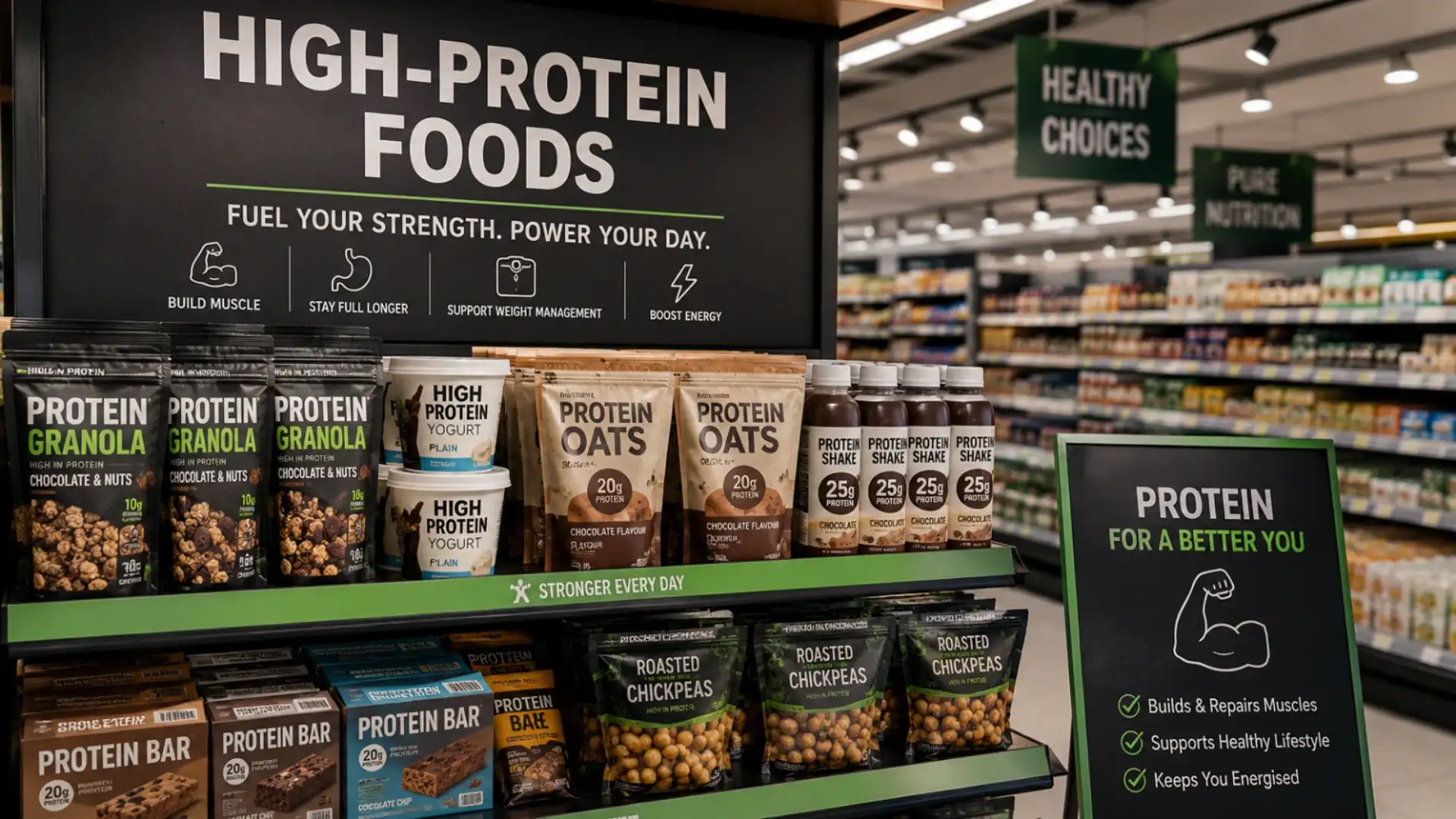
Today, shoppers are looking at protein as part of everyday eating. Eggs, Greek yoghurt, cottage cheese, chicken, fish, lentils, nuts and other protein-rich foods are increasingly appearing on shopping lists because consumers see them as practical ways to make meals more filling and nutritious.
Research from Ocado found that searches for “high protein” more than doubled in 2025, while demand for foods such as Greek yoghurt, cottage cheese and chicken also increased.
Cottage cheese is a particularly interesting example. Once associated with old-fashioned diets, it has been rediscovered by younger consumers and reinvented in everything from breakfast bowls to savoury dips.
The result is a feedback loop. Consumers become interested in protein online, supermarkets notice the demand, manufacturers launch more products, and greater shelf space makes high-protein foods even more visible.
However, more protein does not automatically mean a healthier product. The British Nutrition Foundation points out that most people in the UK already consume enough protein and recommends getting it from a variety of foods, particularly beans, lentils and chickpeas.
That distinction matters. The real opportunity may not be adding protein to everything, but choosing naturally nutritious foods that happen to contain plenty of it.
The interesting part is how ordinary foods are benefiting. Rather than replacing traditional meals completely, protein is being added to familiar choices.
In other words, the biggest change may not be what people are eating, but what they now notice on the label. Protein has become a shorthand for health, convenience and satiety, and supermarkets have clearly realised that shoppers are paying attention.
Protein Has Moved Beyond the Gym
For years, protein had a fairly narrow image. It was associated with athletes, bodybuilding and enormous tubs of powdered supplements. That picture has changed dramatically.Today, shoppers are looking at protein as part of everyday eating. Eggs, Greek yoghurt, cottage cheese, chicken, fish, lentils, nuts and other protein-rich foods are increasingly appearing on shopping lists because consumers see them as practical ways to make meals more filling and nutritious.
Research from Ocado found that searches for “high protein” more than doubled in 2025, while demand for foods such as Greek yoghurt, cottage cheese and chicken also increased.
Social Media Is Changing the Supermarket Basket
TikTok, Instagram and YouTube have played a surprisingly important role in this shift. A simple recipe featuring cottage cheese, eggs or yoghurt can reach millions of people within days, turning an ordinary ingredient into the next food trend.You may also like
- Komic village: Inside India's 'village closest to the sky' where oxygen is nearly 50% lower
- 9 Unique Krishna Mehndi Ideas for a Festive Janmashtami
- 15 Benefits of Moringa for Skin and Hair
- 10 Amazing Benefits of Beetroot for Skin and Hair
- Traumatic Birth and Heavy Bleeding: Understanding the Emotional Impact
Cottage cheese is a particularly interesting example. Once associated with old-fashioned diets, it has been rediscovered by younger consumers and reinvented in everything from breakfast bowls to savoury dips.
The result is a feedback loop. Consumers become interested in protein online, supermarkets notice the demand, manufacturers launch more products, and greater shelf space makes high-protein foods even more visible.
It Is Not Just About Protein
There is also a practical reason behind the trend. Many people are looking for foods that can fit into busy lifestyles while keeping them satisfied between meals.However, more protein does not automatically mean a healthier product. The British Nutrition Foundation points out that most people in the UK already consume enough protein and recommends getting it from a variety of foods, particularly beans, lentils and chickpeas.
That distinction matters. The real opportunity may not be adding protein to everything, but choosing naturally nutritious foods that happen to contain plenty of it.
Why the Trend Could Last
The protein boom appears to be more than a passing supermarket fad. It sits at the intersection of fitness culture, convenience, changing eating habits and growing interest in nutrition.The interesting part is how ordinary foods are benefiting. Rather than replacing traditional meals completely, protein is being added to familiar choices.
In other words, the biggest change may not be what people are eating, but what they now notice on the label. Protein has become a shorthand for health, convenience and satiety, and supermarkets have clearly realised that shoppers are paying attention.






Loving Newspoint? Download the app now
