
Why Do Hotel Rooms Always Smell So Good? The Secret Behind That Signature Scent

The distinct, clean aroma that greets you upon entering a hotel room is no happy accident. Hospitality chains rely on specialized, heavy-duty commercial cleaning products designed to sanitize spaces rapidly between guests. These industrial detergents, carpet shampoos, and surface disinfectants share similar active chemical formulations across the global hotel industry.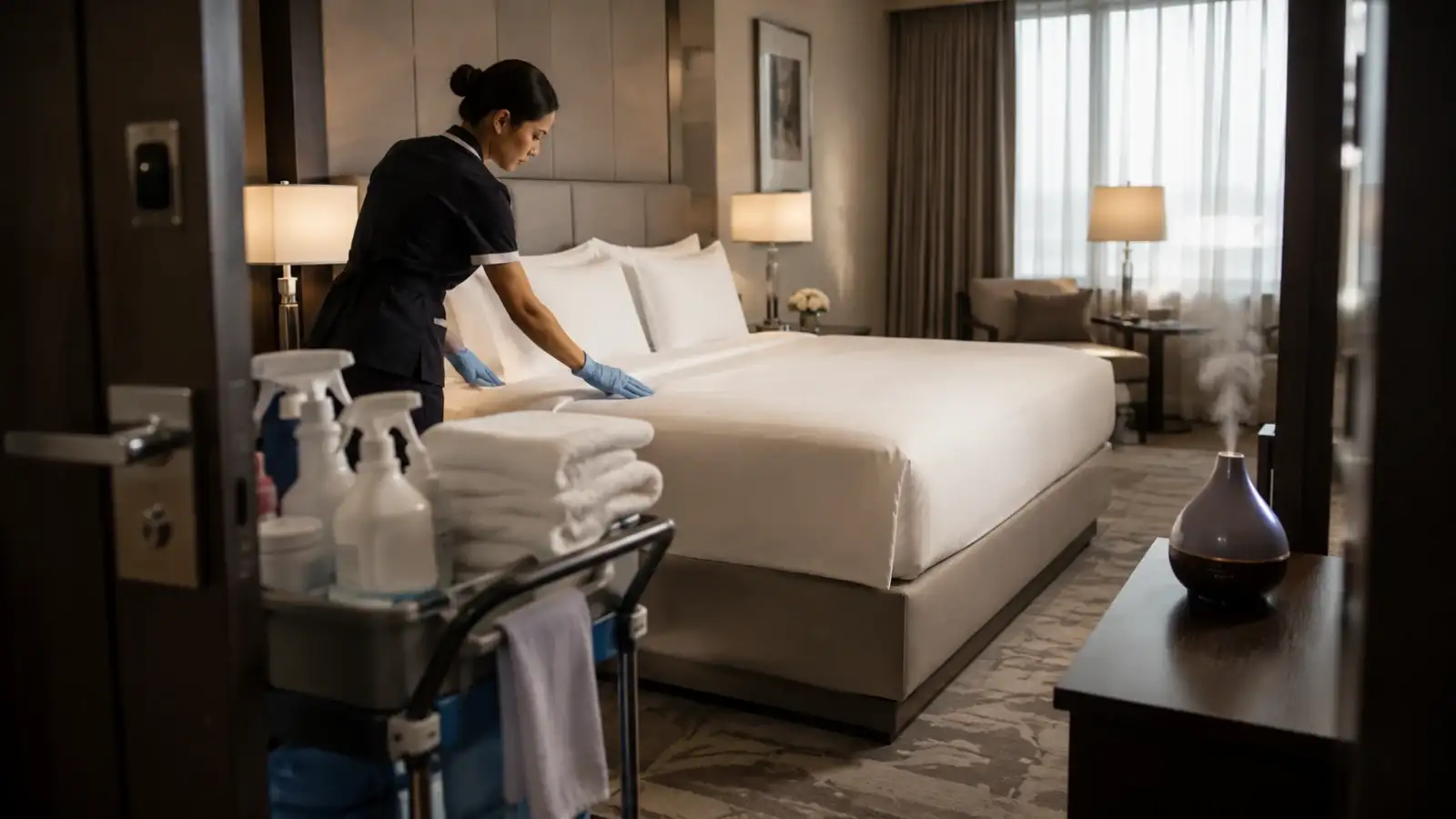
Industrial cleaning fluids often feature subtle, clean underlying fragrance notes such as light citrus, eucalyptus, or gentle linen to signal hygiene to arriving guests. Because housekeepers across major hotel brands use near-identical professional cleaning protocols, the lingering background scent of freshly disinfected hard surfaces and sanitized fixtures creates a familiar, uniform scent profile.
Industrial Laundry Detergents and Bleached Linens
A massive contributor to the iconic hotel room scent comes from the piles of freshly laundered bed sheets, duvet covers, pillowcases, and plush bath towels. Hotels process high volumes of bed linen through commercial laundry facilities using concentrated industrial detergents, fabric softeners, and precise chlorine bleach rinses.
These heavy-duty washing agents leave behind a crisp, slightly powdery fragrance embedded deep within cotton fibers. When housekeepers smooth fresh sheets over mattresses and stack folded towels in guest bathrooms, the warm, clean scent of laundered fabric fills the enclosed space, establishing that recognizable hotel room atmosphere.
Centralized Ventilation Systems and Air Filtration
Hotel buildings rely on large-scale centralized heating, ventilation, and air conditioning systems to regulate indoor climate and air quality. These massive air handlers continuously recirculate air through thick industrial filters, stripping out natural outdoor odors, pollen, and humidity.
This rigorous mechanical filtration creates a neutral, somewhat sterile base air quality that feels uniform whether you stay in a city skyscraper or a seaside resort. Additionally, many hotel chains utilize cold-air aroma diffusers connected directly into central ductwork, quietly pumping subtle, proprietary fragrances like white tea, cedar, or soft amber throughout entire guest floors.
Standardized Synthetic Materials and Soft Furnishings
The physical materials used to construct and furnish hotel rooms are selected for extreme durability, fire resistance, and stain protection. Commercial carpets, heavy blackout curtains, vinyl wall coverings, and dense mattress foams are built from synthetic fibers treated with protective chemical coatings.
These durable synthetic materials off-gas subtle, non-toxic chemical compounds continuously into indoor air. Because major hotel chains source furniture, flame-retardant drapery, and stain-resistant carpet padding from the same global commercial suppliers, the baseline smell emitted by the room’s physical structure remains remarkably consistent world-wide.
Deliberate Scent Marketing and Brand Identity
Modern hospitality brands invest millions of pounds into the art of scent marketing to build instant emotional connections with travelers. High-end hotel groups work with professional fragrance houses to engineer signature scents that evoke relaxation, safety, and luxury.
These bespoke ambient fragrances feature balanced notes like bergamot, green tea, sandalwood, or light jasmine, carefully chosen to appeal to broad global palates without triggering allergies or headaches. Dispersing these consistent signature fragrances across global locations ensures that stepping into a guest room instantly triggers comforting brand recognition, making you feel right at home regardless of your destination.
Industrial cleaning fluids often feature subtle, clean underlying fragrance notes such as light citrus, eucalyptus, or gentle linen to signal hygiene to arriving guests. Because housekeepers across major hotel brands use near-identical professional cleaning protocols, the lingering background scent of freshly disinfected hard surfaces and sanitized fixtures creates a familiar, uniform scent profile.
Industrial Laundry Detergents and Bleached Linens
A massive contributor to the iconic hotel room scent comes from the piles of freshly laundered bed sheets, duvet covers, pillowcases, and plush bath towels. Hotels process high volumes of bed linen through commercial laundry facilities using concentrated industrial detergents, fabric softeners, and precise chlorine bleach rinses.
These heavy-duty washing agents leave behind a crisp, slightly powdery fragrance embedded deep within cotton fibers. When housekeepers smooth fresh sheets over mattresses and stack folded towels in guest bathrooms, the warm, clean scent of laundered fabric fills the enclosed space, establishing that recognizable hotel room atmosphere.
You may also like
- Control Anger And Anxiety In Just 5 Minutes Daily: Why Bhramari Pranayama Is The Ultimate Natural Remedy For Stress
- Why Did Krishna's Own Clan Destroy Itself? The Hidden Truth
- Basque waist is fashion next favourite. What is it?
- How much will you earn on an FD of ₹20,000 to ₹1 lakh? Understand the full breakdown.
- Does the first husband still have to pay alimony if the wife remarries? Here is what the law says.
Centralized Ventilation Systems and Air Filtration
Hotel buildings rely on large-scale centralized heating, ventilation, and air conditioning systems to regulate indoor climate and air quality. These massive air handlers continuously recirculate air through thick industrial filters, stripping out natural outdoor odors, pollen, and humidity.
This rigorous mechanical filtration creates a neutral, somewhat sterile base air quality that feels uniform whether you stay in a city skyscraper or a seaside resort. Additionally, many hotel chains utilize cold-air aroma diffusers connected directly into central ductwork, quietly pumping subtle, proprietary fragrances like white tea, cedar, or soft amber throughout entire guest floors.
Standardized Synthetic Materials and Soft Furnishings
The physical materials used to construct and furnish hotel rooms are selected for extreme durability, fire resistance, and stain protection. Commercial carpets, heavy blackout curtains, vinyl wall coverings, and dense mattress foams are built from synthetic fibers treated with protective chemical coatings.
These durable synthetic materials off-gas subtle, non-toxic chemical compounds continuously into indoor air. Because major hotel chains source furniture, flame-retardant drapery, and stain-resistant carpet padding from the same global commercial suppliers, the baseline smell emitted by the room’s physical structure remains remarkably consistent world-wide.
Deliberate Scent Marketing and Brand Identity
Modern hospitality brands invest millions of pounds into the art of scent marketing to build instant emotional connections with travelers. High-end hotel groups work with professional fragrance houses to engineer signature scents that evoke relaxation, safety, and luxury.
These bespoke ambient fragrances feature balanced notes like bergamot, green tea, sandalwood, or light jasmine, carefully chosen to appeal to broad global palates without triggering allergies or headaches. Dispersing these consistent signature fragrances across global locations ensures that stepping into a guest room instantly triggers comforting brand recognition, making you feel right at home regardless of your destination.






Loving Newspoint? Download the app now
