
The Floor That “Doesn’t Exist”: Why So Many Hotels Skip Number 13

You get into a hotel elevator. You press 8. Then, while waiting for the doors to close, you casually look at the buttons. 11, 12, 14 You stop. Wait a second. Where did the 13 go? Of course the building has not missed a whole floor. Between the twelfth and fourteenth levels there are no mysterious gaps. There is almost certainly a 13th floor. It just isn’t called that.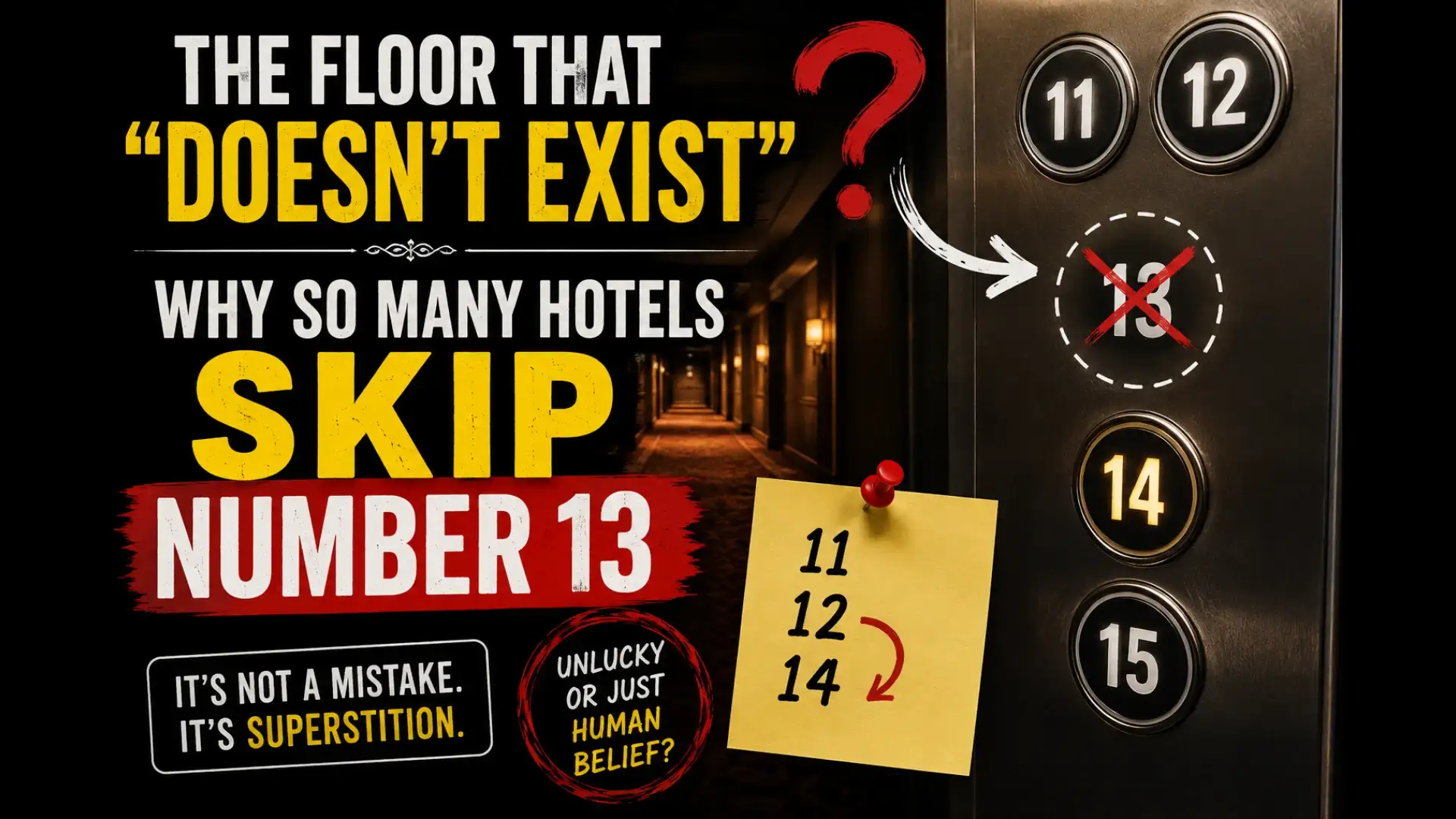
And once you notice it in one hotel, you start noticing it everywhere. Some buildings have a 12A floor. Others just go straight from 12 to 14. Some have totally different names. Why? Because the number 13 has a reputation for a surprisingly large number of people.
Eventually, that reputation became so familiar that people didn't need to know where it came from. They simply knew: 13 means unlucky, and once a superstition becomes common enough, businesses start paying attention to it.
If you're completely comfortable with the number, you probably won't care. But what if you're not? Maybe you hesitate, maybe you joke about it, maybe you ask the receptionist whether there's another room available.
From a hotel's perspective, there is a very simple solution: Don't call it the 13th floor. The physical building stays exactly the same. Only the label changes. And suddenly, the problem disappears.
People are already spending money to sleep somewhere that isn't their home. They want the room to feel safe, clean and relaxing. If a number makes even a small percentage of guests uncomfortable, removing the number is an incredibly easy decision. Why create an unnecessary problem when changing one button costs almost nothing?
And there are other examples of numbers being avoided in different cultures. In some East Asian countries, certain numbers are avoided because their pronunciation resembles words associated with death or misfortune. So the specific number changes depending on where you are. The habit itself doesn't. People attach meaning to numbers.
That's why a building can have a perfectly real thirteenth level while officially calling it something else. It isn't disappearing. It's being renamed.
Maybe that's why the missing 13th floor is so fascinating. It isn't really about whether 13 is unlucky. It's about the power that a simple idea can have when there are enough people who believe in it. Sometimes, even a number can make an entire floor disappear.
And once you notice it in one hotel, you start noticing it everywhere. Some buildings have a 12A floor. Others just go straight from 12 to 14. Some have totally different names. Why? Because the number 13 has a reputation for a surprisingly large number of people.
The Number That Got a Bad Reputation
The fear of the number 13 is known as triskaidekaphobia , and it has existed in Western culture for a very long time. Many theories exist as to the origin of the superstition, but no one universally agreed upon a source. Over the centuries the figure has come to be associated with bad luck in various traditions and stories.Eventually, that reputation became so familiar that people didn't need to know where it came from. They simply knew: 13 means unlucky, and once a superstition becomes common enough, businesses start paying attention to it.
Hotels Don't Want Guests Thinking About Bad Luck
Imagine you're checking into a hotel. You're tired. You've travelled for hours. You finally get your room key and step into the elevator. Then you see that your room is on the 13th floor.If you're completely comfortable with the number, you probably won't care. But what if you're not? Maybe you hesitate, maybe you joke about it, maybe you ask the receptionist whether there's another room available.
From a hotel's perspective, there is a very simple solution: Don't call it the 13th floor. The physical building stays exactly the same. Only the label changes. And suddenly, the problem disappears.
It's Less About Believing in Luck and More About Avoiding Discomfort
This is the interesting part. A hotel doesn't necessarily skip 13 because its management genuinely believes something terrible will happen there. It may simply be responding to what guests believe. Hotels are businesses built around comfort.People are already spending money to sleep somewhere that isn't their home. They want the room to feel safe, clean and relaxing. If a number makes even a small percentage of guests uncomfortable, removing the number is an incredibly easy decision. Why create an unnecessary problem when changing one button costs almost nothing?
You may also like
- RBI's strict rule: If a bank takes more than 7 days to close your credit card, you stand to gain—you'll get ₹500 daily..
- EPFO Updates: When and how much PF can you withdraw after losing your job? What is the '12 months of unemployment' rule?
- Before you call your child 'naughty,' remember Krishna was called 'Makhan Chor': Why mischief, curiosity and playfulness are important parts of a happy and healthy childhood
- WMO says El Nino to persist through Feb 2027: What it means for India
- From Dal-Roti to Packaged Food: How India's Traditional Plate Has Changed and What It Means for Your Health
And It Isn't Just Hotels
The missing 13th floor isn't limited to hotels. Some apartment buildings, office towers and hospitals have also avoided the number. Hospitals, in particular, have an obvious reason to be sensitive about anything associated with fear or bad luck.And there are other examples of numbers being avoided in different cultures. In some East Asian countries, certain numbers are avoided because their pronunciation resembles words associated with death or misfortune. So the specific number changes depending on where you are. The habit itself doesn't. People attach meaning to numbers.
But Is the 13th Floor Actually Missing?
Usually, no. If a building has a floor physically located above 12 and below 14, that's effectively the thirteenth floor regardless of what the elevator says. The architecture doesn't care about superstition. People do.That's why a building can have a perfectly real thirteenth level while officially calling it something else. It isn't disappearing. It's being renamed.
Maybe That's the Most Interesting Part
We like to think modern life has left old superstitions behind. We have smartphones, artificial intelligence, self-driving technology and buildings that can practically run themselves. And yet, somewhere inside a modern hotel, a tiny number can still make people uncomfortable enough to remove it from the elevator.Maybe that's why the missing 13th floor is so fascinating. It isn't really about whether 13 is unlucky. It's about the power that a simple idea can have when there are enough people who believe in it. Sometimes, even a number can make an entire floor disappear.






Loving Newspoint? Download the app now
